This Singaporean shoemaker moved to Kyoto to make barefoot shoes by hand
A good friend of mine once told me he had never owned a truly comfortable pair of shoes until he was in his twenties. It was only after having his feet properly measured that he discovered they were wider than average. For years, he had simply squeezed them into narrower, off-the-rack shoes without questioning it.
It was a classic case of not knowing what you don’t know: If discomfort is all you’ve ever felt, you might not recognise it as discomfort at all.
That is the question at the heart of Singaporean craftsperson Chin Shiying’s work: What if we have simply forgotten what shoes – and feet – are supposed to feel like?
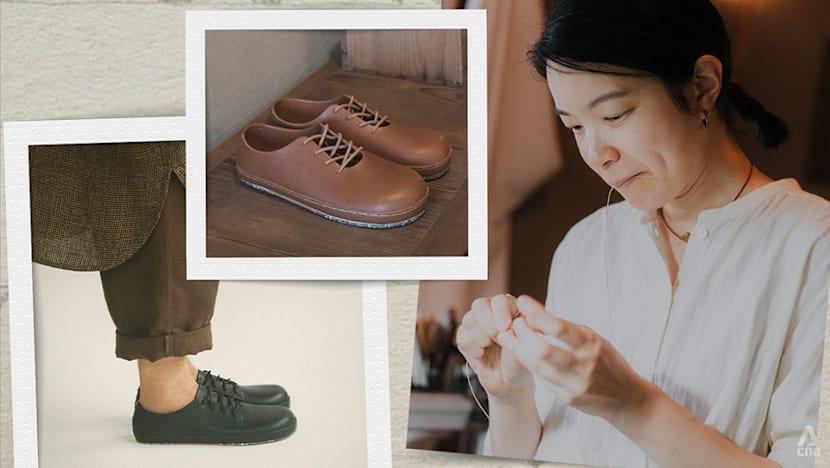
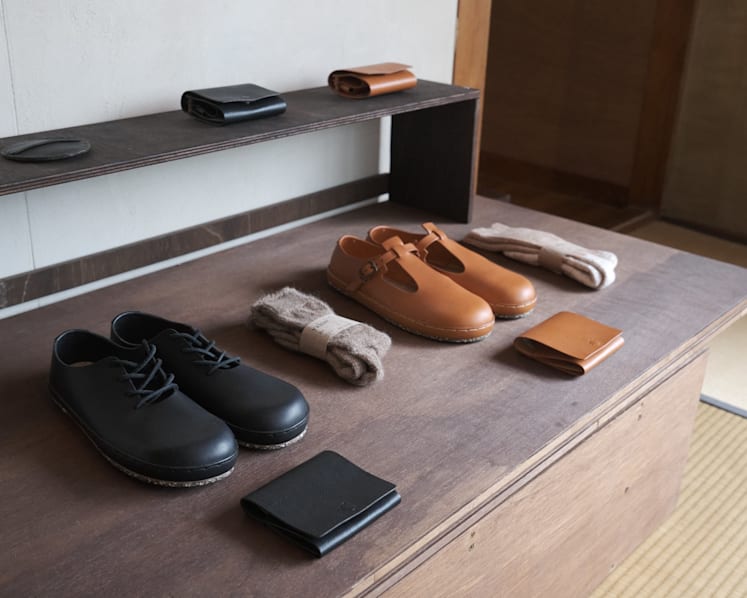
Through Yanmaei, her Kyoto-based artisanal leather label, the 37-year-old makes barefoot shoes designed to give the feet more freedom to move. They have thin, flexible soles, no raised heel and a wide toe box that allows the toes to spread naturally.
“When we wear shoes that are not feet-shaped, over time, our feet will naturally mould into the shape of the shoe,” said Chin.
She believes the problem is especially pronounced in conventional dress shoes, whose narrow, pointed lasts and rigid soles restrict how the foot moves.
“The hardness of the soles doesn’t allow you to bend your feet when you move, so you’re just walking with ‘micro-bends’,” she said. “All that rigidity adds to the body not being able to perform at its best.”
AN EARLY INSTINCT FOR MAKING THINGS
As a child, Chin dismantled toys and Barbie dolls to see how they worked. At school, she was the one classmates turned to when something needed fixing.
Her parents still run a signboard-making business, and Chin spent much of her childhood in their workshop, peeling vinyl stickers and watching them build signs by hand.
“I grew up watching them build their own business,” she said. “It’s something that I feel very naturally inclined to.”
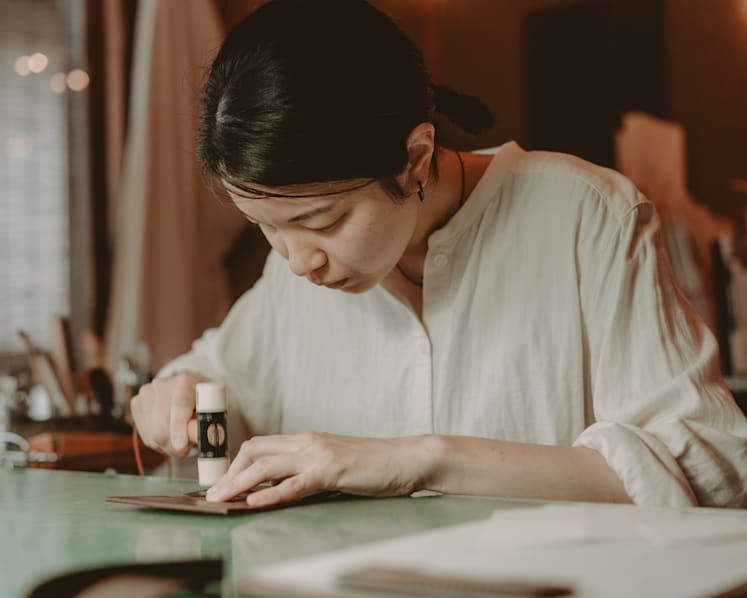
After struggling through Millennia Institute, Chin left in her second year and enrolled at the Nanyang Academy of Fine Arts to study fashion design at her mother’s suggestion. The entrance test involved sewing and drawing.
“I was like, ‘Oh, this is the most fun I’ve ever had,’” she recalled.
She eventually earned her degree and worked across production, retail and tailoring, imagining that she might one day start her own label.
But a 2014 trip to Kyoto to visit her sister sent her in another direction. Chin attended several workshops at a nearby leather studio and was immediately drawn to the unforgiving nature of the material.
“With leather, you can see where you make a mistake, whereas you can probably disguise it in fabrics,” she said. “There’s no cheating. If you want to do it well, then you have to spend the time to master it.”
At the end of the workshops, she asked the Japanese leather artisan, over Google Translate, if she could return to learn more.
“Whenever you’re ready, just come back,” he replied.
It took Chin about two and a half years to save enough money. In the meantime, she learnt Japanese, eventually passing the upper-intermediate N2 proficiency exam.
In 2016, she returned to Kyoto and spent roughly a year apprenticing with the artisan, learning through the daily rhythm of production rather than a formal syllabus.
“There was something new every day,” she said. “As I was helping him to craft something, he would teach me the steps naturally.”
WHEN MAKING BECAME TOO MUCH
Back in Singapore, Chin launched her own leather accessories label, Senkoubou, in 2018, making bags, wallets and other small leather goods. Its name was a play on the Japanese pronunciation of her surname and koubou, meaning “workshop”.
The business grew, but so did the demands of running a one-person craft operation. During the pandemic, Chin took on too many custom jobs and found herself confronting a basic limitation of making everything by hand: Her income depended on how much she could physically produce.
“Your hands don’t move, you don’t get paid,” she said.
Wanting a reset, she enrolled at a reputable shoemaking school in Tokyo, initially to expand her technical skills rather than start a shoe business.
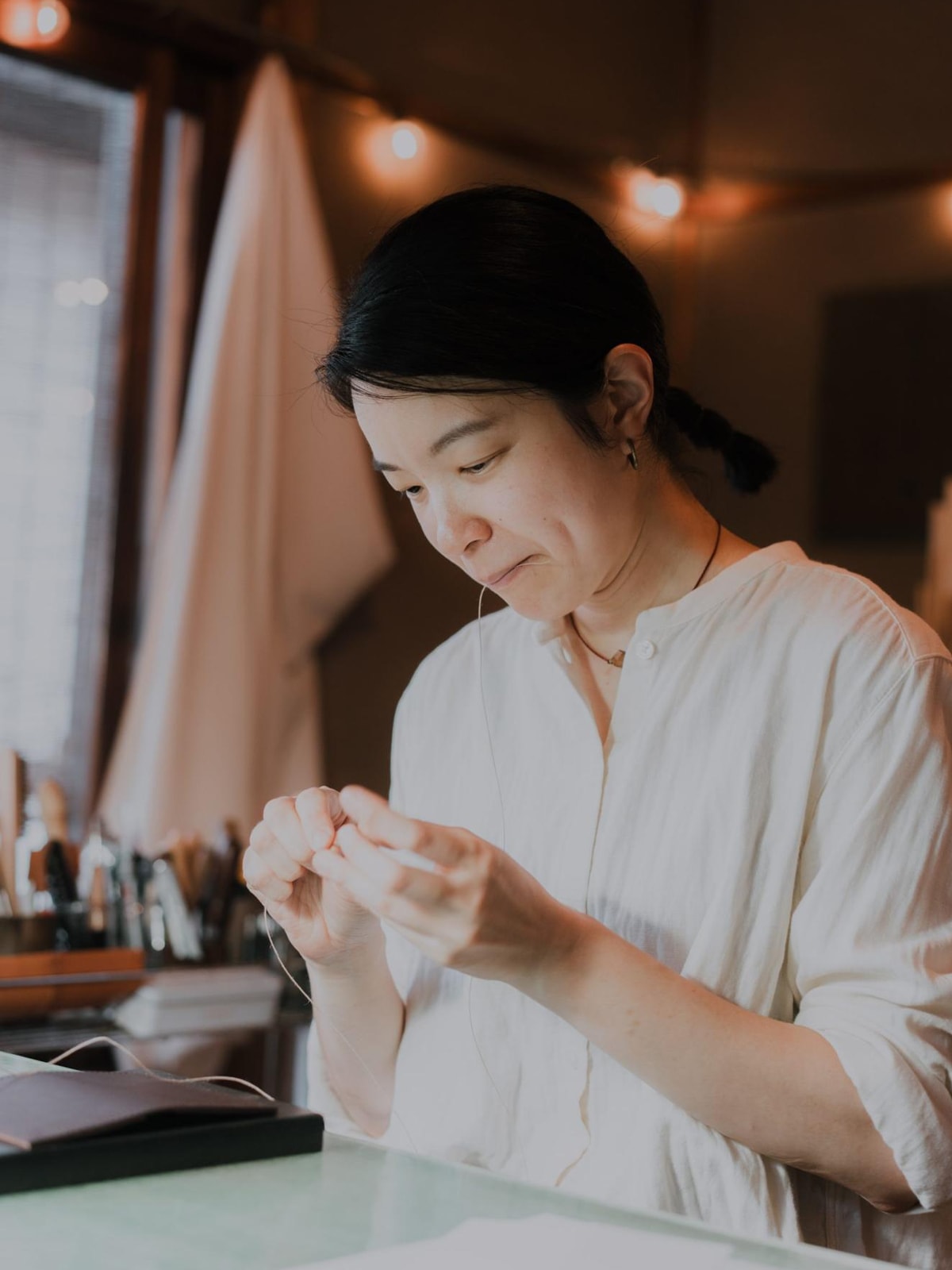
The course required her to make 10 types of classic men’s shoes, including oxfords and monk straps, with each pair taking up to two months.
She loved the rigour of making them. Wearing them was another matter.
“I walked a lot in the shoes I made and my feet would hurt,” she said. “There was a sense of accomplishment when I finished making the shoes, but I realised I didn’t want to wear them.”
Once each pair was finished, she found herself reaching for sneakers instead.
Around the same time, Chin discovered barefoot shoes on Instagram and bought a pair from British brand Vivobarefoot. Chin has hypermobile ankles, and found that being closer to the ground made her feel steadier.
“So I thought: Maybe I could make barefoot shoes using the techniques I’ve already learnt,” she said.
There was another person she had in mind, too.
Her mother has bunions and has long struggled to find comfortable shoes. “Since I was young, when she takes me shopping, it’s really hard for my mum to buy shoes. Everything would be so squished,” Chin said.
“So my first target customer is my mum.”
MOVING TO KYOTO FOR GOOD
By then, Chin had also begun thinking about staying in Japan more permanently.
She already knew its craft ecosystem, and Kyoto offered specialist leather, tools and suppliers, along with something she had missed in Singapore: A community of people equally invested in the minutiae of making things.
“I felt very lonely in Singapore, not really able to discuss the small details of craft,” she said.
But inspiration alone wasn’t enough to justify the move. She needed a business concept that could meet Kyoto’s requirements for a Business Manager visa. Chin put forward her handmade leather barefoot shoe concept, building on the shoemaking skills she had acquired in Tokyo. Once her application was approved, she moved to Kyoto in 2024.
The move also marked her rebrand from Senkoubou to Yanmaei, named after the Chinese bayberry – yangmei – a small, sweet red fruit that grows in bunches.
After building Senkoubou largely on her own, Chin wanted the new business to grow differently: Into a small team where everyone could feel part of creating something wholesome together.
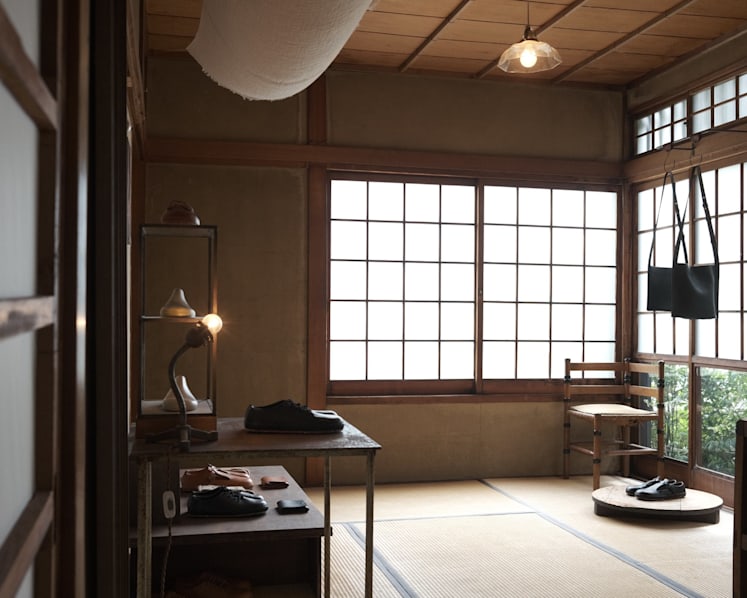
She set up her studio in Jodo-ji, near Ginkaku-ji and the Philosopher’s Path – first in an old house she renovated with friends, before moving to a bigger, brighter space nearby. Her first customer was the owner of a juice bar in the neighbourhood.
Two years into her new life in Kyoto, Chin says things are beginning to fall into place.
“Business has been improving month by month,” she said. “I feel like I have a community I can depend on, and I’ve grown to be more confident.”
THE HARDEST PART ISN’T THE SHOE
For all the painstaking work involved in making a shoe by hand, Chin says one of her biggest challenges comes before the shoe itself: Figuring out what shape it should begin with.
At the heart of every shoe is the last, the three-dimensional mould around which it is built. Conventional lasts follow established ideas of how a shoe should look and fit. A barefoot last, by contrast, has to accommodate a wider toe box, flatter profile and the foot’s natural movement.
That has left Chin navigating between two approaches to shoemaking.
Many of the last-makers she approached are deeply skilled in traditional shoemaking but have little experience working outside those conventions. She has also found that the craft is often approached from a design perspective – how a shoe should look, how a last should be proportioned – while her starting point is nearly the opposite.
“My purpose is comfort first, then design,” she said.
It has been a slow process of finding open-minded collaborators and working things out one step at a time. Chin has learnt to make lasts herself while continuing to search for specialised guidance.
“It’s quite stressful to figure this out by myself,” she said. “I don’t want to make shoes that end up causing people more problems.”
For her, a finished shoe has to pass two tests: “It doesn’t hurt when I wear it for the entire week, and aesthetically, it’s something I want to look at every day.”
LEARNING TO LET GO
Today, shoes are Yanmaei’s main focus, while bags and wallets are produced in smaller quantities.
Its current shoe collection features three barefoot styles, including T-strap and lace-up variations, priced from ¥69,800 (around S$575). Made to order in Chin’s Kyoto workshop, they use vegetable-tanned leather sourced from Italy, Japan and Mexico, and feature wide toe boxes, zero-drop construction and thin, flexible soles.
Production can take up to six months, depending on the season. The shoes are still made mostly by Chin, with help from a former shoemaking schoolmate who recently moved to Kyoto and joined Yanmaei part-time.
It remains a small operation. Yanmaei produces roughly 10 to 20 pairs every two to three months, and most customers are Japanese. Many visit the studio first to try on samples, given the importance of fit.
But Chin is beginning to reconsider an assumption that shaped her first business: That being a craftsperson means doing everything herself.
She wants to introduce more styles, grow her team and outsource some processes – partly because the economics of staying in Japan demand it.
“I used to have that mindset,” she said. “But because I’m not in Singapore, I have to profit to be able to renew my visa. I’m like, okay, I need to put on my business hat. I need to share the workload.”
It is a lesson she has already learnt once. With Senkoubou, the limits of the business were ultimately the limits of her own two hands. With Yanmaei, she is trying to build something that can grow beyond them.
Whether Kyoto will be a permanent base, she doesn’t yet know. For now, Chin is giving herself roughly five years to see where the business takes her.
What she does know is that she wants to keep doing the thing that has followed her from her parents’ signboard workshop in Singapore to a leather studio in Kyoto, and now to a shoemaking bench of her own.
KioskNews shows a cleaned-up reading view extracted from the publisher’s page — the original always lives on their site, not ours.