India-born US citizen drives research into light at sanctioned Chinese school
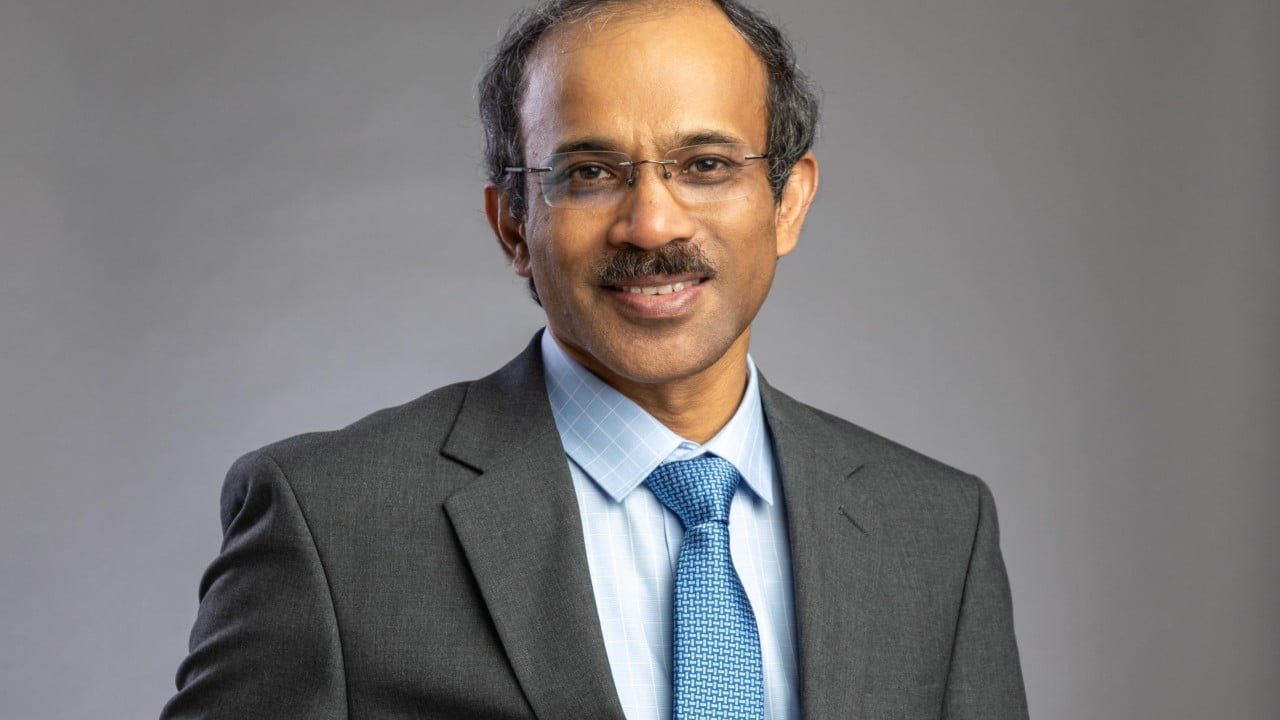
“Science has no borders,” Arup Neogi, an India-born scientist who works at a US-sanctioned university, told Chinese state media.
Neogi’s speciality is photonics, the study of generating, controlling and detecting light. At the University of Electronic Science and Technology of China (UESTC) in the southwestern city of Chengdu, he leads a team exploring the interconnection between light and sound.
This university has one of China’s top electronics and communication programmes and has been on the US “Entity List” since 2012. Inclusion on the list subjected the university to sanctions on academic exchanges and technology procurement.
The university was added to the list because it was accused of acting as a proxy for the Chinese Academy of Engineering Physics, which had previously been sanctioned over its role in China’s nuclear programme.
Neogi was born and raised in India, obtained his first doctorate in his home country and his second in Japan before working in the US for around two decades and becoming an American citizen. In 2014, he began to collaborate with UESTC, and in 2022 joined the university full-time.
02:39
China’s self-powered neural device helps stroke survivors walk naturally
“As a foreigner working in China, I really like this state of affairs because I can gather different thoughts and perspectives together,” Neogi said in an interview published in Chinese by state-run Science and Technology Daily on September 17.
“Especially in today’s era when global challenges such as climate change are intensifying, we need this kind of cooperation even more.”
He leads a team focused on creating photonic chips and nanophotonics.
“One growing area the group is interested in is manipulating sound using light for deep-sea communications and ultrasound imaging,” he was quoted as saying.
In 2024, he received the China Government Friendship Award, the highest honour for foreign experts who have made significant contributions to China’s development.
He won the award for developing an acoustic diode for underwater sound wave control at UESTC.
05:22
No gym needed? Scientists in China develop self-exercising muscle grafts
After the award ceremony, Neogi was invited to attend a reception celebrating the 75th anniversary of the founding of the People’s Republic of China, at which Chinese President Xi Jinping delivered a speech.
In addition to his scientific work, he helped cultivate China’s optical expertise.
In the past few years, he helped UESTC enrol several overseas researchers, according to the university. He also helped many Chinese students apply to study abroad, young Chinese teachers apply to international programmes, and Chinese teachers attend international conferences.
KioskNews shows a cleaned-up reading view extracted from the publisher’s page — the original always lives on their site, not ours.