The 20 Most Universally Acclaimed Books of All Time, Ranked

Jeremy has more than 2800 published articles on Collider to his name, and has been writing for the site since February 2022. He's an omnivore when it comes to his movie-watching diet, so will gladly watch and write about almost anything, from old Godzilla films to gangster flicks to samurai movies to classic musicals to the French New Wave to the MCU... well, maybe not the Disney+ shows.
His favorite directors include Martin Scorsese, Sergio Leone, Akira Kurosawa, Quentin Tarantino, Werner Herzog, John Woo, Bob Fosse, Fritz Lang, Guillermo del Toro, and Yoji Yamada. He's also very proud of the fact that he's seen every single Nicolas Cage movie released before 2022, even though doing so often felt like a tremendous waste of time. He's plagued by the question of whether or not The Room is genuinely terrible or some kind of accidental masterpiece, and has been for more than 12 years (and a similar number of viewings).
When he's not writing lists - and the occasional feature article - for Collider, he also likes to upload film reviews to his Letterboxd profile (username: Jeremy Urquhart) and Instagram account.
He has achieved his 2025 goal of reading all 13,467 novels written by Stephen King, and plans to spend the next year or two getting through the author's 82,756 short stories and 105,433 novellas.
Sign in to your Collider account
With books, you’ve got a vast history to go over, more so than with other mediums, and that can lead to more controversy when you try to single out what some of the greatest of all time are. So, there is some caution needed for an undertaking like this, and some need to explain what “most universally acclaimed” means.
Older books are at an advantage, because they’ve had more time to build in acclaim, or if they weren’t loved upon release, then they’ve also had time to find acclaim. If something’s older, you can see its influence, and if something holds up many years later, then it’s also more worthy of acclaim. If books have won awards, that helps, and if books are often taught in school or university courses, that can also be a factor. There are other factors involved in picking the most universally acclaimed books of all time, but please rest assured there was at least some method to the following madness.
20 'Little Women' (1868–1869)

A coming-of-age novel, for the most part, but also something of a family drama, since Little Women does focus on a family, but mostly on four sisters. They're all growing up and everything, in the 1860s, and so there you’ve got all the coming-of-age stuff, obviously. Good, bad, and other things happen, and all in ways that have clearly struck a chord for a great many people for more than a century and a half, at this point.
With particularly old books, it can be a little harder to assess the extent to which something was critically acclaimed in its time, but if there is even some evidence of it being well-received back in the day, and then it continues to get read and adapted/reimagined time and again, that’s probably a sign it’s universally loved. So, on those notes, it feels right to put Little Women here for sure.
19 'The Great Gatsby' (1925)
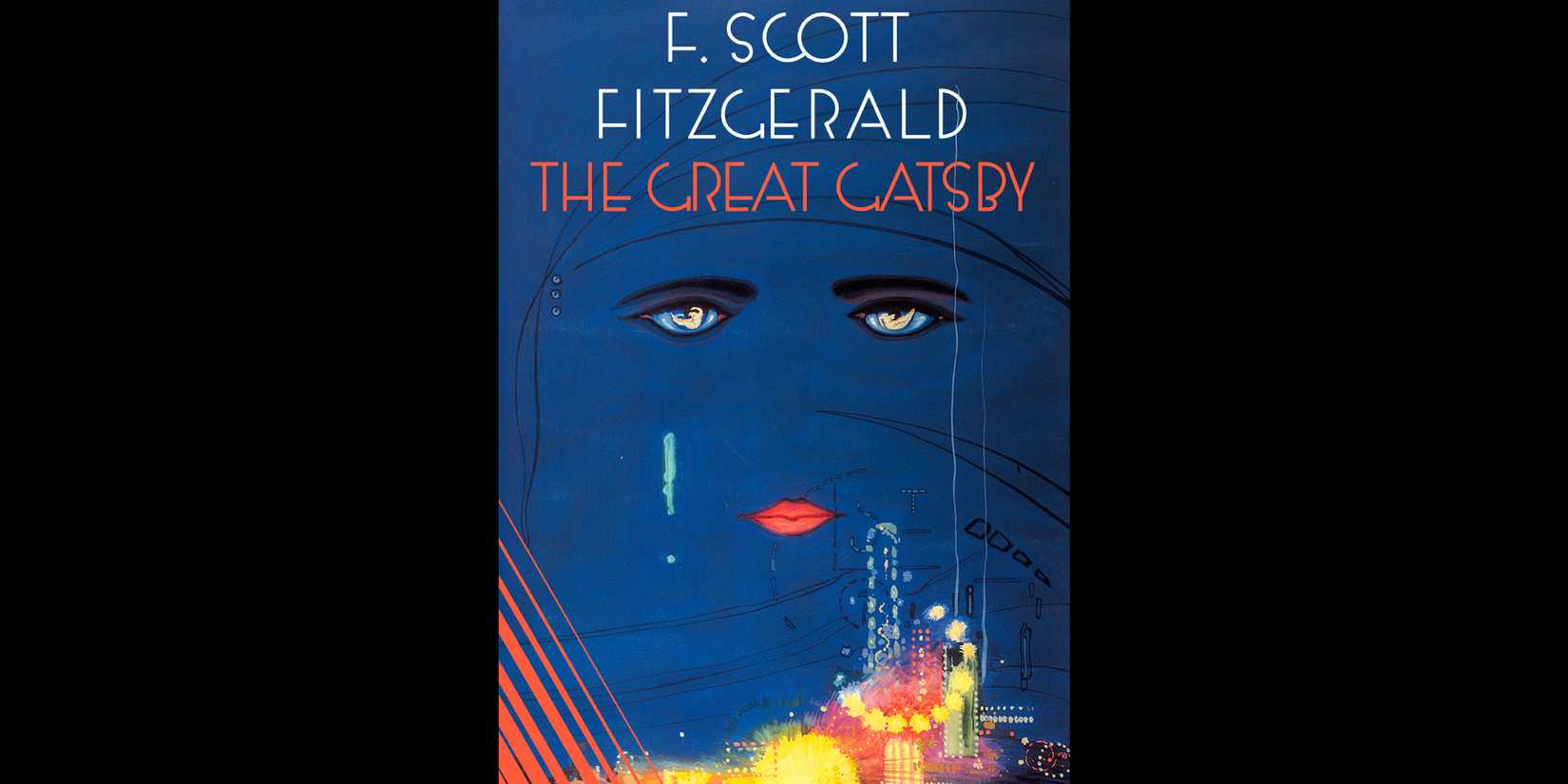
The Great Gatsby is another older novel with the sort of reputation that makes it an obligatory pick, pretty much, for present purposes. It’s the definite novel about the 1920s in America, written and published during the decade in question, and though this might sound like a bit of a weird comparison, it does for that decade what Scarface did for the 1980s: being of the decade, but then in hindsight, kind of what people picture when they think about said decade.
Also, for what it’s worth, both that 1983 movie and The Great Gatsby are in-your-face tragedies, and not all that hard to interpret. One is read in high school quite often, as a result, and the other… well, probably isn't appropriate for high school viewing, even though teenagers typically love it. Anyway, The Great Gatsby. It is a classic, and one of a bunch of books here that are being highlighted partly because they're Great American Novel candidates.
18 'The Catcher in the Rye' (1951)

Things will move away from American authors in a bit, but for now, here’s another Great American Novel contender: The Catcher in the Rye. This one came out in the middle of the 20th century and very much explored issues specifically of that time, but then The Catcher in the Rye kept enduring, and it turned out much of what it had to say about alienation, internal struggles, and youthful rebellion kept feeling relevant.
There are enough worms in the small can that's already been opened, but if you want to talk about the negative effects (or influences) of The Catcher in the Rye, that’s indeed another can, and a bigger one with a lot more worms. It’s got some notoriety to it, but it is also a great book regardless, and if you want to argue its merits are reduced because of the bad influence it’s had, then sure, you can make that argument. You'll have a lot of worms all over you while you're doing that, since you'll have to open that massive can of them, but knock yourself out.
17 'Dune' (1965)

While science fiction and fantasy books sometimes get looked down upon by particularly snobby critics, you'll be hard-pressed to find too many that genuinely dislike Dune. Specifically, the first one, because after Dune (1965), things get a little stranger and more experimental, not to mention messier. Then again, not too messy, or not messy in terrible ways, if you're just looking at the five sequels Frank Herbert wrote (after that, it’s kind of the Wild West quality-wise).
It’s really classic, essential stuff, and a genuine must-read of the sci-fi genre, even being worth a shot if you don’t consider yourself someone who gravitates toward science fiction.
As for Dune (1965), it’s about a conflict over a valuable planet, and a young man who starts to believe he might be some kind of messiah, leading him to become a military leader who seeks revenge for the ways his once-powerful house/family was betrayed. It’s really classic, essential stuff, and a genuine must-read of the sci-fi genre, even being worth a shot if you don’t consider yourself someone who gravitates toward science fiction super often.
16 'Beloved' (1987)

Beloved is beloved, to put it one way. It’s relatively recent in the overall scheme of things, and especially so compared to most other books here, but the reputation it’s built up in that time is immense, with The New York Times doing a Sight and Sound-style survey of writers and critics in 2006, asking them what they thought the best American book published in the preceding quarter-century was, and Toni Morrison’s Beloved won.
Calling it a horror novel might not be entirely accurate, but Beloved concerns a possible haunting of a house, and then a lot more that’s complicated and thematically dense beyond that (and related to it). It takes place after the American Civil War and deals with how the memory of it and the trauma from the enslavement that was part of life before the war still linger. Beloved does a lot, and is certainly one of the most important American books of the last few decades.
15 'Infinite Jest' (1996)

Perhaps the final boss of postmodernism, even if one other postmodernist book released a year after is going to be mentioned further down, here’s Infinite Jest. It’s worthy of inclusion because of its overwhelming ambition and head-spinning structure, because there are several threads here, and everything feels scattershot, with non-chronological storytelling (if there even is a story at all), and so many endnotes. Enough endnotes to make up an entire novel’s worth of text, honestly.
There is a lot here about addiction, where society might be headed, entertainment, consumerism, and all sorts of other big ideas, but they're thankfully tackled in interesting ways. Very little of Infinite Jest feels overly familiar or anywhere close to clichéd, and it’s the kind of thing where if you read it and only really “get” 10 to 20% of it on that first reading, it’ll still be an immensely rewarding experience.
14 'Moby-Dick' (1851)

While not as long as Infinite Jest, nor as lengthy as a few other soon-to-be-mentioned books, Moby-Dick is still very much an epic, though one where, it should be acknowledged, the acclaim for it took a while to come about. Moby-Dick was ahead of its time, in some regards, or the kind of thing people just weren’t ready for back in the 19th century, for whatever reason.
You'll still potentially find some detractors, owing to the novel’s length and the fact that it’s so focused on the topic of revenge that some might think it’s all a bit repetitive, but still, it’s Moby-Dick. It has that kind of untouchable reputation and prestige nowadays, or more accurately, it’s been held in that kind of regard for more than a century now (just not too much longer than a century).
13 'Watchmen' (1986–1987)

Watchmen is a graphic novel, sure, but the word novel is still in there, and this is a particularly great one with genuine literary merit, so it feels like fair game to include. It’s recognized for elevating the whole art form of the graphic novel, and deconstructing superhero comics in a genuinely groundbreaking way, all the while still being engaging with its very high-stakes story.
There have been plenty of other darker takes on the superhero genre since, whether it be in other graphic novels or comic books, or in other mediums, like film and TV, but all of them are inevitably going to be compared to Watchmen, and even the good ones are going to struggle to hold up to it. This is obviously excellent stuff, and to sort of reiterate something that was said about Dune and its place within the sci-fi genre, Watchmen is the kind of thing great enough that, even if you don’t read graphic novels, you should probably make an exception for it.
12 'Frankenstein' (1818)

The best way to experience Frankenstein, by far, is reading it, or listening to it is almost as good. That’s worth stressing because there are so many adaptations of Frankenstein, and some of them are quite good for sure, but none successfully capture everything great found in Mary Shelley’s original text. There really is so much going on at every stage of this book.
Lots of characters are balanced while an assortment of massive/broad themes are all explored, and then Frankenstein still finds room to lay the groundwork for so much literary science fiction and horror to come. Its influence on a great deal that came after it is the thing that jumps out most of all, when you're looking for things to praise here, but importantly, it’s also worth appreciating how this still works as a great story, and one that’s just as interesting and eerie now as one imagines it must've been more than 200 years ago.
11 'The Grapes of Wrath' (1939)

Doing for the 1930s what The Great Gatsby did for the 1920s, The Grapes of Wrath is the definitive novel about the Great Depression. It’s about a family who travel a great distance towards California, hoping to find some kind of work and stability there, but things aren’t that easy in California either, it turns out, and that’s to say nothing of all the difficulties involved with the travel itself.
It’s mostly depressing, but there are moments of humanity throughout to balance things out to some extent, and John Steinbeck’s brutal honesty is kind of the point, and he tackles the whole thing without it ever feeling like misery for the sake of misery. Truly an author who knew what he was doing (big old understatement, really, since he has some other books that are among the most acclaimed of all time, but it’s probably The Grapes of Wrath that stands the tallest of the bunch).
KioskNews shows a cleaned-up reading view extracted from the publisher’s page — the original always lives on their site, not ours.