Central Elections Committee opens disqualification hearings for Balad head Sami Abu Shehadeh

The proceedings opened with a separate request to disqualify MK Ofer Cassif. The committee was also scheduled to consider the case against Abu Shehadeh on Wednesday.
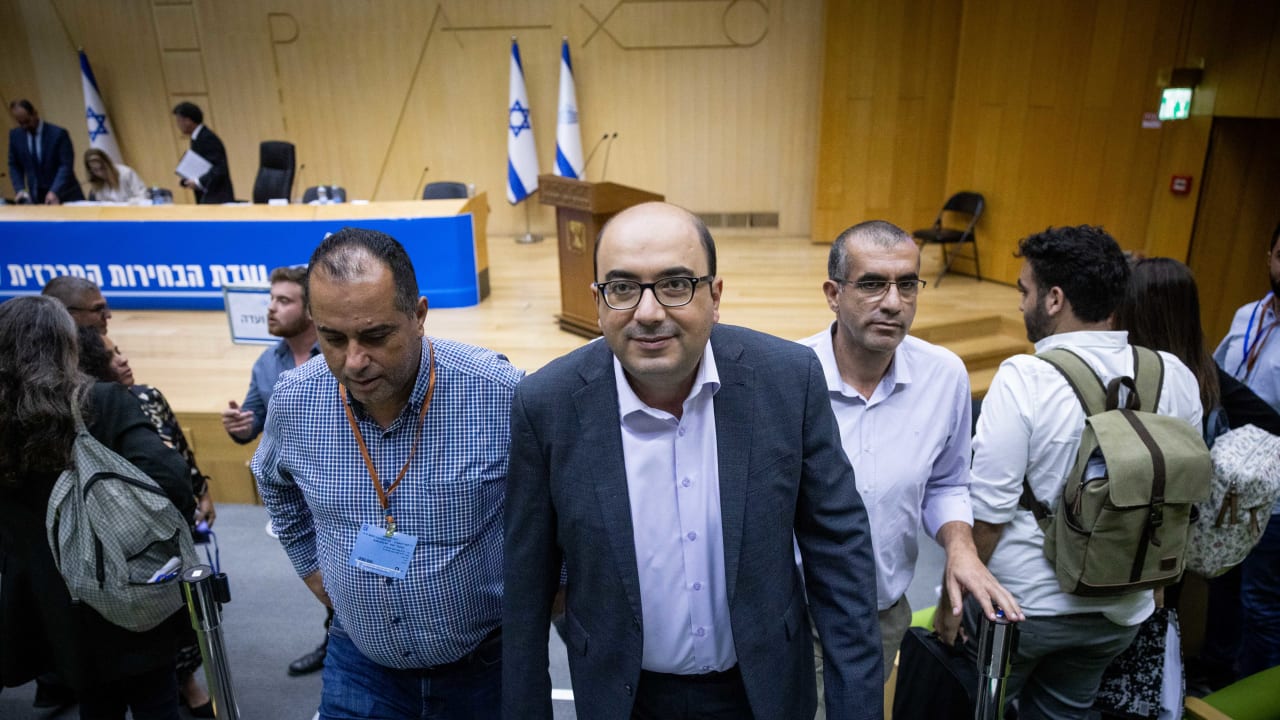
The Central Elections Committee opened two days of disqualification hearings on Wednesday, with a request to bar former MK Sami Abu Shehadeh (Balad) over his writings following the October 7 massacre expected to form the central legal dispute of the proceedings.
The proceedings opened with a separate request to disqualify MK Ofer Cassif. The committee was also scheduled to consider the case against Shehadeh on Wednesday.
The Shehadeh case has been set apart from the other challenges by an unusual position from Attorney-General Gali Baharav-Miara and State Attorney Amit Aisman. They said the evidence appeared to show that he had expressed support for a terrorist organization’s armed struggle against Israel, but stopped short of expressly recommending his disqualification.
The request, filed by Otzma Yehudit, centers principally on an Arabic-language article Shehadeh published on October 8, 2023, one day after the Hamas-led attack.
In the article, Shehadeh described the attack as an “important historic event” in military, political, and strategic terms. He wrote that if “small and besieged Gaza” had succeeded in surprising Israel on such a scale, others could do so more effectively and easily.

Otzma Yehudit argues that the article praised the attack and encouraged others to learn from it. Its request seeks to bar Shehadeh principally on the grounds that he supported armed struggle against Israel by a terrorist organization.
Shehadeh denies supporting political violence
Shehadeh denies supporting the massacre or political violence. He said the article was intended to analyze Israel’s intelligence failure and warn against continuing the war.
In his written response, he acknowledged that the article’s failure to address the crimes committed on October 7 was “jarring” and wrong. He said the full scale of the atrocities was not yet known to him when it was published and that he would have condemned them had it been clear.
Baharav-Miara and Aisman said his written explanation did not sufficiently dispel the conclusion that the article expressed support for armed struggle “at a time that could not have been more grave.”
They nevertheless noted that the article did not fit the usual pattern of evidence underlying previous disqualifications, which have generally involved a broad record of systematic conduct over time. They called on committee members to consider the request seriously under the legal standards and in light of Shehadeh’s arguments during the hearing.
Basic Law barring candidates subject to Supreme Court interpretation
Under Basic Law: The Knesset, a candidate or list may be barred for rejecting Israel as a Jewish and democratic state, inciting racism, or supporting armed struggle against Israel by an enemy state or terrorist organization.
The Supreme Court has interpreted those grounds narrowly because disqualification also denies voters the ability to choose the candidate. The prohibited position must be central to the candidate’s political activity and supported by clear, convincing, and unequivocal evidence.
Shehadeh was permitted to participate remotely after requesting that the hearing be postponed because he had been hospitalized following an injury. Committee chairman and Deputy Supreme Court President Noam Sohlberg rejected the postponement request, citing the compressed election timetable.
Committee members will vote after hearing the arguments. Any decision to disqualify Shehadeh would require Supreme Court approval before taking effect. A decision allowing him to run could also be appealed to the court.
KioskNews shows a cleaned-up reading view extracted from the publisher’s page — the original always lives on their site, not ours.