Panda diplomacy: all the countries currently hosting China’s beloved ambassadors

Two giant pandas arrived in the US following Chinese President Xi Jinping’s visit to Washington, continuing a decades-old tradition in which the beloved fuzzy ambassadors have become symbols of China’s ties with countries around the world.
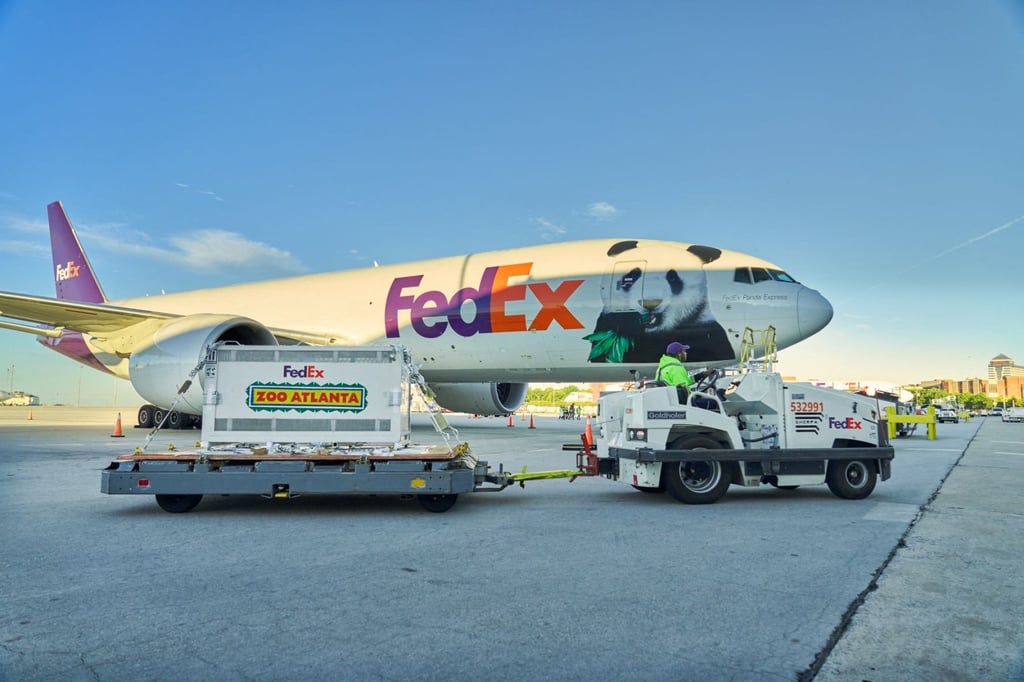
Zoo Atlanta announced the arrival of giant pandas Ping Ping and Fu Shuang on Sunday, saying it was “overjoyed” to welcome the pair after the zoo’s previous 25-year partnership with China ended in 2024.
Xi said during his US visit that the pandas would be sent as an “envoy of friendship” between the Chinese and American people.
New giant pandas from China arrive in the US
What is panda diplomacy, how does it reflect bilateral ties?
For decades, China has used its unique giant pandas as symbols of friendship and goodwill in its relations with other countries, in a practice known as panda diplomacy. The exchanges have often been linked to diplomatic initiatives and major trade deals.
It gained international attention in the 1970s when China sent pandas to countries including the US and Japan following major diplomatic developments, including the establishment of diplomatic relations with Japan in 1972.
Cooperation has also sometimes been suspended, or loan deals left unrenewed, with no new pandas for countries when relations have soured.
Japan is currently without any giant pandas. Twins Xiao Xiao and Lei Lei returned to China in January against a backdrop of strained Beijing-Tokyo ties following Japanese Prime Minister Sanae Takaichi’s remarks about Taiwan.
02:20
Panda fans in Japan jostle for last glimpse of China-bound twins
In November, Takaichi told the Japanese parliament that a Taiwan contingency could trigger the deployment of her country’s defence forces.
Beijing sees Taiwan as part of China to be reunited by force if necessary. Most countries, including the US and Japan, do not recognise Taiwan as an independent state, but Washington is opposed to any attempt to take the self-governed island by force and is committed to supplying it with weapons.
Where are China’s pandas?
Following the arrival of Ping Ping and Fu Shuang in the US, China has 40 giant pandas living overseas in 15 countries, according to Chinese official figures.
South Korea has hosted giant pandas since 2016, when Ai Bao and Le Bao arrived under a joint conservation programme following Xi’s 2014 visit to Seoul that helped deepen bilateral ties.
Singapore, Malaysia and Indonesia have also hosted giant pandas under conservation partnerships, while Adelaide Zoo in Australia remains the only panda facility in Oceania.
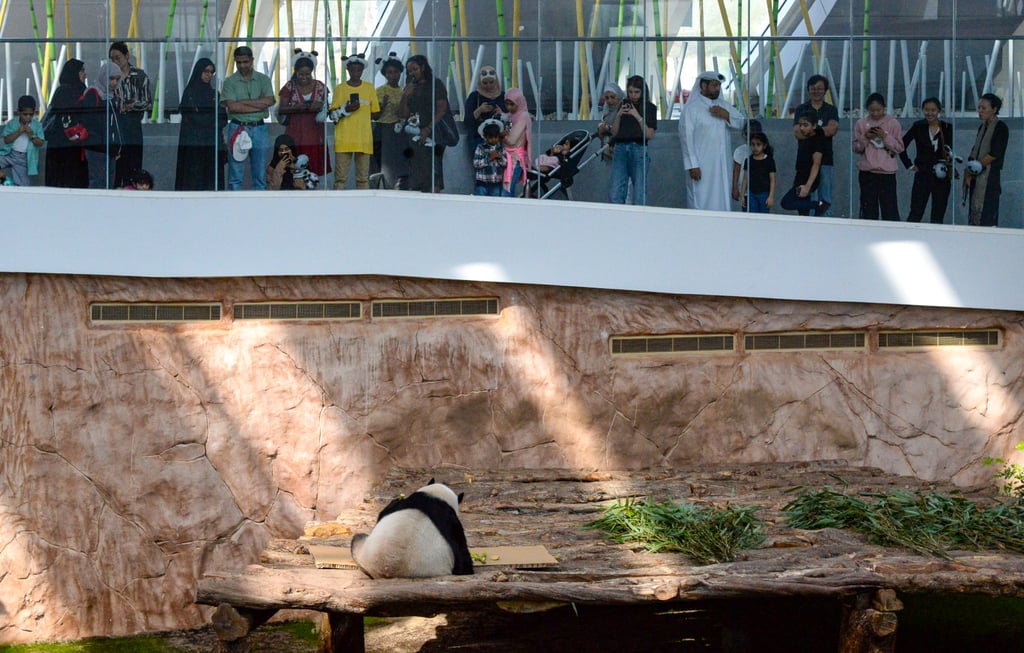
Qatar became the first country in the Middle East to receive giant pandas when Si Hai and Jing Jing arrived in 2022, shortly before the Fifa World Cup, as China-Qatar ties expanded in areas including trade and cultural exchanges.
SCMP Plus is a new premium news platform that gives you an
all-inclusive edge to stay ahead on China news.
To access our exclusive content you’ll need to subscribe.
Already a subscriber?
LOG IN
In Europe, pandas have been part of long-running conservation partnerships with countries including France, Germany, Austria, Spain, the Netherlands and Belgium.
France received pandas in 2012, while Belgium’s pair arrived in 2014 during Xi’s state visit, when he and King Philippe opened their enclosure.
Russia received its first giant pandas in 2019, when Ru Yi and Ding Ding arrived for a joint conservation programme marking the 70th anniversary of China-Russia diplomatic relations.
Xi and his Russian counterpart Vladimir Putin attended the opening of the panda enclosure during the Chinese leader’s visit to Moscow.
In the US, pandas became a symbol of China-US engagement in 1972, when Beijing sent Ling Ling and Hsing Hsing following then-president Richard Nixon’s historic visit to China and the two countries moved towards formal diplomatic relations.
The pair later died in the US, with China ending its practice of gifting pandas and shifting to loans to better protect the endangered species. Since then, successive generations of pandas have lived in US zoos under such agreements.
Several US zoos returned pandas to China in 2023 and 2024 as agreements expired during a period of strained bilateral ties over trade, technology and geopolitical disputes.
The US currently has six giant pandas across three zoos – more than any other country outside China.
Xin Xin, born at Mexico City’s Chapultepec Zoo in 1990, is the world’s only giant panda that is not owned by China. She is descended from a pair gifted to Mexico in 1975, before Beijing changed its global ownership rules and turned them into loans.
KioskNews shows a cleaned-up reading view extracted from the publisher’s page — the original always lives on their site, not ours.