How China’s regional leadership changes offer clues to the future of the Communist Party
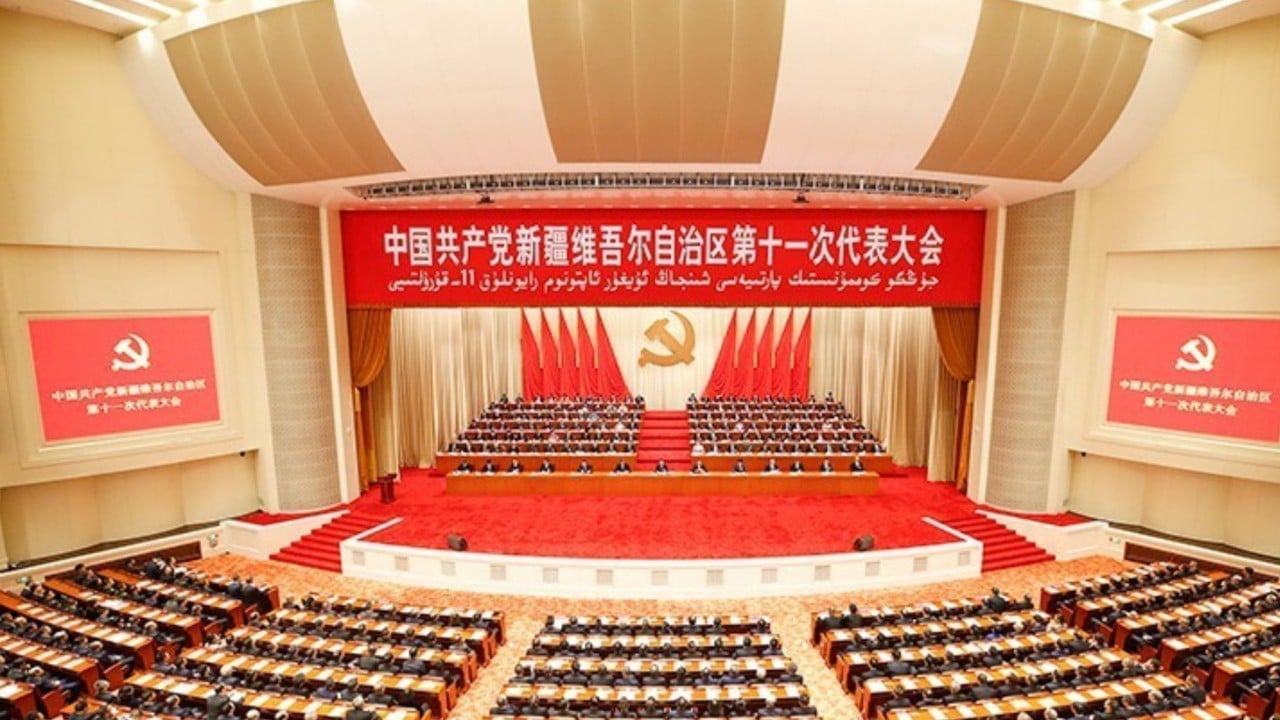
China’s five-year leadership cycle is getting under way at a provincial level, with new teams being installed in a process that offers important clues to the future of the Communist Party at a national level.
Last week, four provinces – Anhui, Henan, Shanxi and Xinjiang – wrapped up their respective party congresses and appointed new standing committees for the next five years.
The plenum will also offer an opportunity to prepare for a major overhaul of the national leadership, which will take place at the party congress next year and will be key to the country’s goals of becoming an economic and military superpower by the middle of the century.
All of China’s provinces will hold their own party congresses in the run-up to the main event. As well as setting out their development plans for the next five years, these events will also determine which officials will remain in office, retire or be promoted.
The process is expected to be completed by June, with 14 provinces holding their congresses by the end of the year.
New party chiefs and governors have already been appointed in 10 of these provinces.
Next year, the remaining local congresses will include the four municipalities under the direct jurisdiction of the central government – Beijing, Shanghai, Tianjin and Chongqing – whose party secretaries generally also serve as members of the Politburo.
These events will provide important clues about personnel arrangements for the national party congress, including the selection of full and alternate members of the 21st Central Committee.
The provincial party chiefs and governors appointed in the coming months are almost certain to secure full membership of the committee. The third-ranking official in each province is also likely to secure alternate membership, with many taking up their seats on the body for the first time.
For example, in Anhui, one of the provinces that has already installed a new leadership team, Industry Minister Li Lecheng, who was already a member of the Central Committee, was named as the new party secretary last month.
Xi projects confidence for China’s Communist Party at 105th anniversary event
Wang Dongwei, born in 1969, was installed as the acting governor and is set to join the committee next year, while the province’s third-ranked official, Shan Xiangqian, born in 1972, is likely to become an alternate member.
Xinjiang Uygur autonomous region also held its party congress recently, with Chen Xiaojiang remaining as party chief and Erkin Tuniyaz staying on as chairman of the regional government.
Both Chen and Tuniyaz are already members of the Central Committee, but convention suggests that the region’s party secretary will also be given a seat on the Politburo.
The region’s No 3, He Zhongyou, deputy secretary of the regional party committee, born in 1965, is likely to become an alternate member of the Central Committee.
As provincial party standing committees also face substantial overhauls, one source familiar with personnel work within the party said an important age threshold was in play.
The source said the customary age threshold for the top two provincial leaders was 63, while the age limit for entering or remaining on a provincial party standing committee was 58 and officials would find it hard to stay in office once they had passed these cut-offs.
For example, Anhui’s former party chief, Liang Yanshun, 64, and governor Wang Qingxian, 63, stepped down last month after reaching retirement age.
However, some officials have been able to stay in office despite exceeding the customary age threshold, a possible sign of their continued importance to the party.
Shi Taifeng, then 65, remained as party secretary of Inner Mongolia following its regional party congress in December 2021. He joined the Politburo the following year and although he has since handed over the reins at a regional level, he remains a member of the key decision-making body.
KioskNews shows a cleaned-up reading view extracted from the publisher’s page — the original always lives on their site, not ours.