Monsoon departs from Delhi in earliest withdrawal since 2002
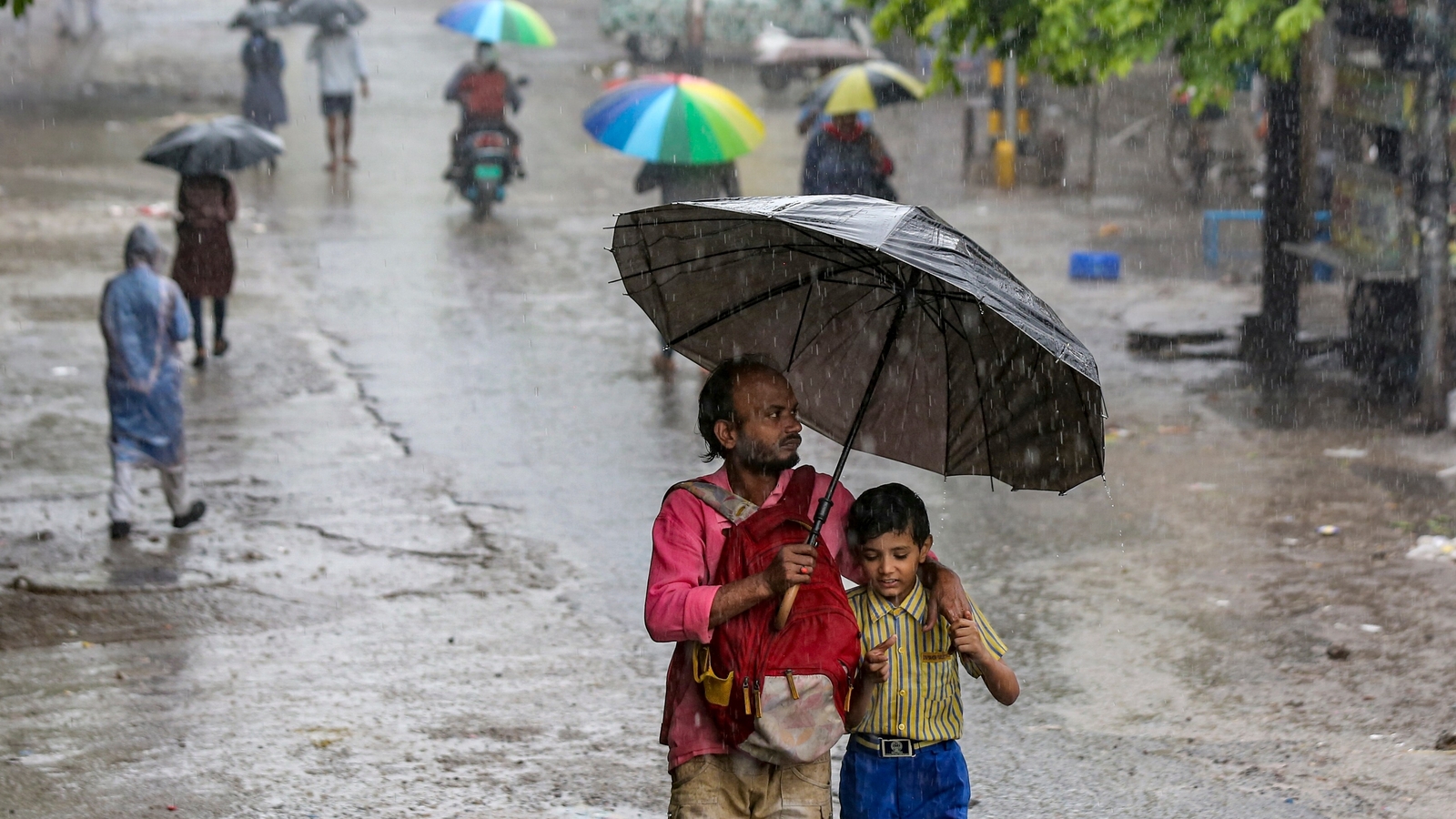
The monsoon has also withdrawn from most parts of Punjab, Haryana and Rajasthan, along with parts of Uttar Pradesh and Gujarat.

 Prefer HTon Google

The Southwest Monsoon has withdrawn from Delhi on Wednesday, September 23, the India Meteorological Department (IMD) says. This is the earliest withdrawal of the monsoon from Delhi since 2002, when it retreated on September 20.
The monsoon has also withdrawn from most parts of Punjab, Haryana and Rajasthan, along with parts of Uttar Pradesh and Gujarat.
The IMD said the monsoon’s withdrawal line now passes through Gurdaspur, Chandigarh, Muzaffarnagar, Aligarh, Dholpur, Udaipur, Deesa and Naliya, among other places.
Now, drier weather is expected to gradually set in across Delhi and other parts of northwestern India as the monsoon moves further away.
ALSO READ | Delhi’s AQI begins to worsen as winter pollution cycle nears
What does monsoon withdrawal mean?
Monsoon withdrawal does not mean that rain immediately stops everywhere. The IMD declares withdrawal after looking at several weather conditions, including a sustained break in rainfall, a drop in moisture levels and the development of an anticyclone in the lower atmosphere.
For further withdrawal, the IMD also looks for a continued spell of dry weather and a clear, connected pattern of retreat.
The monsoon normally begins to retreat from northwestern India around September, before gradually moving south and east.
According to IMD's revised normal dates, withdrawal from northwest India begins around September 17, while the monsoon generally retreats from most of the country by around October 15, with the southern peninsula taking longer.
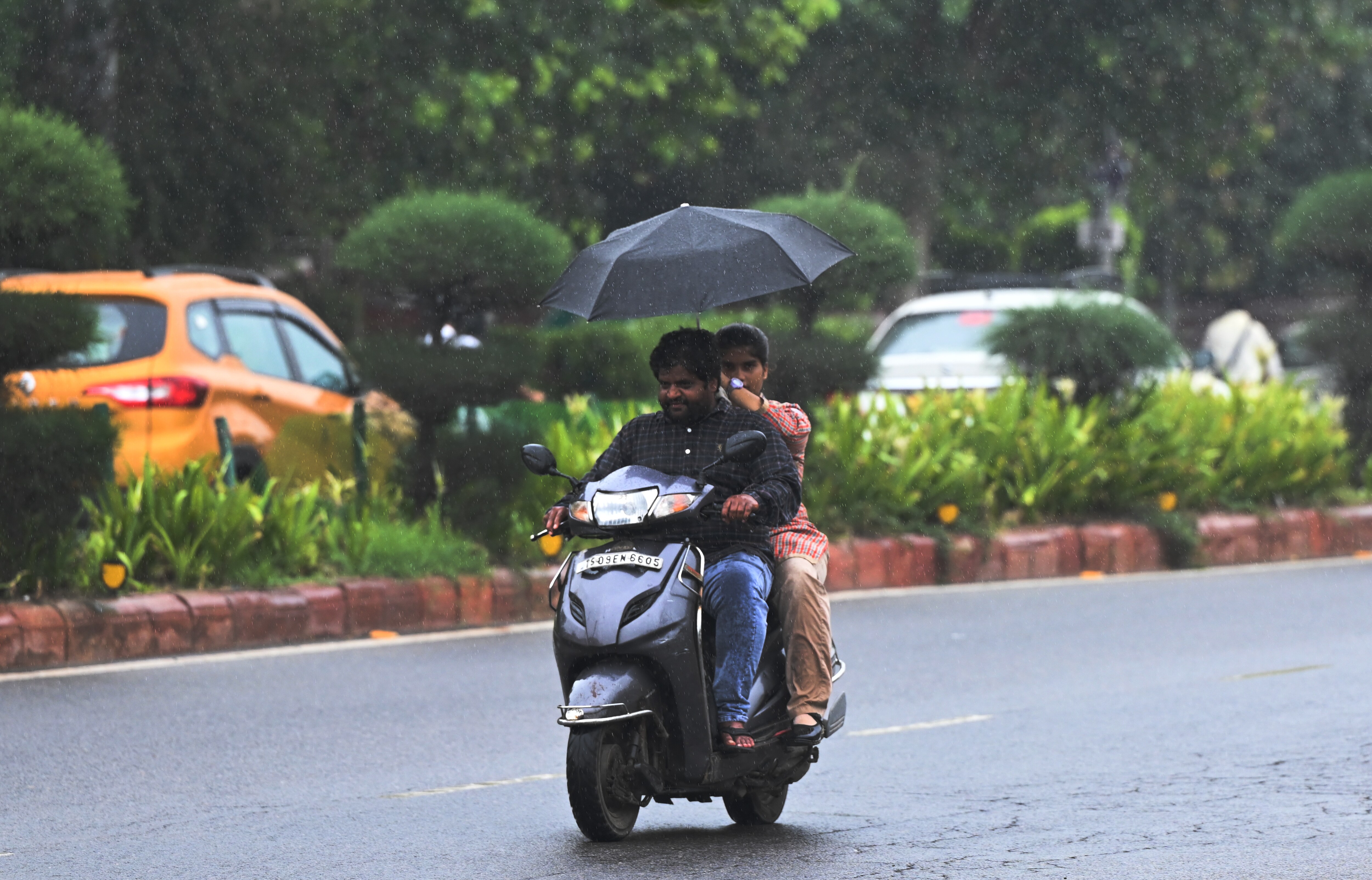
ALSO READ | Delhi sees heaviest 24-hr rain in two years; residents cite waterlogging strain
What happens after the monsoon retreats?
As the monsoon moves away, rainfall generally decreases and weather becomes drier over the areas from which it has withdrawn.
Isolated rain can still occur because local weather systems can continue to produce showers. For Delhi and adjoining areas, the IMD's September 23 forecast showed no weather warning for September 23-29.
Delhi has seen varying withdrawal dates
The monsoon's withdrawal date from Delhi has varied considerably over the years.
IMD records show it retreated on September 20 in 2002, while in several years it remained over the capital until late September or even October.
In 2013, for example, withdrawal was recorded only on October 17, while it was October 8 in 2016 and October 2 in 2024.
ALSO READ | Delhi saw excess rain this month due to favourable weather system: Experts
Delhi pollution begins to rise
The withdrawal of the monsoon comes as Delhi’s air quality has started to worsen.
The city’s 24-hour average AQI rose from 118 on September 19 to 160 on September 20, 169 on September 21 and 178 on September 22, according to the Delhi Pollution Control Committee.
On Wednesday morning, the AQI was recorded at 151.
Delhi's air pollution typically becomes a bigger concern from October onwards, after Diwali, with conditions often worsening in November and December.

Follow the latest breaking news, major developments and agenda-setting stories from India and around the world with the newsdesk at Hindustan Times. Operating round the clock, the desk brings together experienced editors, reporters and correspondents to deliver fast, accurate and contextual reporting across subjects that influence public policy, governance, business, society and international affairs. The HT News Desk covers politics, elections, government policies, the economy, business and markets, science and technology, the environment, law and order, infrastructure, education, climate issues and geopolitics, while closely tracking developments across states, institutions and global capitals. The team also leads coverage of major breaking news events, policy announcements, court proceedings, natural disasters, public emergencies and significant international developments. Reports published by the newsdesk are based on information gathered from reporters on the ground, official statements, government agencies, court records, regulatory filings, recognised institutions and other authoritative sources. Stories undergo editorial scrutiny and verification processes to ensure accuracy, fairness and relevance, and are updated as events evolve and additional information becomes available. Whether covering a key political decision in New Delhi, an economic policy shift affecting millions, a landmark court ruling or a major global event, the HT News Desk aims to provide readers with reliable, fact-based journalism that delivers not only the latest developments but also the context and analysis needed to understand their wider implications.Read More

KioskNews shows a cleaned-up reading view extracted from the publisher’s page — the original always lives on their site, not ours.