Democrats Make Historic Gains in US Midterms, Win Senate and Take Control of Congress
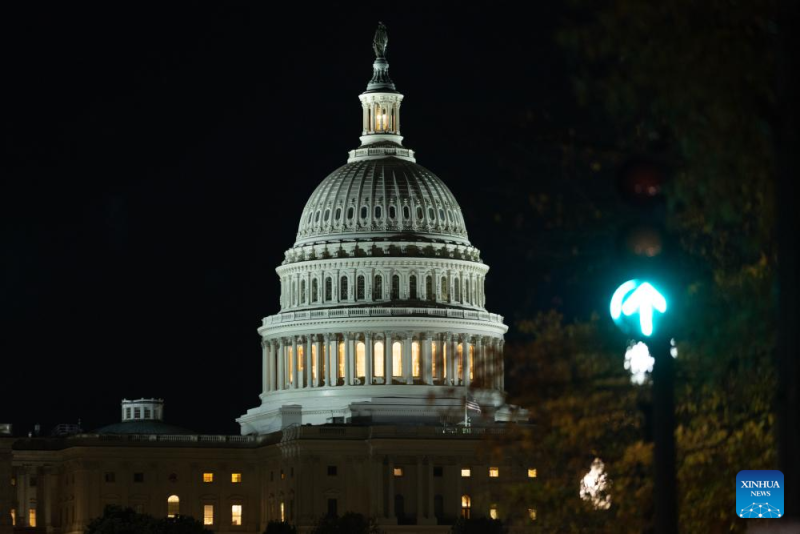
NAIROBI, Kenya, Nov 4 – Democrats have reclaimed control of the United States Senate after scoring a series of major victories in traditionally Republican strongholds, delivering a significant setback to President Donald Trump and his Republican Party.
The Associated Press projected that Democrats had secured enough victories in Tuesday’s midterm elections to take control of the Senate, ending Republican dominance of the upper chamber and setting the stage for increased congressional opposition to Trump’s administration.
Among the notable victories was Democrat James Talarico’s defeat of Republican Ken Paxton in Texas, marking a major breakthrough in a state that has long been a Republican stronghold.
Democrats also secured victories in Iowa, Kansas, South Carolina, Ohio and North Carolina, where Josh Turek, Adam Hamilton, Annie Andrews, Sherrod Brown and Roy Cooper respectively won Senate contests.
In Georgia, Democratic Senator Jon Ossoff retained his seat after defeating Republican Representative Mike Collins, while Democrat Chris Pappas won in New Hampshire, replacing retiring Senator Jeanne Shaheen.
The victories give Democrats control of the Senate for the first time in the current congressional cycle, potentially reshaping the political balance in Washington during the final two years of Trump’s presidency.
The party is also closing in on control of the House of Representatives after defeating several Republican incumbents in competitive districts.
Democrats had flipped seven House seats by Wednesday morning, including victories in New Jersey and Pennsylvania, as well as gaining open seats in North Carolina and Kentucky.
They need a net gain of three seats to secure a majority in the 435-member chamber, although the Associated Press said the outcome remained too early to call.
The election results could significantly constrain Trump’s legislative agenda, with Democrats expected to intensify congressional oversight of his administration and challenge key policy proposals.
Trump had campaigned extensively for Republican candidates, urging supporters to treat the midterm elections as a referendum on his presidency.
However, as the results turned against his party, he sought to distance himself from the losses, claiming on social media that Republicans would have won by a landslide had he been on the ballot.
Economic concerns featured prominently in the election, with voters expressing frustration over rising living costs, inflation and the state of the economy.
An Associated Press voter survey found that about three-quarters of voters considered the economy to be in poor or unsatisfactory condition, while roughly eight in 10 said inflation had caused moderate or severe financial hardship for their households.
Concerns about government corruption and the direction of the country also featured prominently in voters’ decisions.
The midterm elections, held halfway through Trump’s second presidential term, determine the composition of Congress, which plays a central role in passing legislation, approving government spending and providing oversight of the executive branch.
Democratic control of the Senate will give the party greater influence over legislation and presidential appointments, while the unresolved House contest remains critical to determining the full extent of its influence in Washington.
KioskNews shows a cleaned-up reading view extracted from the publisher’s page — the original always lives on their site, not ours.