Soul Patrol review – heart stopping story of Vietnam’s first Black special ops team
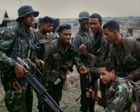
Here is the remarkable story of the US army’s “Soul Patrol” unit in the Vietnam war: the all-Black Long-Range Reconnaissance Patrol (or LURP), a six-man team of largely teenage African American soldiers, within Company F 51st Infantry. Their duty was to go behind the Vietcong enemy lines, each carrying 150lbs of kit and an M16 assault rifle, and in conditions of terrifying danger report on the enemy’s movements. One heart stopping anecdote is about a panicky member of the unit, who had never seen fireflies before, and became convinced he had seen a Vietcong insurgent in the undergrowth, smoking a cigarette. The film also reports on their later, poignant reunion as old men, using their contemporary home-movie footage and dramatically recreating some scenes.
It is based on the 2003 memoir of the same title by unit member Ed Emanuel (who had gone into journalism in civilian life), based on his own experiences and those of his comrades who he had been able to track down. The publication of the book itself was intended to bring other ex-soldiers out of the woodwork, which it duly did. The Soul Patrol was at one level a special forces unit, an elite squad that was tough, capable, resourceful, operating at the highest standards of soldiering – and yet it was also subject to racist exploitation as cannon-fodder. This was what many in the unit came to suspect, and one interviewee here recounts his almost hallucinatory sense the enemy itself had spared them from certain death in the jungle, aware of their awful sacrificial purpose.
Like many African American soldiers in Vietnam, the Soul Patrol were not drafted, but volunteered to escape the brutality and bigotry of the home front, to which the survivors finally returned, for decades unable to deal with the rage and PTSD. Watching this, I wondered if Spike Lee’s film Da 5 Bloods was indirectly inspired by Emanuel’s original memoir. The title of course refers to the soul music that became anthemic to these soldiers, but also, with grim irony, to their sense that their souls had died in the jungle fighting people they felt were just like them.
KioskNews shows a cleaned-up reading view extracted from the publisher’s page — the original always lives on their site, not ours.