EU's Kallas pushes to reinforce Operation Aspides in the Red Sea amid Houthis attacks
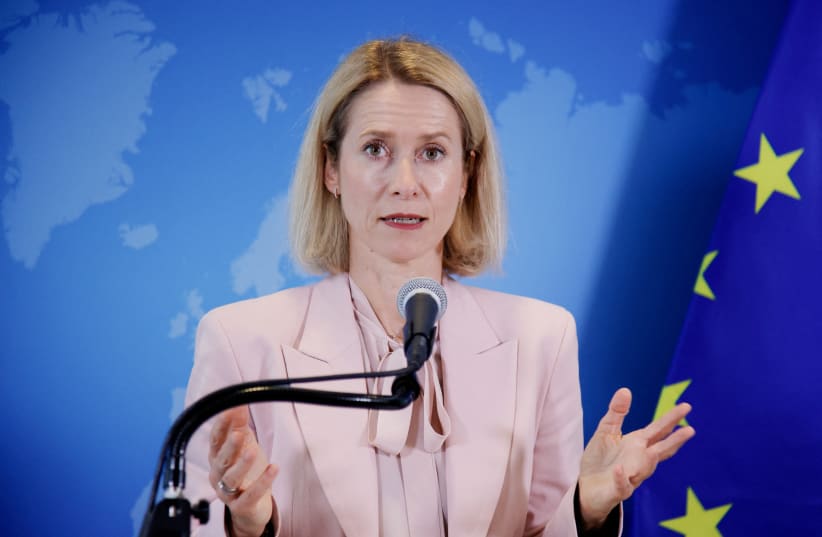
The European Union’s foreign policy chief, Kaja Kallas, has urged EU countries to increase their naval support for Operation Aspides in the Red Sea. This is the name of the European mission in the strategically important maritime area that links the Indian Ocean with the Suez Canal. The Houthi advance over the last month led them to the control of an area near the Bab al-Mandeb strait.
The EU mission in the Red Sea dates from 2024. However, it has usually consisted of only a handful of ships, typically three to six. This is not enough for the mission, and Kallas and others want to see a larger deployment. Most reports speak of boosting the naval presence to more than 10 ships. The mission’s name, Aspides, comes from the ancient Greek word aspides, which is the plural of aspis, a type of heavy wooden shield used in ancient Greece.
A report at EuroNews notes “the EU is considering reinforcing Operation Aspides in the Red Sea, after Italy's request, with ships and aircraft to protect the Bab el-Mandeb Strait from attacks launched from Yemen. The passage is crucial for energy trade, as energy costs are skyrocketing across Europe.”
That report goes on to say that “EU foreign policy chief Kaja Kallas has asked EU countries to strengthen the Aspides mission in the Red Sea, amid increasing threats from Houthis to navigation in the Bab el-Mandeb strait, which is crucial for trade routes between the Indian Ocean and the Mediterranean Sea.”
This is important. The proposal to make changes goes back to September 19, around 8 days after the Houthis launched their new offensive. It comes after a “request by Italy's Defense Minister Guido Crosetto, who raised the alarm after an Italian frigate intervened to escort an Italian merchant vessel off the coast of Yemen last Friday,” EuroNews noted. Crosetto noted at the time that only two EU country vessels were. Currently in the area available for escort duty. This is lower than the complement of six the missions should have.

Kallas: Operation requires 'more suitably equipped naval and air assets'
"We need more suitably equipped naval and air assets,” Kallas said. This would enable closer protection of vessels and allow the mission to carry out its mandate. Six vessels are just a handful of naval units in a waterway that is incredibly complex and has numerous ships transiting at any one time. For instance, the maritime vessel tracking site VesselFinder shows more than 50 large ships transiting the Red Sea on September 28, with others at ports along the route. Many of these are bulk carriers or oil tankers.
The EU is concerned about the Houthis conquering areas along the route, such as the town of Mocha and also Perim island. “More EU countries could decide to assume responsibility for a specific stretch of sea under the Aspides mission itself, as Italy just did to protect its merchant vessel. French and Dutch units are also already operating in the area to protect their own merchant fleets,” the report added.
EU defense ministries expected to discuss issue at Monday meeting
The EU defense ministries are expected to discuss this issue on Monday. Another meeting is scheduled for October 12. Euronews notes that Greece has been entrusted with strategic command of the Aspides mission, while Italy and Greece run operations. Admiral Vasileyos Griparis currently leads the mission.
We have been asking the EU for months to reinforce the Aspides mission: Italy and Greece are doing a great deal ... but if there is no military contribution [from the other EU states], there must be a financial contribution,” Italian Foreign Minister Antonio Tajani has said in the past.
Regional media have noted the push for a more robust European presence. Al-Ain media in the UAE highlighted the push by the EU to do more in the Red Sea.
KioskNews shows a cleaned-up reading view extracted from the publisher’s page — the original always lives on their site, not ours.