A student asked about corruption. Why did it go viral? — Khoo Ying Hooi
OCTOBER 19 — A student asked prominent political leaders about corruption, 1MDB and public donations to help former prime minister Najib Razak pay a RM50 million fine. The exchange went viral, and drew extensive responses from the public including the politicians. Yes, there is something encouraging about that attention, but it is also something deeply sad. When did asking the questions universities are supposed to encourage become extraordinary enough to make headlines and go viral?
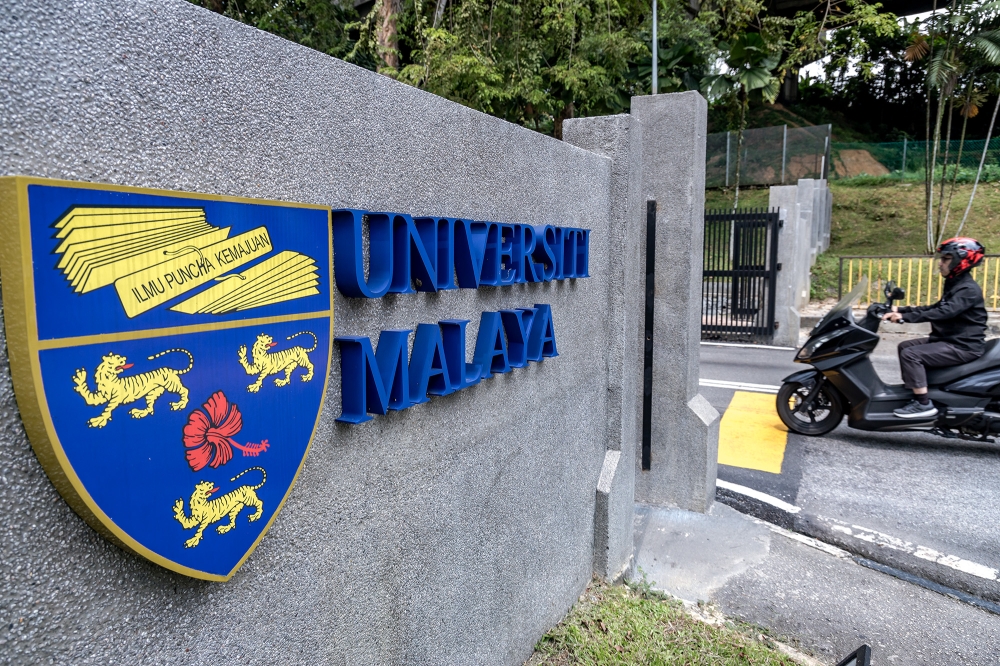
A Universiti Malaya (UM) student raised the issue at the Higher Education Ministry-backed iFUTURE dialogue.
A Universiti Malaya (UM) student raised the issue at the Higher Education Ministry-backed iFUTURE dialogue. — Picture by Firdaus Latif
The student challenged the fundraising for Najib, referred to the Tabung Haji controversy and asked how future leaders could confront corruption and feudalism with critical thinking, facts and evidence. The questions were direct, certainly. More importantly, the question demonstrated a refusal to treat political authority as a reason to avoid an uncomfortable subject.
The intervention drew extensive coverage from the news outlets and over the social media. Khairy Jamaluddin praised the student and said wrongdoing should never be defended. Selangor Menteri Besar Amirudin Shari welcomed the concern young people showed about corruption.
Johor Menteri Besar Onn Hafiz Ghazi described corruption as a cancer, while warning against selective prosecution. The irony is difficult to ignore. We have grown so accustomed to silence on our campuses that a student asking difficult questions has become national news, even though this is precisely what universities are supposed to encourage.
As someone who teaches at UM, I welcome this student’s intervention. But at the same time, I also find the reaction unsettling. We teach critical thinking, ask students to interrogate evidence and encourage them to challenge established assumptions. These are principles that universities constantly emphasise as part of higher education.
Yet when a student puts them into practice by questioning political leaders on corruption, the response is one of extraordinary admiration and surprise. The student certainly deserves recognition for having the courage to speak up. But it is worth asking why exercising that courage in a university setting should still be seen as something so exceptional.
Of course, one viral video cannot prove that campuses have fallen silent. Student groups continue to organise, protest and challenge authorities, often without recognition. But as I have repeatedly argued in my commentaries on the subject of academic freedom, silence on our campuses takes many forms. It is cultivated through administrative procedures, hierarchies and the expectation that difficult subjects should be handled carefully.
A forum needs approval, an invitation becomes a negotiation, and students learn which discussions might cause trouble. Lecturers, too, know the temptation to avoid controversy. Over time, people begin to censor themselves long before anyone issues an instruction.
In April this year, UM student groups alleged that an integrity and anti-corruption forum was disrupted when access to its planned venue was blocked. It is reported that university authorities required prior approval for campus forums, citing procedures and harmony, while student organisers said obtaining approval was often difficult. There is a disturbing contrast between celebrating an anti-corruption question at a ministry-backed event and the difficulties students have reported in organising anti-corruption discussions on campus.
Deputy Higher Education Minister Adam Adli Abdul Halim has since defended the student’s remarks as fair comment, while several politicians voiced support. UM vice-chancellor Noor Azuan Abu Osman confirmed on 17 October that no disciplinary action had been taken against the student and affirmed that differences of opinion should be heard.
These assurances are welcome. But freedom should be demonstrated in everyday campus practices, especially when students challenge those currently exercising power, including university administrators themselves.
Even more troubling is the harassment that followed. The student reported that personal photographs from social media were taken without consent, alongside attacks on physical appearance and threats of expulsion.
People may disagree with the student’s language or political views. They have every right to argue back. But personal attacks and intimidation have consequences beyond this particular incident. They send a chilling message to other students that speaking up may come at a considerable personal cost.
The student’s experience also raises important questions about the ongoing efforts to repeal the Universities and University Colleges Act (UUCA), particularly whether legal reform alone can guarantee students the freedom to speak, question and challenge authority.
In August, the Higher Education Ministry directed public universities to stop disciplinary proceedings over student expression, public criticism and peaceful assembly. This is an important commitment, but changing legislation cannot by itself eliminate habits of caution and deference. Genuine academic freedom must also extend to student-organised forums, invited speakers, political disagreements and questions that university leaders would rather avoid.
This requires clear institutional safeguards, accessible complaint mechanisms and independent oversight to ensure that students can exercise these freedoms without facing harassment or disciplinary retaliation.
We should also expect more from the politicians who applauded the student. Saying corruption is wrong is easy. The harder task is to demonstrate consistency when allegations implicate allies, institutions or political patrons. The questions deserved substantive answers about the political culture that continues to excuse wrongdoing, rather than admiration for the boldness of asking them.
I hope this student’s willingness to speak encourages others. More importantly, I hope we will reach a point where students can ask difficult questions in lecture theatres and public forums, engage in open disagreements without fear of threats, and return to their studies without worrying about the consequences of speaking up.
The health of our universities should be measured by how much space we give students to think independently, question authority and express themselves freely.
Until then, we should celebrate the courage to speak while being much less comfortable with the silence that made it newsworthy.
*Khoo Ying Hooi, PhD is associate professor at Universiti Malaya. She is also co-founder and advisor of Southeast Asia Coalition on Academic Freedom (SEACAF).
** This is the personal opinion of the writer or publication and does not necessarily represent the views of Malay Mail.
KioskNews shows a cleaned-up reading view extracted from the publisher’s page — the original always lives on their site, not ours.