Government, KEMSA call for stronger pharmacist leadership to ensure medicine availability
NAIVASHA, October 13 — The Government has called for stronger pharmacist leadership, evidence-based health products planning and closer collaboration between hospitals and the Kenya Medical Supplies Authority (KEMSA) to improve the availability of essential health products and technologies (HPTs).
Speaking in Naivasha, Principal Secretary for Medical Services Dr Ouma Oluga said effective management of medicines and other health products is fundamental to delivering quality healthcare and achieving Universal Health Coverage.
He said procurement alone does not guarantee that medicines will be available when and where patients need them, stressing the need for pharmacists to play a more strategic role in determining the products required, quantities and timing of procurement.

“Pharmacists must be at the centre of determining what products are needed, in what quantities and when, based on consumption data, clinical evidence and service requirements,” the PS said.
He said better quantification and forecasting, rational use of medicines, effective inventory management and stronger accountability throughout the health products supply chain would help ensure public resources are directed towards actual patient and facility needs.
Oluga also highlighted progress in KEMSA’s transformation, including improvements in Order Fill Rate, order turnaround times and service delivery.
He said the gains must be sustained through accurate forecasting, stronger collaboration with health facilities and clear accountability, adding that the ultimate measure of supply chain performance is whether patients can access the products they need.
The PS called for closer coordination between KEMSA and health facilities, noting that timely and accurate information from hospitals is essential for national procurement planning.
He said health facilities, in turn, require a predictable and responsive supply of medicines and other essential health products to support uninterrupted service delivery.
The remarks were made during a five-day conference running from October 11 to 15 under the theme, “Strengthening Pharmacist Leadership and Strategic HPT Management for Sustainable Health System Resilience.”
The conference brings together representatives from national and county governments, hospital pharmacists, professional associations, development partners and the pharmaceutical industry.
KEMSA Chief Executive Officer Dr Waqo Ejersa said supply chain performance should ultimately be measured by what reaches patients rather than simply what is procured.
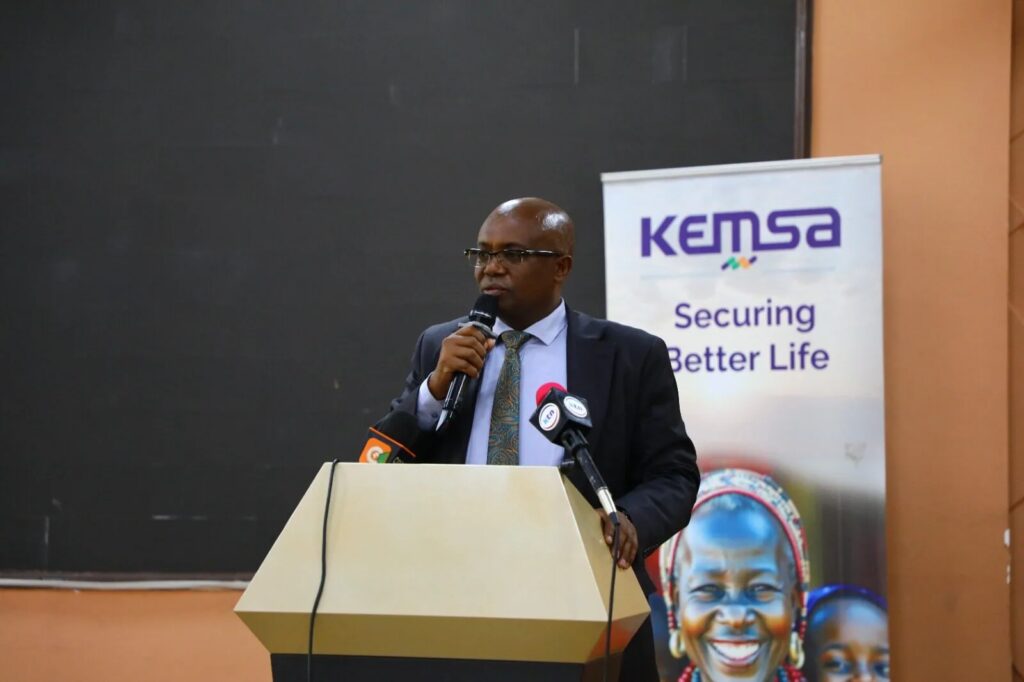
He said pharmacists are strategic contributors to forecasting, procurement, resource allocation, inventory management and institutional decision-making.
Ejersa urged hospitals to involve pharmacists more closely in determining health products requirements and expenditure, saying their expertise was critical to evidence-based planning, accountability and monitoring.
He said procurement decisions should be based on validated consumption data, existing stock levels, service workload and anticipated demand to improve medicines availability and minimise wastage, expiries and avoidable expenditure.
“Where quantification is weak, information is incomplete or communication is delayed, availability is affected and public resources may not be used optimally,” he said.
Ejersa called for sustained engagement between KEMSA and health facilities, with shared information, clear responsibilities and joint monitoring of supply chain performance.
The conference is also examining opportunities to harmonise health products and strengthen evidence-based rationalisation.
Participants are considering variations in product strengths, dosage forms, pack sizes and specifications where these can be harmonised without compromising clinical or operational requirements.
Digital tools are also being explored as a means of improving visibility across the supply chain, monitoring consumption, strengthening forecasting and inventory management, and enhancing procurement accountability.
Oluga said health system resilience requires the country to anticipate demand, manage supply disruptions and respond effectively to changing disease patterns.
Ejersa, however, cautioned that technology alone would not guarantee better outcomes without reliable data, effective processes, adequate capacity and accountability.
The conference is being supported by the Ministry of Health, KEMSA, county governments, the Hospital and Private Ambulance and Pharmacy Association (HOPAK), Clinton Health Access Initiative (CHAI) and pharmaceutical industry partners.
The partners include Johnson & Johnson, Roche, Novartis, Cipla, Ethypharm, Troikaa and Pfizer.
The conference is expected to produce several outputs to inform KEMSA’s 2026/27 procurement planning, including a harmonised pharmacist-validated HPT list, standardised product specifications, prioritised new health products requirements, evidence-based rationalisation and consolidation, and validated quantities.
Participants are also expected to develop a joint KEMSA-Hospital Pharmacists Action Plan setting out key priorities, responsibilities and timelines.
The Government said the overall objective is to strengthen the health products management system so that health facilities can access the right products, in the right quantities and at the right time and place, ultimately improving the quality of care and protecting patients.
KioskNews shows a cleaned-up reading view extracted from the publisher’s page — the original always lives on their site, not ours.