Indonesia sets Rp4.1q 2027 budget as Prabowo govt targets growth, fiscal discipline
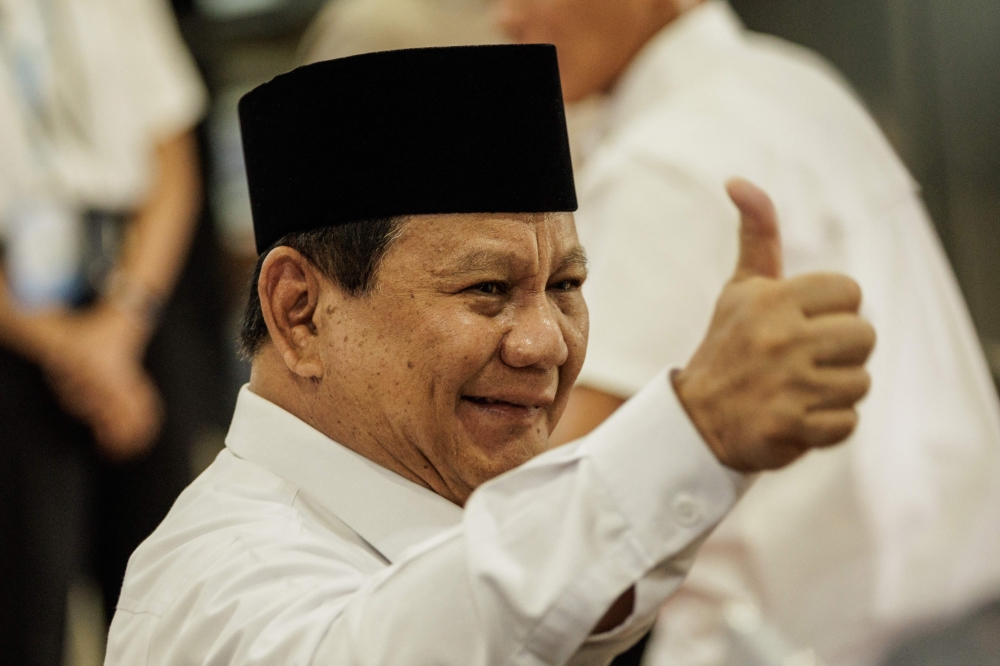

Indonesia’s President Prabowo Subianto first tabled the 2027 State Budget Bill and Financial Note before the DPR on August 14, followed by deliberations with lawmakers that culminated in Tuesday’s final approval. — AFP pic
First Published: Tuesday, 29 Sep 2026 4:42 PM MYT
JAKARTA, Sept 29 — Indonesia’s House of Representatives (DPR) has approved a Rp4.106 quadrillion (RM931.5 billion) state budget for 2027, with major allocations for education, social protection and food security as the government seeks to accelerate national development while maintaining fiscal discipline.
Finance Minister Suahasil Nazara said education received the highest allocation among the priority areas highlighted at Rp824 trillion, covering student assistance, university scholarships, school and madrasah renovation, as well as the development of Sekolah Rakyat and Sekolah Unggul Garuda.
He said Rp539.7 trillion was allocated for social protection to support low-income, poor and vulnerable groups and accelerate poverty reduction, while Rp195.3 trillion was allocated for food security to strengthen food self-sufficiency and improve the welfare of farmers and fishermen.
“The 2027 State Budget is designed to respond to global uncertainty while accelerating national development priorities without compromising fiscal sustainability. The principle is clear: fiscal policy must remain prudent but not passive.
“It must be present to maintain growth momentum and protect the public while preserving its credibility,” he said in the government’s final remarks on the budget at the Parliament Complex in Jakarta.
President Prabowo Subianto first tabled the 2027 State Budget Bill and Financial Note before the DPR on August 14, followed by deliberations with lawmakers that culminated in Tuesday’s final approval.
Suahasil said the budget focused on eight national priority clusters, namely food sovereignty; energy and water independence; education; health; downstreaming and industrialisation; infrastructure, housing and disaster resilience; the people’s economy and village development; and poverty reduction.
To support these priorities, he said state revenue was set at Rp3.43 quadrillion, with the fiscal deficit at 2.4 per cent of gross domestic product (GDP), as the government seeks to maintain fiscal sustainability.
He said the budget assumes economic growth of six per cent and inflation of 2.5 per cent in 2027, with the rupiah exchange rate projected at around Rp17,500 against the US dollar.
Suahasil said the government also set the Indonesian crude oil price assumption at US$75 per barrel, with oil lifting targeted at 612,500 barrels per day and gas lifting at 954,000 barrels of oil equivalent per day.
He said the budget was formulated amid high global uncertainty, including geopolitical tensions and trade fragmentation that could disrupt supply chains, increase price volatility and add to inflationary pressures.
He added that the government would continue to maintain a healthy, credible and sustainable state budget through revenue optimisation, improved spending quality and innovative but measured financing. — Bernama
KioskNews shows a cleaned-up reading view extracted from the publisher’s page — the original always lives on their site, not ours.