Why Kim Jong-un’s border trip to China differs from past pre-summit playbooks
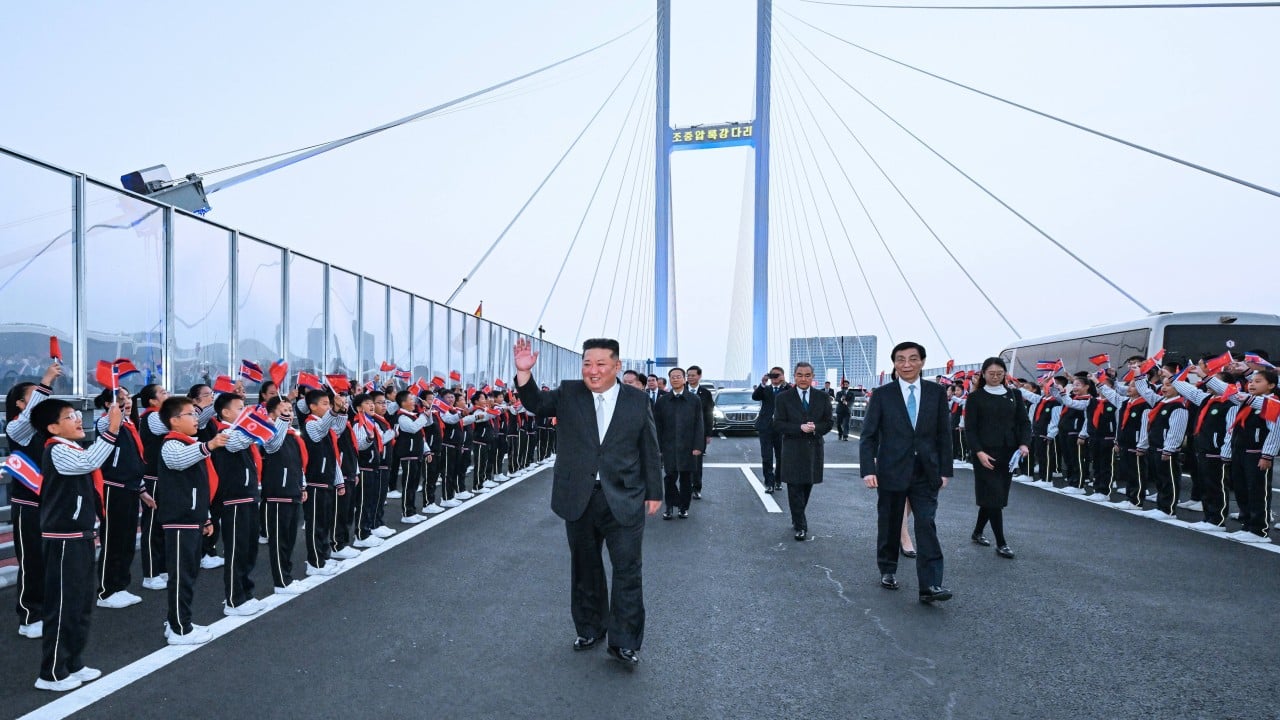
North Korean leader Kim Jong-un’s trip to the Chinese border city of Dandong on Saturday echoed the intense coordination that preceded his previous summits with US President Donald Trump.
Between March 2018 and June 2019, Kim met Chinese President Xi Jinping five times across Beijing, Dalian and Pyongyang, and three of those occasions happened not long before his summits with Trump.
Yet, while Saturday’s unannounced visit appeared superficially similar, analysts said the strategic focus had shifted dramatically.
Unlike previous visits featuring head-of-state summits with Xi, Kim was received by Wang Huning, China’s fourth-ranking official, and Foreign Minister Wang Yi. Kim also inspected a bus factory.
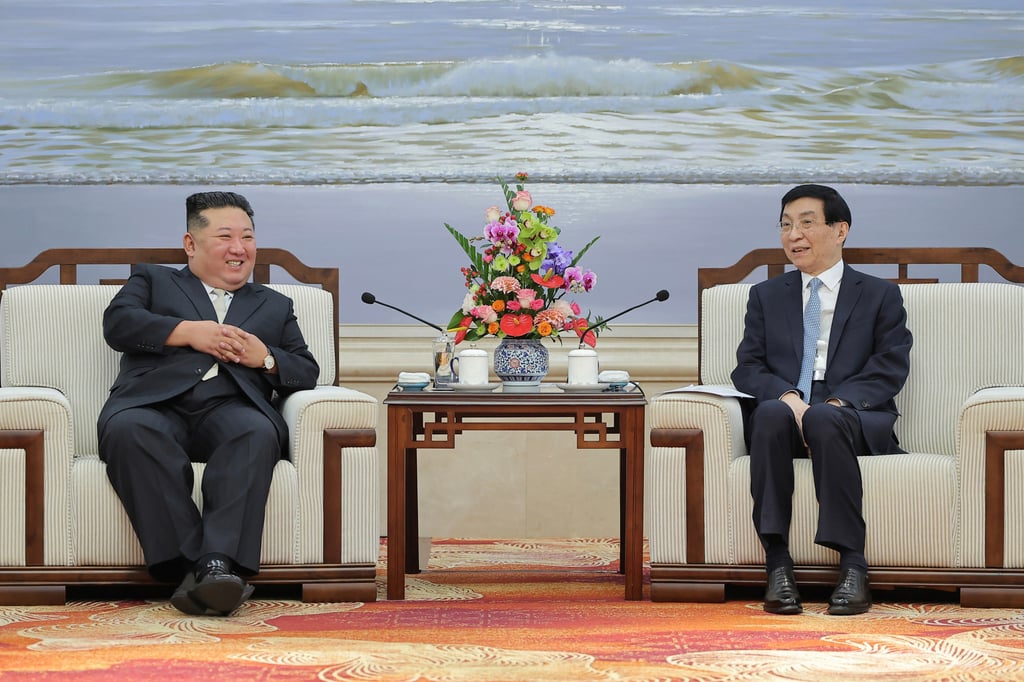
“Pyongyang deliberately intended to show that the two countries are extending political mutual trust into pragmatic economic cooperation,” said Niu Xiaoping, an expert on the Korean peninsula at the Shanghai Institutes for International Studies.
Kim’s inspection of the bridge illustrated his expectations for using the transport link to spur cross-border commerce and personnel exchanges with China, Niu added, noting a shift from the nuclear-focused consultations of previous visits.
Saturday’s visit built on momentum from Xi’s two-day trip to Pyongyang in June, his first in seven years.
In June, the leaders pledged broader cooperation, including in military affairs. But unlike his 2019 visit, Xi made no mention of denuclearising the Korean peninsula.
That omission extends a pattern. In recent years, China has quietly dropped the phrase from official papers and statements, including its arms control white paper in November last year.
As for Pyongyang, it has hardened its position, conditioning any talks on Washington’s de facto recognition of North Korea as a nuclear-armed state.
Expectations of a Trump-Kim meeting in Shenzhen in November, on the sidelines of the Asia-Pacific Economic Cooperation (Apec) forum, initially rose after Trump claimed in August that Kim had welcomed his outreach.
Last week, Trump took a more uncertain tone, saying: “I don’t know … I’m not sure that anybody’s asking for a meeting.” Meanwhile, he skirted questions about whether denuclearisation remained his objective.
American and South Korean officials confirmed Pyongyang had completely ignored Washington’s overtures, with prospects for a summit this year fading fast, according to Reuters.
“China’s primary objective on this occasion [Kim’s Dandong visit] was likely to gauge North Korea’s intentions,” said Hwang Ji-hwan, professor of international relations at the University of Seoul.
Hwang suggested the two sides could hold preliminary consultations on possible discussions on North Korea when Xi and Trump meet at Apec in Shenzhen.
Any concrete movement towards a Trump-Kim summit would require prior working-level contacts, both between China and North Korea and between the US and North Korea, Hwang added.
02:28
How North Korean state media reported on Kim Jong-un’s visit to China
“With no signs of such preparations and little time remaining, a US-North Korea summit appears unlikely.”
According to Niu, the conditions for holding another summit had yet to ripen.
“Trump’s domestic policy on North Korea still faces major divisions, making it difficult to offer negotiating chips that satisfy Pyongyang,” she said. “On the other hand, North Korea’s strengthened ties with China and Russia have raised its negotiating demands considerably.”
“Unless Washington puts forward major concessions, Pyongyang will not play along merely for Trump’s political show.”
Kim’s recent visit could be seen as an indirect message to Trump, whom Niu described as now distracted by America’s conflict with Iran and the coming midterm elections.
As the brief Dandong trip showed, the Apec summit in Shenzhen would create an opportune window in both timing and geography, and therefore the possibility of a snap meeting between Trump and Kim remained on the table, Niu added.
The flurry of great-power interest in engaging Pyongyang has sparked anxiety in Seoul, another stakeholder in a potential Trump-Kim summit.
“South Korea’s primary stake is whether it will have a meaningful voice in decisions about North Korea that directly affect its security,” said Cho Sung-min, associate professor in the political science department at Sungkyunkwan University in Seoul.
“What remains unclear is how closely they will consult the Lee [Jae Myung] administration and whether South Korean interests will be taken into account,” Cho said, referring to South Korea’s president.
The current impasse contrasts sharply with Trump’s first term, when he met Kim three times. Their 2018 Singapore summit yielded broad commitments to denuclearisation, but the process collapsed at the February 2019 Hanoi summit.
Kim offered to dismantle the Yongbyon nuclear facility in exchange for lifting UN sanctions that had crippled North Korea’s civilian economy, mineral trade and fuel imports.
Washington rejected the offer, insisting North Korea surrender its entire nuclear inventory, uranium enrichment sites, ballistic missiles and chemical-biological stockpiles before receiving sanctions relief.
“If North Korea agrees to engage with the US, this could be interpreted as an indication that Washington has made substantial concessions to Pyongyang on the nuclear issue,” Hwang said.
KioskNews shows a cleaned-up reading view extracted from the publisher’s page — the original always lives on their site, not ours.