Yemen’s Houthis say they hit two Saudi ports in response to coalition strikes
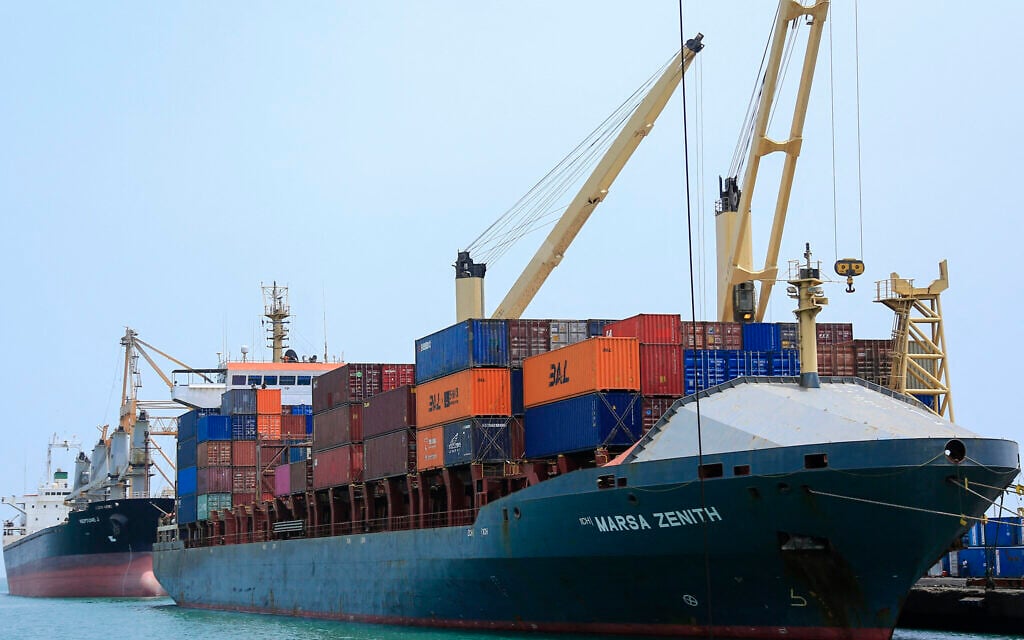
RIYADH, Saudi Arabia — Yemen’s Houthis said Wednesday that they had targeted the Saudi ports of Jeddah and Jazan in response to Saudi strikes on a Yemeni port controlled by the Iran-backed group as their conflict further escalated.
The attacks came after the Saudi-led military coalition fighting the Houthis said it had struck Yemen’s Red Sea port city of Hodeida, drawing threats of retaliation from the Yemeni fighters.
“Both operations resulted in damage to the targeted sites,” Houthi military spokesman Yahya Saree said.
0:00 / 0:00
Promoted: Wondering Jews, Angela Buchdahl

The coalition earlier said a projectile fired by the Houthis had hit Jazan port.
“Minor damage with no civilian casualties,” coalition spokesperson Turki al-Malki wrote on X. “Efforts are underway to determine the type of projectile.”
Get The Times of Israel's Daily Edition by email and never miss our top stories
By signing up, you agree to the terms
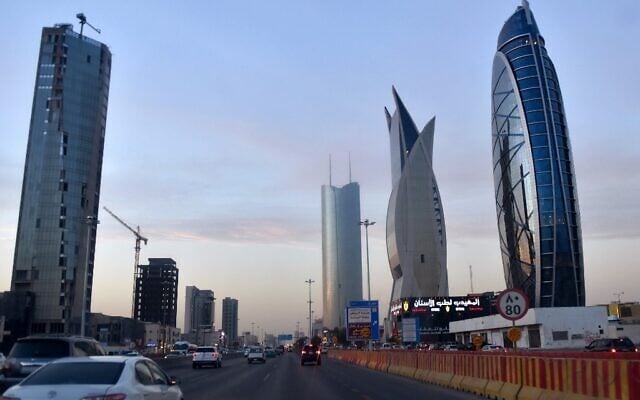
The Houthis had also claimed responsibility for attacks a day earlier on the Saudi capital that struck the tallest tower in its financial district, wounding 11.
In recent weeks, the group has launched a barrage at Saudi targets including the financial district, airports, energy infrastructure and military sites.
The Saudi coalition has in turn been striking Houthi-held areas of Yemen in support of the internationally recognized government, which has been battling the Houthis for territory since a civil war reignited in July.
Hodeida
“We targeted operational capabilities at the port of Hodeida,” the coalition posted to X on Wednesday, having earlier warned civilians to evacuate.
Hodeida is under Houthi control and is a key entry point for goods into Yemeni territory held by the group.
Houthi media outlet Almasirah on Wednesday morning confirmed Hodeida had been targeted and also reported new strikes later in the day, but did not provide details. No casualties or injuries were mentioned.
Almasirah added that Saudi forces had also attacked the area’s international airport.
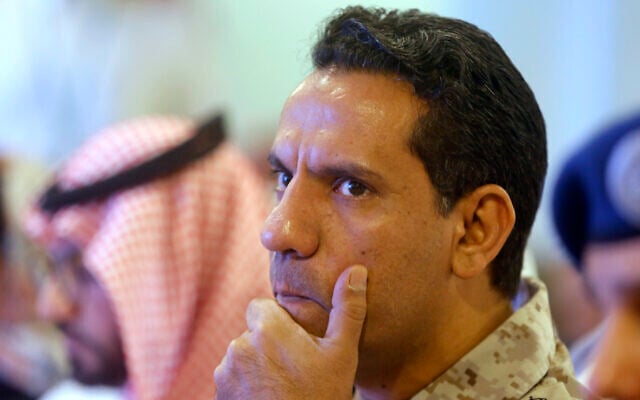
Houthi military spokesperson Yahya Saree early on Wednesday threatened to retaliate against Red Sea ports in Saudi Arabia if the coalition went ahead with strikes on Hodeida.
“The port of Jeddah, along with all other Saudi enemy ports along the Red Sea coast, will become targets for our forces should the enemy carry out its threats,” he posted on Telegram.
Saree warned civilians near Saudi ports to “evacuate immediately” and called for “all shipping companies to remove their vessels from these ports at once.”
Symbolic strikes
Months into the renewed war, Saudi Arabia appears increasingly unable to shield even its most sensitive infrastructure from attacks, with the Houthis striking strategic facilities across the kingdom and prominent skyscrapers in the heart of Riyadh.
On the ground in Yemen, the Houthis are pressing their advance against government forces, forcing them to retreat. Houthi fighters are positioned just 60 kilometers (37 miles) from Aden, the government’s main stronghold in the south.
A Yemeni military spokesman said this week that they were preparing Aden’s defenses for a potential attack.
In a sign of mounting pressure on Riyadh, Saudi Arabia last week removed its top general overseeing its military campaign, in what appeared to be an effort to inject new momentum into the war and contain its adversaries.
On Wednesday, the Houthis claimed responsibility for the strike a day earlier on the Saudi capital’s tallest skyscraper, also saying they struck the sprawling Ras Tanura refinery in the kingdom’s oil-rich east.
Saree described the refinery attack as “accurate and direct,” saying it “caused fires to break out at the facility.”
Coalition spokesperson Turki al-Malki said early Wednesday that four drones had been intercepted and destroyed in Ras Tanura, resulting in falling shrapnel but no injuries.
Riyadh skyscraper
On the Riyadh attack, Houthi spokesman Saree said it had been carried out in three phases, with the strikes hitting their targets “accurately.”
The assault on the capital struck its PIF tower, which houses the Saudi sovereign wealth fund. The building had already been targeted last Thursday and is one of several high-profile sites hit since fighting resumed in the summer.
Attacks on the PIF building are symbolic as the fund is driving efforts to diversify the oil-reliant Saudi economy — a project that has been complicated by the Middle East war and Houthi strikes.
Qatar and Pakistan, who have been acting as mediators in efforts to end the wider regional war between Iran and the United States, both “strongly” condemned the attack on the building.
Two Indian citizens were wounded in the attack, Delhi’s foreign ministry said.
Animal lovers, this one's for you

In 1935, Rabbi Max Shorenstein left Denmark to pursue his lifelong dream: building a zoo in Tel Aviv and teaching children to love animals. The Tel Aviv Zoo became one of the city’s greatest attractions, but envy, greed, and corruption drove Shorenstein from the paradise he created.
The film 'There Are No Lions in Tel Aviv' is available to screen November 19-26 for members of our reader support group, The Times of Israel Community. Join the Community today to support our work and watch our DocuNation series of outstanding Israeli documentary films.
I want to watch I want to watch Already a member? Sign in to stop seeing this
KioskNews shows a cleaned-up reading view extracted from the publisher’s page — the original always lives on their site, not ours.