Scary deals? What makes Hong Kong shun death-linked homes while France embraces the risk

Even as Hong Kong remains the world’s least affordable housing market, many buyers still shun heavily discounted homes linked to an “unnatural death”, such as murder or suicide, according to property agents.
Prices for such properties could fall by as much as 50 per cent, while rents were typically about 20 per cent below market rates, they added.
The aversion stands in stark contrast to parts of Europe, particularly in France, where buyers are often willing to purchase homes under a “vente en viager” arrangement that can see properties sold at discounts of up to 80 per cent below market value.
Under the system, an elderly homeowner agrees to sell a property in exchange for an upfront payment and a monthly annuity that continues for the rest of their life.
The arrangement allows sellers to supplement their retirement income while remaining in their homes. For buyers, the main attraction is the steep discount, even if they may have to wait for years before taking possession.
In effect, buyers are betting on how long sellers will live before they can claim the property.
“In Hong Kong, there is no official definition or registry for ‘haunted houses,’ or xiong zhai in Chinese,” said Ivy Wong, managing director of Centaline Mortgage.
“The term generally refers to properties associated with unnatural deaths, such as murders, suicides or fatal accidents, which are distinctly separated from natural deaths such as passing away from old age.”
The “haunted houses”, particularly those linked to sensational murder cases, could receive a zero valuation or be deemed ineligible for valuation, making it difficult to secure a mortgage, according to Eric Tso Tak-ming, chief vice-president at mReferral Mortgage Brokerage Services.
“Because the difficulty of reselling these properties in the future is exceptionally high, valuation firms significantly reduce their valuations,” Tso said. “Consequently, it is very difficult for banks to approve the buyer’s desired loan amount, and they often lower the loan-to-value ratio.”
Recently, a low-floor flat with a private podium in Metro Town in Tseung Kwan O was sold for HK$4.5 million (US$574,000), significantly below the more than HK$7 million valuation for a comparable home on a similar floor in another tower of the same project.
The reason, according to one agent, was that a person had fallen from a higher floor and landed on the flat’s private podium, stigmatising it as a “haunted house”.
Murders, especially those involving multiple victims, grisly details or extensive media coverage, tend to have the most severe impact on home assessments and could result in outright mortgage rejections
In some cases, online mortgage valuation platforms operated by banks do not generate valuations for homes associated with such incidents.
There were also cases where the “negative impact even spilled over, causing online valuations for the entire floor to become unavailable”, Centaline Mortgage’s Wong said.
Banks and surveying firms relied heavily on internal databases and media reports of tragic incidents to conduct case-by-case assessments, she added.
Banks, however, do not all take the same approach. “While some adopt a highly conservative approach and outright reject mortgage applications for stigmatised properties, the majority rely on individual assessments to determine approval and set conditions,” Wong said.
Assessments depend on factors including the nature and severity of the incident. Murders, especially those involving multiple victims, grisly details or extensive media coverage, tended to have “the most severe impact” and could result in “outright mortgage rejections”, she said.
Suicides involving charcoal burning, jumping or hanging, as well as fatal accidents such as falls or gas explosions were generally viewed as less severe, and more open-minded banks could still consider mortgage applications for such properties, Wong added.
Valuations for homes linked to high-profile murder cases would typically fall by 50 per cent or more, while those associated with suicides or fatal accidents could decline by at least 30 per cent, she said.
However, if an incident occurred decades ago and the property had changed hands or been leased multiple times since, some banks could “view the negative impact as diluted, resulting in a more favourable assessment”, Wong said.
France and several other European countries, including Belgium, Switzerland, Spain, Italy and Germany, take a markedly different view of death in relation to property transactions under the “vente en viager” arrangement.
“What sets France apart is how common private, person-to-person ‘viager’ sales are, with a well-developed legal framework around them,” said Alex Balkin, head of Savills French Riviera.
The arrangement offered advantages to both sellers and buyers, Balkin added.
For sellers, the benefits included additional retirement income while remaining in their homes, annuity payments indexed to inflation and part of the income receiving a “favourable tax treatment”, he said.
Sellers were also well-protected, as contracts typically contained clauses allowing them to reclaim the property and retain payments already received if buyers stopped paying.
For buyers, the property’s price was discounted to reflect occupancy and the seller’s life expectancy, while payments were spread over time, removing the need for a traditional bank mortgage, according to Balkin.
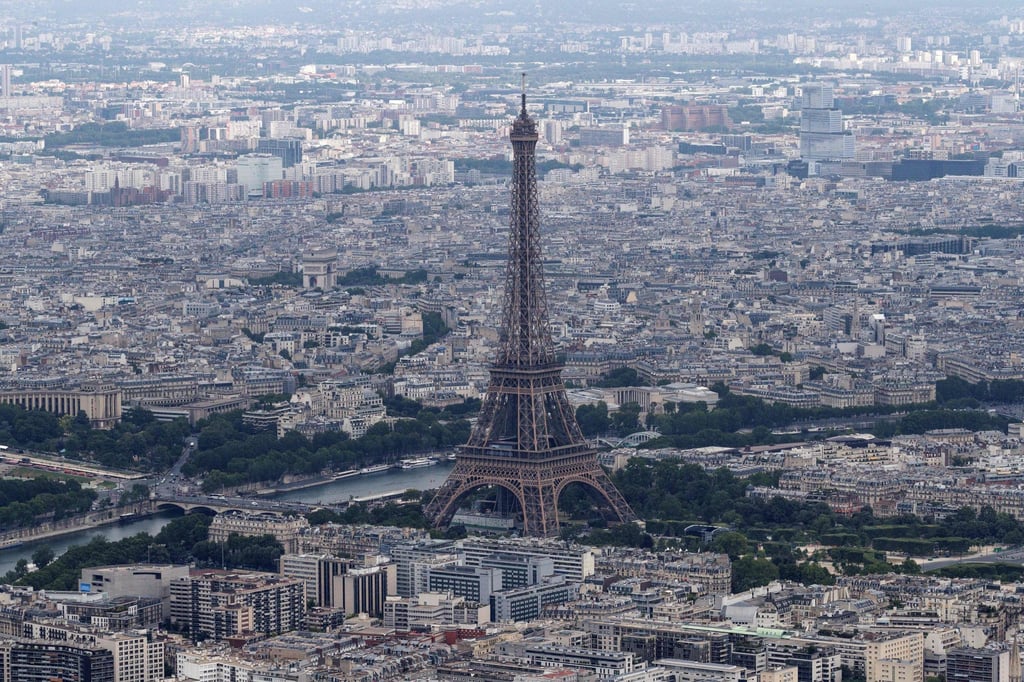
Some Hong Kong-based buyers had inquired about purchasing French property through a “vente en viager” arrangement, said Sebastien Salin, a Hong Kong-based French entrepreneur and the founder of Acheterpourlouer, a real estate advisory firm that helps expatriates and foreigners to buy properties in France remotely.
“There’s a number of clients who have shown an interest, but it’s a limited percentage,” Salin said.
Depending on the seller’s age, discounts could reach as much as 80 per cent of market value, he added.
“This arrangement is getting more popular because a lot of people are getting older and don’t have much income, but they have a nice flat,” Salin said. “So they want to get some extra funds to make sure they have enough income during the remaining years of their life.”
There is, however, a famous example of a transaction that went badly wrong for the buyer.
In 1965, Jeanne Calment sold her home in Arles, France, at age 90 under a “vente en viager” arrangement to Andre-Francois Raffray, a 47-year-old lawyer.
Raffray paid Calment 2,500 French francs a month for 30 years before dying in 1995. His widow continued the payments until Calment died in 1997 at the age of 122. By then the family had paid more than twice the home’s value, according to Savills. France replaced the franc with the euro in 1999, when 2,500 francs equalled around US$405.
“It’s a little bit like gambling,” Salin said.
In Hong Kong, the aversion to properties linked to unfortunate circumstances stemmed from “the prevailing cultural beliefs and superstitions that are deeply ingrained in local Chinese society,” according to a spokesman from Centaline Property Agency.
There were, however, prospective buyers or tenants willing to consider these properties, he said.
“Individuals who do not subscribe to local superstitions, such as Catholic buyers, expatriates and atheists, are much more open to living in these homes,” he said.
“This is particularly driven by budget constraints or a desire to save money, as the significant rental discounts of around 20 per cent below standard market rates make these properties a highly cost-effective option.”
“While general market growth may result in a slight increase in value, these properties almost invariably continue to trade at a significant discount relative to comparable, unaffected properties in the same neighbourhood,” the spokesman said.
KioskNews shows a cleaned-up reading view extracted from the publisher’s page — the original always lives on their site, not ours.