Draining peatlands is responsible for a few percent of our global warming
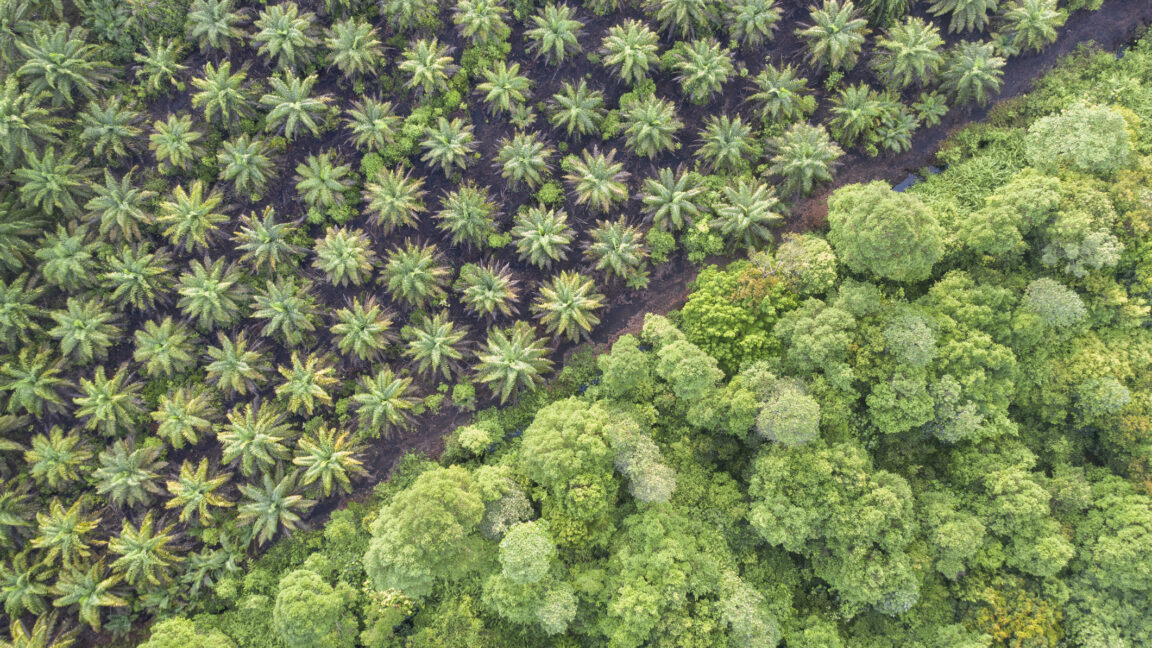
The simplest way to represent the climate impact of both CO2 and methane changes was to calculate the change in Earth’s energy budget—the strength of the greenhouse effect, in other words. They calculated the total effect in 2020 at about +83 milliwatts per square meter of the Earth’s surface from the CO2 emissions, and about -9 milliwatts per square meter from the reduced methane emissions, for a total effect of +73 mW. That is 2.7 percent of the total human-caused change in Earth’s energy budget. (With the error bars on all these numbers, it’s 1.8–3.6 percent.)
Or to look at it another way, it means that around 4 percent of all the carbon that was buried in peatlands is now in the atmosphere.
Regionally, over half of the total CO2 came from Europe, almost a quarter came from Southeast Asia, and only 14 percent came from North America. The timing is quite different, as well, with the contribution from Southeast Asia only jumping up in the last few decades.
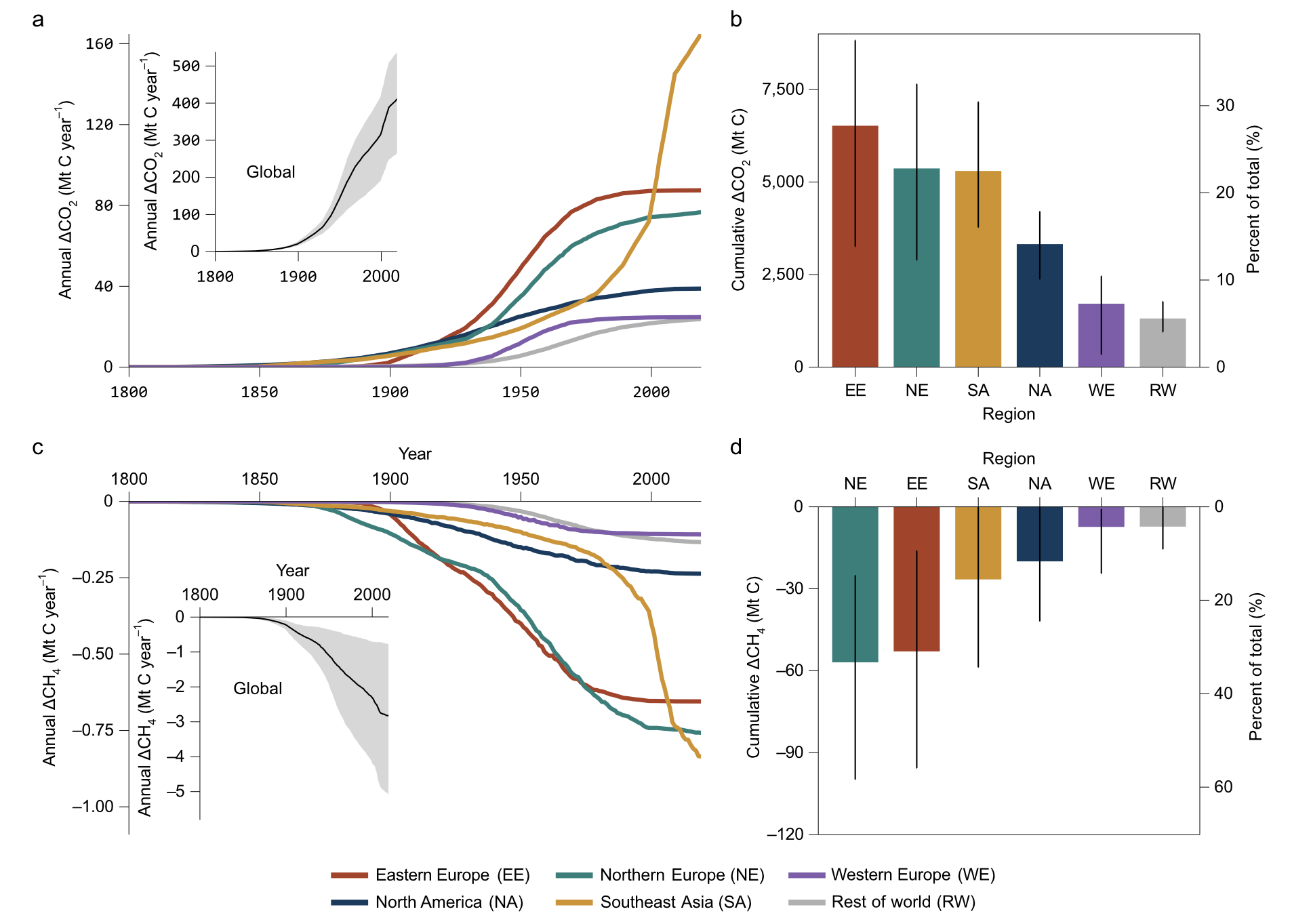
Regional emissions timeline (left) and total shares (right) for carbon dioxide (top) and methane (bottom).
Credit: Yu, et al./Nature
Regional emissions timeline (left) and total shares (right) for carbon dioxide (top) and methane (bottom). Credit: Yu, et al./Nature
Draining a peatland only starts the process of releasing carbon, though. So that means past land-use change will still be producing emissions in the future. To examine this, the researchers also ran their model forward to 2100.
If peatland water levels were simply held constant from 2020 on, the total change in Earth’s energy budget would nearly double, from 73 to 138 milliwatts per square meter by 2100. Moderate restoration of peatland water levels could reduce that growth, and ambitious restoration could even cause the effect to shrink slightly below its 2020 potency in their analysis. This is a process we can halt if we really want to.
But since rolling all the way back to the landscape of 1800 is unlikely, elevated emissions will continue for a long time. That makes this another part of the climate system where change plays out slowly, with long-term consequences.
KioskNews shows a cleaned-up reading view extracted from the publisher’s page — the original always lives on their site, not ours.