RBI Repo Rate Hike: Should You Pay More EMI Or Extend Home Loan Tenure?

A home loan is often the biggest monthly expense for a family. When interest rates rise, even a small change can force borrowers to rethink their household budgets. They may have to cut discretionary spending, dip into savings or put off other financial goals.
Earlier this month, the Reserve Bank of India (RBI) raised its policy repo rate by 25 basis points, from 5.25 to 5.50 per cent. The move has renewed attention on borrowing costs, including home loans linked to floating interest rates.
Now, existing borrowers must either accept a higher equated monthly instalment (EMI), or ask the lender to extend the loan tenure and keep the monthly payment manageable. But which one makes more financial sense?
Also Read | Layoffs Are Rising In Tech, But These Skills Are Helping People Unlock Better Pay
There is no single answer. Paying a higher EMI can reduce the interest paid over the life of a loan. Extending the tenure can ease monthly cash-flow pressure, but it may increase the total interest bill.
Adhil Shetty, CEO of BankBazaar, told NDTV that the decision should depend on a household's monthly affordability and long-term financial goals. "Picking a home loan tenure is really about balancing what a household can comfortably pay each month with what the loan costs over time. A shorter tenure means a higher EMI but much lower total interest, which can work for younger borrowers with steady, growing incomes, as the loan ends sooner and frees up cash later," Shetty said.
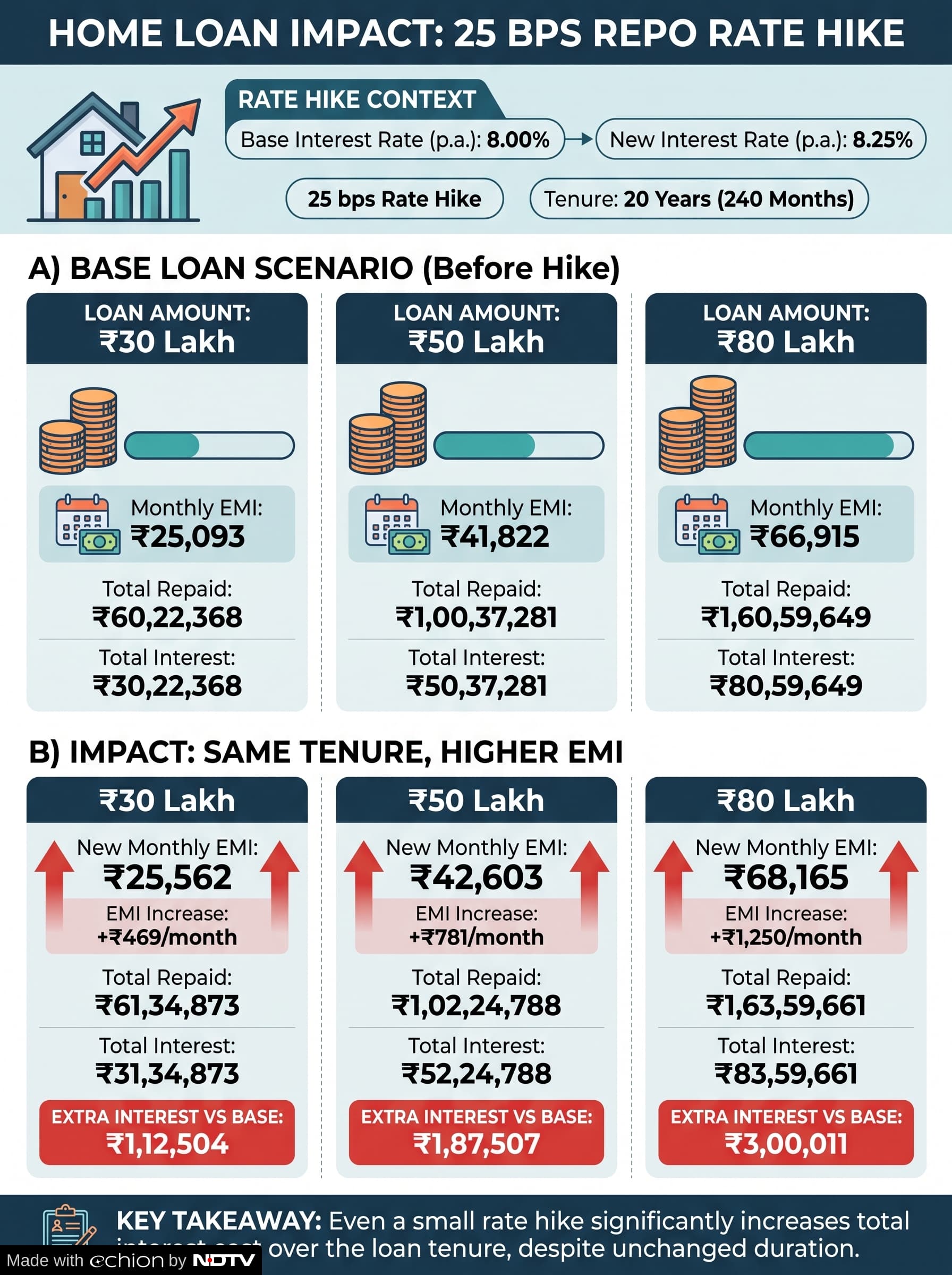
Higher EMI Or Longer Tenure: What Should You Choose?
Option 1: Pay A Higher EMI
Borrowers who have enough room in their monthly budgets can consider increasing their EMI after an interest rate reset. This helps them repay the principal faster and can reduce the total interest paid, provided the higher payment is maintained and the loan terms allow it.
This option may suit salaried professionals whose incomes have grown, households with low existing debt, or borrowers who expect their earnings to rise steadily.
However, a higher EMI should not come at the cost of essential expenses, insurance premiums or emergency savings. Homeowners should also account for other financial commitments, such as children's education, retirement contributions and parents' healthcare.
Option 2: Extend the loan tenure
Borrowers who are already stretched may prefer to keep their EMI unchanged and allow the lender to extend the repayment period, where permitted.
This provides immediate relief because the monthly outgo does not rise as much, or may remain unchanged. But the borrower stays in debt for longer and generally pays more interest over the extended period.
Adhil Shetty says a longer tenure can be useful for mid-career professionals who face rising household expenses or have variable incomes.
"A longer tenure keeps the EMI lighter, which helps when income is uneven and acts as a cushion in tight months, though the loan costs more overall and may run closer to retirement," he said.
The risk is that borrowers may continue paying interest for years longer than planned. Those approaching retirement should be especially careful about extending a home loan into a period when their regular income may fall.
What Does The Math Say?
Consider a borrower with an outstanding home loan of Rs 50 lakh and 20 years remaining. Assume the interest rate rises from 8.50 per cent to 8.75 per cent. The following illustration shows how a borrower might weigh the choices.
The figures are estimates based on standard monthly EMI calculations. They assume the interest rate remains unchanged after the initial adjustment, with no fees or further rate changes.
| Loan scenario | Approximate monthly EMI | Repayment period |
| Rs 50 lakh at 8.50% for 20 years | Rs 43,391 | 20 years |
| Rs 50 lakh at 8.75% for 20 years | Rs 44,160 | 20 years |
Under these assumptions, the monthly EMI rises by about Rs 769. That may seem manageable to one household but could be significant for another already dealing with rent, school fees, insurance and everyday expenses.
The illustration also shows why borrowers should ask their lender for a revised repayment schedule rather than assume the rate hike will automatically translate into a particular EMI increase. Depending on the lender's policy and the borrower's instructions, the adjustment may instead affect the loan tenure or involve a combination of higher EMIs and a longer repayment period.
The actual impact will depend on the outstanding principal, remaining tenure, existing interest rate, lender's benchmark and the size of the rate reset.
A Third Option: Prepay The Loan When You Have Surplus Money
Borrowers do not necessarily have to choose between a permanently higher EMI and a much longer loan tenure. Part-prepayment can offer a middle path.
For example, a borrower who receives an annual bonus, a salary arrear or proceeds from an investment may use part of that money to reduce the outstanding principal. A lower principal means less interest accrues in the future. Depending on the lender's repayment rules, the borrower may be able to reduce the tenure while keeping the EMI unchanged.
Adhil Shetty points to this approach as a way to lower borrowing costs without committing to a higher monthly payment. "Many borrowers put bonuses or surplus savings towards the principal, which can cut interest and shorten the tenure without locking them into a higher EMI, though terms can vary by lender," he said.
However, borrowers should not use all their savings to prepay a home loan. Maintaining an emergency fund is important, particularly when employment or household income is uncertain. They should also compare the benefit of prepayment with other financial priorities, including expensive outstanding debt and essential insurance cover.
Before making a part-prepayment, borrowers should ask their lender how the payment will affect the outstanding principal, EMI and remaining tenure. They should also check the applicable terms and charges.
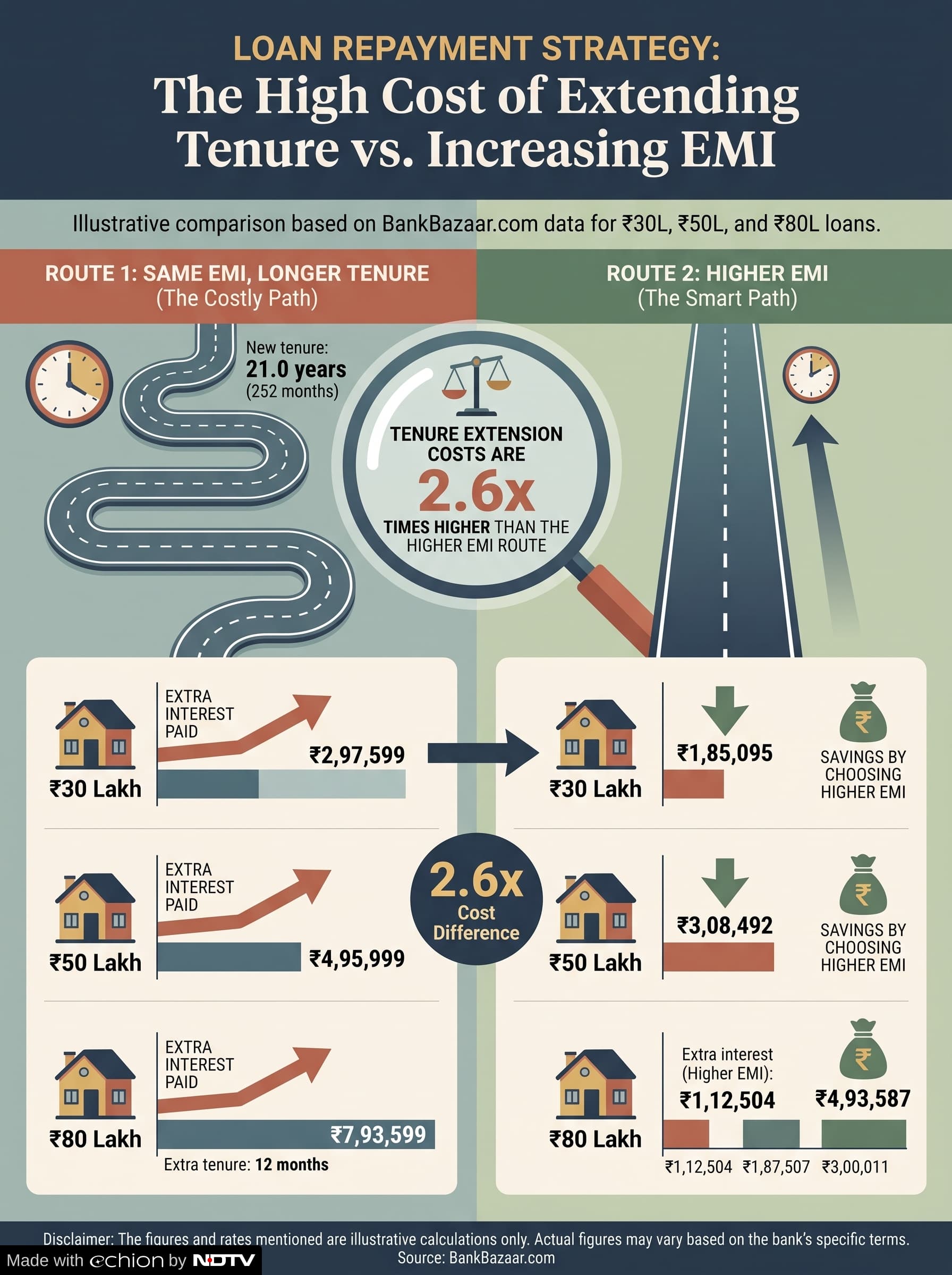
What Options Do Home Loan Borrowers Have Under RBI Rules?
RBI's framework for floating-rate loans linked to changes in benchmark interest rates provides borrowers with options when their repayment terms are reset. These include increasing the EMI, extending the number of instalments, combining the two approaches, switching to a fixed interest rate where available under the lender's policy, and making part or full prepayments. The applicable terms and charges should be checked with the lender.
Borrowers should contact their bank or housing finance company and ask for the revised interest rate, the new repayment schedule and the total interest payable under each available option.
They should also check whether the lender has increased the EMI, extended the tenure or made both changes. A longer tenure can be easy to overlook when the monthly instalment remains unchanged, but it can materially affect the total repayment.
KioskNews shows a cleaned-up reading view extracted from the publisher’s page — the original always lives on their site, not ours.