OPINION: Trump's U.N. speech, a stark contrast with past presidents
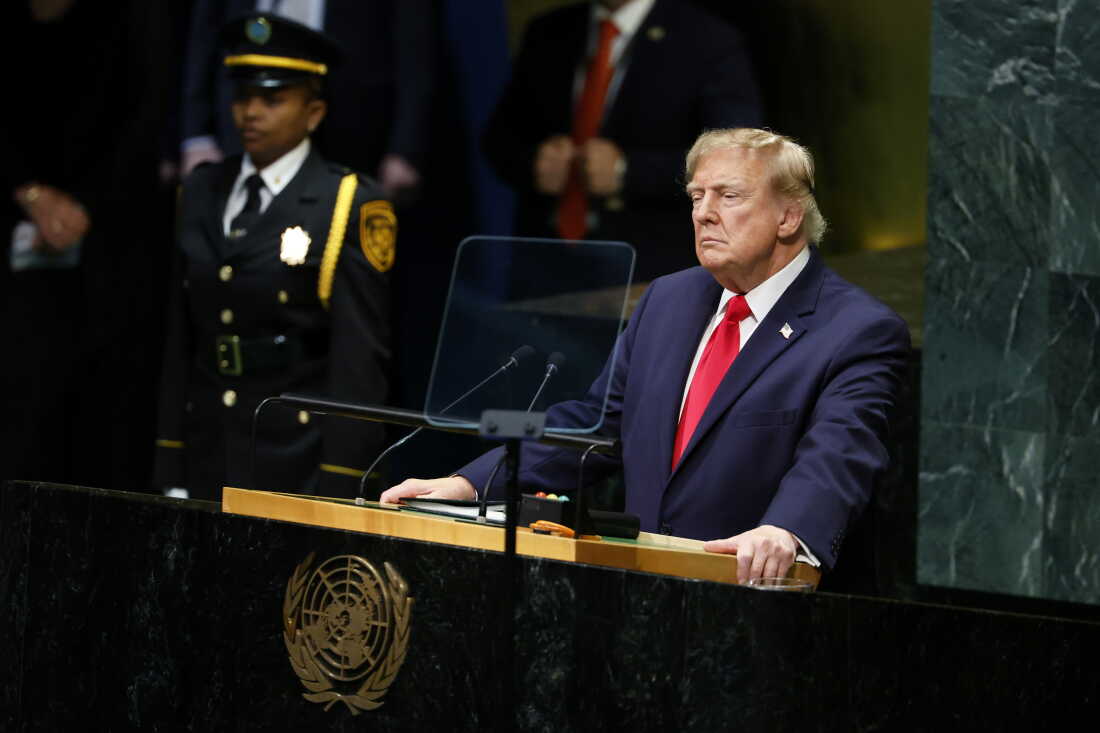
President Trump speaks during the 81st session of the United Nations General Assembly at U.N. headquarters in New York City on Sept. 22. Chip Somodevilla/Getty Images/Getty Images North America hide caption
toggle caption
Chip Somodevilla/Getty Images/Getty Images North America
The world took note when President Trump told the United Nations General Assembly this week that he had asked himself whether to make a deal with Iran - or...
"Do I annihilate the Islamic Republic…
"Do I drive them into hell with no chance of survival and no hope of future greatness or generations?"
Those words seem especially forbidding from a leader who can command armies to march and missiles to fly.
On August 6, 1945, President Harry Truman told the world the United States had dropped the first atomic bomb, on Hiroshima, Japan. It instantly killed an estimated 70,000 people. Some 40,000 more died days later in Nagasaki, and tens of thousands more from radiation illnesses in the days, weeks, months and years thereafter.
In his speech announcing the nuclear attack on Hiroshima, President Truman called it "a harnessing of the basic power of the universe," and added cautions about "protecting the world from the danger of sudden destruction."
Nuclear weapons have not been used in war since. And Truman's successors have been pointedly measured when they talk about them. As President Ronald Reagan put it, "a nuclear war cannot be won and must never be fought."
When President John F. Kennedy ordered US ships to blockade Cuba to prevent the Soviet Union from installing nuclear missiles in 1962, he told Americans, "We will not prematurely or unnecessarily risk the costs of worldwide nuclear war in which even the fruits of victory would be ashes in our mouth."
In 1974, President Gerald Ford told the U.N. General Assembly, "A very stark reality has tempered America's actions for decades and must now temper the actions of all nations. Prevention of full-scale warfare in the nuclear age has become everybody's responsibility. Today's regional conflict must not become tomorrow's world disaster."
And in 2017, President Obama visited the Peace Park that now stands in Hiroshima and said, "Among those nations like my own that hold nuclear stockpiles, we must have the courage to escape the logic of fear and pursue a world without them."
All strong words from presidents sworn to protect the United States. So strong and measured, they might have felt it wasn't necessary to add threats of annihilation, and "no chance of survival…"
KioskNews shows a cleaned-up reading view extracted from the publisher’s page — the original always lives on their site, not ours.