Sea spider with hairy feet, three lips, and red eyes found in Canada
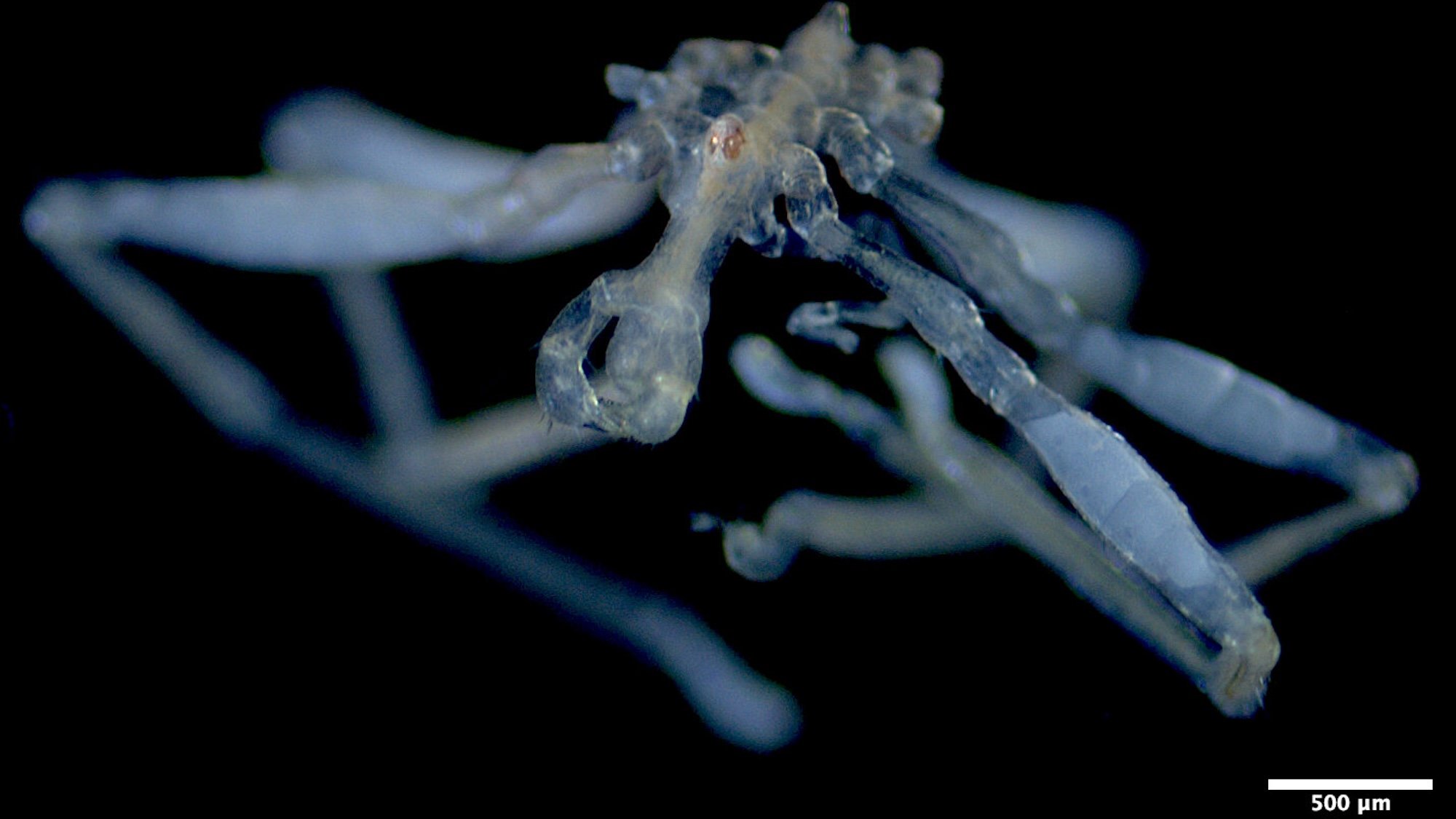
Halloween season doesn’t technically start until October, but marine biologists are celebrating a little early this year. In a recently published study for the journal Organisms Diversity & Evolution, ecologists at the University of British Columbia have described a pair of newly identified oceanic horrors. Two species of sea spider—one that views the world through red eyes, and another crawling with parasites.
Sea spiders aren’t spiders, per se, but they are related to arachnids and fellow arthropods such as horseshoe crabs and scorpions. The ocean animals first evolved around 500 million years ago and range anywhere between less than half-an-inch to over two feet in size. Some species have as many as 12 legs, while most of them suck up their nutrients using a proboscis.
“They’ve retained some weird traits,” conceded UBC zoologist and study co-author Cormac Toler-Scott in a university profile.
The weirdness doesn’t stop there. Sea spiders breathe through the skin, and females produce eggs along their limbs that eventually extrude through specialized pores. Males then use dedicated limbs called ovigers to grab the eggs, glue them to their own legs using secretions, then rear them on their own. But as unique as they are, biologists still know little about the often hard-to-reach sea spiders.
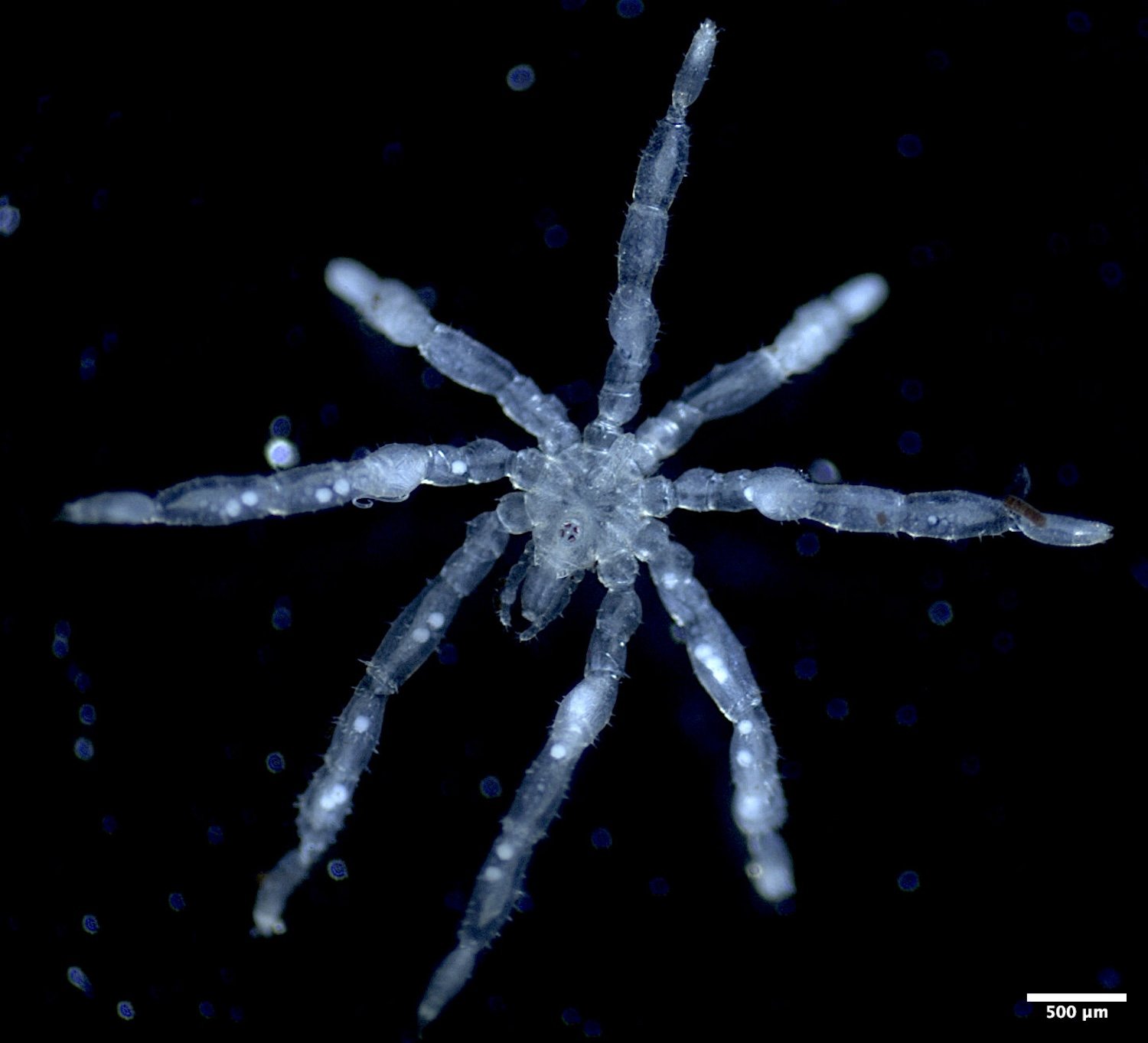
Toler-Scott spotted both new species while conducting dives near Vancouver at depths of around 60 feet in northwestern Canada’s Salish Sea. The first sea spider, Callipallene pilosuspedes, is named in honor of its “hairy feet” and features red eyes. It also has a three-lipped, triangular proboscis covered with sensory barbs, as well as ovigers also used for grooming.
The second species known as Tanystylum kiixin is named after an ancient Indigenous village near the site of its discovery. The second word, pronounced “kee-hin,” derives from a word for the sound of crashing ocean waves. Unlike C. pilosuspedes, T. kiixin’s shorter limbs make it unable to consistently groom itself. The subsequent buildup of grime makes it a prime home for even smaller parasites.
“[It’s] an ecosystem within an ecosystem within an ecosystem,” said Toler-Scott.
The discoveries are the first newly described sea spiders from the Salish Sea in nearly 100 years. Unfortunately, their identification is a testament to an issue much scarier than any sea spider.
“I was interested in how sea spiders are impacted by climate change and human disturbance, because marine invertebrates in the Salish Sea are particularly at risk,” explained Toler-Scott. “That’s largely because people don’t know much about what species exist here and what their lifestyle is.”
KioskNews shows a cleaned-up reading view extracted from the publisher’s page — the original always lives on their site, not ours.