After Typhoon Samuel’s exit, Philippines likely storm-free in coming days

Already have Rappler+?
to listen to groundbreaking journalism.
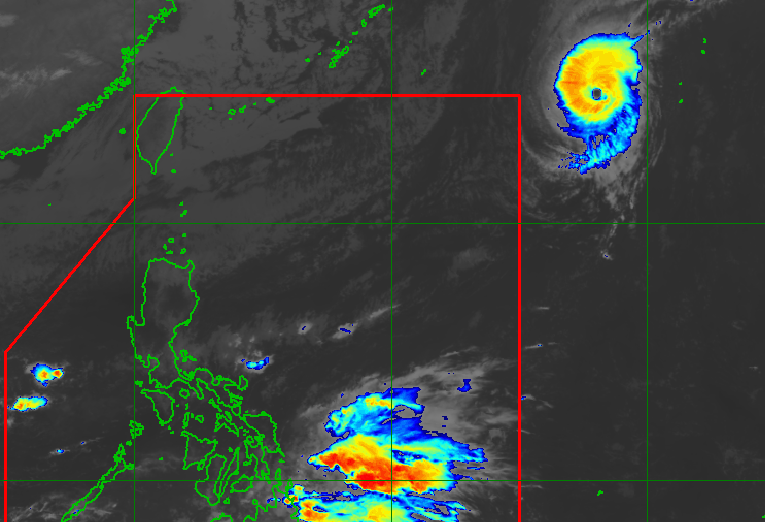
SAMUEL. Satellite image of Typhoon Samuel (Cempaka) outside the Philippine Area of Responsibility as of November 10, 2026, 8 am.
PAGASA
The northeast monsoon is affecting Luzon on Tuesday, November 10, while the easterlies are affecting the rest of the country
AT A GLANCE
- Typhoon Samuel (Cempaka) left the Philippine Area of Responsibility on Monday, November 9, and no other potential tropical cyclones are being monitored.
- The northeast monsoon and the easterlies are causing rain in parts of the country on Tuesday, November 10.
This is AI-generated. Read the article for full context. Report any errors.
MANILA, Philippines – New tropical cyclones are less likely to develop within or enter the Philippine Area of Responsibility (PAR) in the next two weeks or so, following the swift exit of Typhoon Samuel (Cempaka).
The Philippine Atmospheric, Geophysical, and Astronomical Services Administration (PAGASA) said Samuel left PAR at 4 pm on Monday, November 9, just hours after its entry at 8:40 am.
It was the Philippines’ 19th tropical cyclone for 2026, and the first for November, but stayed far from land and had no impact on the country.
As of 8 am on Tuesday, November 10, Samuel was already 1,720 kilometers east northeast of extreme Northern Luzon, moving east northeast or away from PAR at 25 kilometers per hour (km/h).
At the time of its exit from PAR on Monday afternoon, the typhoon had maximum sustained winds of 130 km/h. It has since strengthened, with its maximum sustained winds reaching 155 km/h on Tuesday morning. Its gustiness is now up to 190 km/h.
On Tuesday, the northeast monsoon or amihan is affecting Luzon, while the easterlies or warm winds from the Pacific Ocean are affecting the rest of the country.
The northeast monsoon may cause moderate to at times heavy rain in Aurora, Quezon, and Camarines Norte; light rain in Cagayan Valley and the Cordillera Administrative Region; and isolated light rain in the rest of Luzon.
The easterlies are bringing scattered rain and thunderstorms to Eastern Samar, Southern Leyte, Bohol, Caraga, the Davao Region, Misamis Oriental, and Camiguin, as well as isolated rain showers or thunderstorms to the rest of the Visayas and the rest of Mindanao.
The current presence of El Niño in the tropical Pacific Ocean does not mean there will be no rainfall in the Philippines or zero tropical cyclones inside PAR.
El Niño only leads to reduced rain, and tropical cyclones can still enter PAR. Tropical cyclones could be fewer, but they may still reach typhoon or even super typhoon status during El Niño. – Rappler.com
KioskNews shows a cleaned-up reading view extracted from the publisher’s page — the original always lives on their site, not ours.