Inside The BJP-Akali Dal Reunion: How 6 Years Of Bitter Split Ended
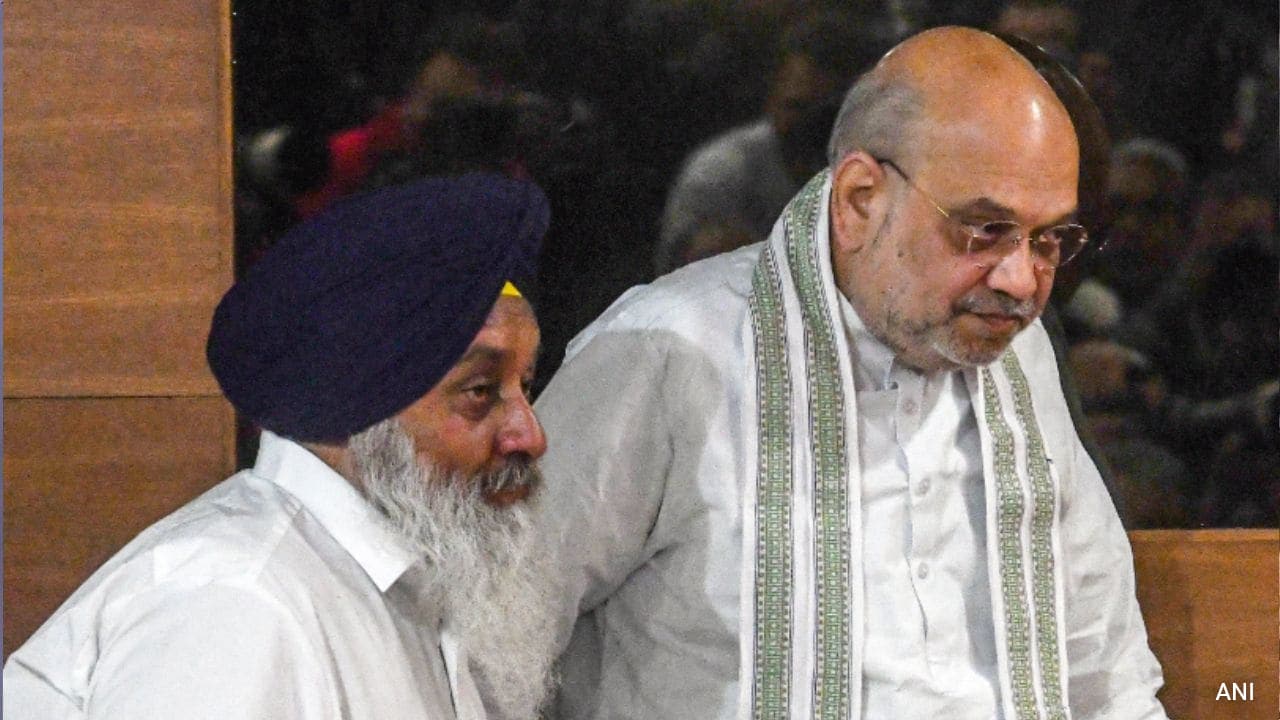
Extensive research through surveys, back-channel negotiations and efforts to bring leaders from both parties on the same page were among the factors that shaped the BJP-Akali Dal alliance for the 2027 Punjab Assembly elections. Ultimately, the Akali Dal's organisational network and the BJP's assessment of its electoral winnability proved decisive in sealing the alliance.
Sources from both parties said that as early as April/May, the BJP leadership began consulting with the BJP Punjab unit on whether to re-form an alliance with the Akalis with Punjab polls approaching.
While some Punjab BJP leaders were firmly against re-forming the alliance, others felt that the BJP would benefit electorally from a renewed partnership with the Akalis.
However, the BJP chose not to pre-emptively decide on this and so commissioned research on the current political landscape.
Three Types Of Surveys But One Central Question - Is The BJP Able To Compete In Punjab?
Information was compiled by the BJP through three distinct research methods: a party survey, an independent survey and also a party research function.
One area of concern to the BJP was the lack of its network and winnability in rural Punjab.
Although it has successfully built up its network in urban and semi-urban areas, the BJP - despite employing Sikh leaders and even having Kewal Singh Dhillon as state BJP chief - has struggled to replicate this success in rural regions.
While the Akali Dal has suffered electorally, it has still maintained its strong network and Panthic connection.
Sources noted that, according to the research, the BJP would find it challenging to enhance its rural winnability without a more robust alliance partner. Likewise, the Akalis recognised that the BJP had succeeded in winning over urban and semi-urban electorates and that this could effectively supplement the Akalis' traditional electorate.
Electoral Winnability Proves To Be Important Factor
As the BJP analysed how to re-connect with the Akalis, it was also looking at whether a new alliance would enhance the parties' electorally.
Previously, the BJP contested 23 assembly seats and the Akali Dal 94. But much has changed politically since they split in 2020.
There has been a growing feeling within the BJP that it should endeavour to play a broader role in Punjab, and not just stick to its traditional electorates, the research had also shown that there were constraints to the BJP's ability to contest elections alone.
For the Akali Dal, merging with the BJP would enable them to re-energise themselves. By uniting the BJP's urban network and national leadership with the Akalis' traditional rural and Panthic network, the Akalis can make use of the BJP's political muscle.
Sources from the Akali Dal told NDTV that the party's network, Panthic connection and institutional power continue to be key components of its political powerbase. Of particular importance to the Akalis is the Shiromani Gurdwara Parbandhak Committee (SGPC) which continues to be a key player in the party's traditional Panthic network.
Although newer political parties have tried to encroach on the SAD's traditional domain, so far none has been able to match the SAD's network, sources said.
From July - Developing Network And Secret Negotiations
Following Satish Poonia becoming the BJP's Punjab in-charge, the party also began to intensify its network in the state from July.
Alongside this, secret talks regarding a potential alliance continued to progress.
It was reported that one of the initial stages in the alliance negotiations involved Kewal Singh Dhillon meeting with Akali leader Parvinder Chota. This was one of the first times that the two parties had openly discussed the potential for an alliance.
Intensive cross-party talks then began.
Key BJP figures involved in the alliance talks and analysis were Kewal Singh Dhillon, Ashwani Sharma, Sunil Jakhar and former Punjab Chief Minister Captain Amarinder Singh.
Approximately four sets of meetings were held at state and central level.
August 7 - Meeting Between SAD Chief Sukhbir Badal And PM Modi
On August 7, SAD chief Sukhbir Singh Badal met PM Modi in parliament. This was a key moment in the alliance process.
While it provided additional impetus to the alliance talks, decisions regarding the alliance were still under review at various levels.
The BJP leadership continued to analyse the political pros and cons of the alliance, a final understanding was subsequently reached, sources said.
The research and talks had increasingly shown that the BJP required enhanced rural and Panthic network connection. Likewise, the Akali Dal recognised that it needed to both bolster and diversify electorally.
After extensive analysis, sources said that a shared understanding was reached and a joint political plan was then drawn up.
Why The Akalis Felt An Alliance Would Benefit Them
The Akalis, sources said, were keen to return to the NDA, they also wished to re-establish themselves politically in a state where they have incurred severe electoral losses.
The Akalis possess a strong network, Panthic connection and rural presence. They recognised that the BJP had also successfully broadened its political acceptance in urban and semi-urban areas.
Accordingly, sources from the SAD said that the alliance would allow the parties to harness their respective strengths and avoid overlapping politically.
The Akalis believe that, thanks to its strong network, the alliance can better establish itself in rural areas where the BJP has been trying to grow its network.
How Differences Will Be Managed - Looking Forward
The alliance has been formally announced, this does not necessarily mean that all political and policy differences have been overcome.
As mentioned, the farm laws were the catalyst for the 24-year-old alliance's collapse in September 2020. The Akalis left the NDA and Harsimrat Kaur Badal resigned from the Union Cabinet.
On Tuesday, both parties made it clear at a joint press conference that they are united, with Amit Shah declaring "ab NDA complete ho gaya hai".
Shah underscored that the Akali Dal would continue to be the senior partner, or bada bhai, in the alliance. When asked who would be the chief minister if the alliance comes to power, Amit Shah said, "Jo bada bhai hota hai, wohi chief minister hota hai (The elder brother is the one who becomes the Chief Minister)."
Seat allocation was to be discussed later.
BJP chief Nitin Nabin and Sukhbir Singh Badal will also engage in in-depth talks in the next three months on farmer issues, Punjab's economy and the creation of jobs for the youth. A unified political plan will then be formulated based on these talks, Shah added.
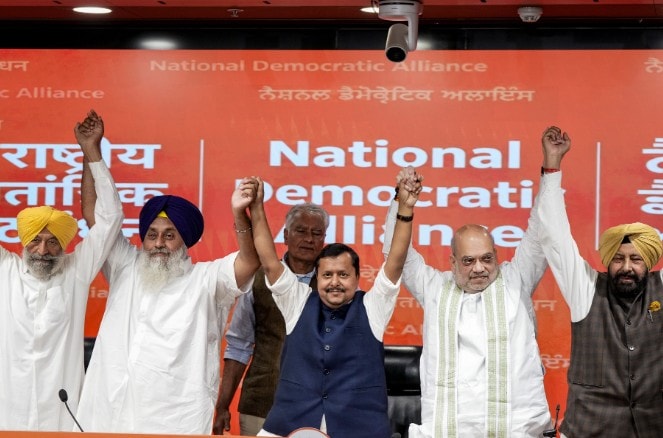
The leaders projecting a united front after rebooting the alliance
In addition to devising a common political plan, the BJP and Akali Dal are expected to co-operate in drawing up a manifesto, and in campaigning and networking. Plans include a joint yatra, a unified campaign to oppose the AAP government and a chargesheet exposing what the state government is alleged to have done wrong.
Issues such as drug abuse, corruption, farming, jobs, law and order and the state of Punjab's economy are likely to be key themes of the campaign.
A New Political Setup But A Changing Punjab
Both parties now have differing aspirations.
While the BJP is aiming to greatly increase its electoral presence - compared to its previous tally of 23 seats - the Akali Dal wishes to continue as the leading local political partner and to utilise its network to restore its electoral power.
Having officially announced their alliance, both parties now seem to agree that their political strengths are mutually beneficial. Potentially, they run a greater risk by choosing to stand for election in Punjab independently, as opposed to forming an alliance.
KioskNews shows a cleaned-up reading view extracted from the publisher’s page — the original always lives on their site, not ours.