Open Cosmos steps up Europe's space sovereignty game, shows off ConnectedCosmos satellites
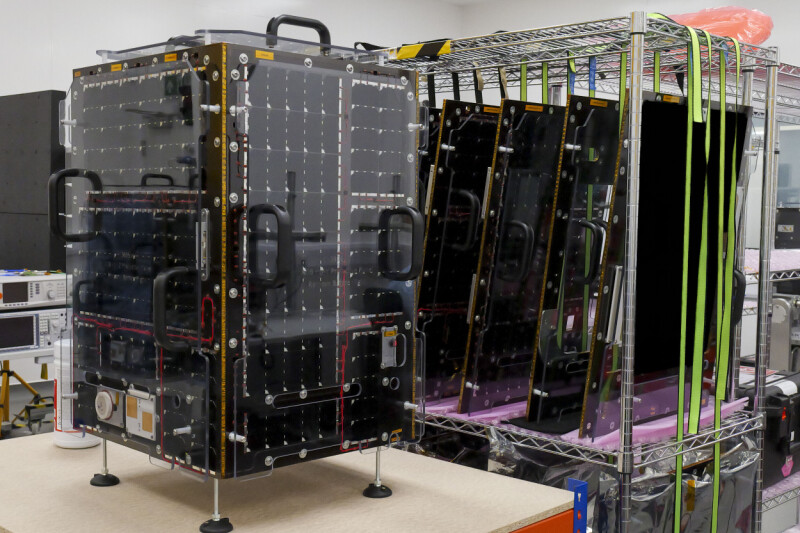
El Reg takes a tour of a satellite nursery for customers thinking about de-risking dependence
The question of who controls satellite-based connectivity came into sharp focus in recent weeks after Ukraine's service was throttled and then restored.
Wherever Reg readers stand on those activities involving SpaceX's Starlink and Starshield, reliance on a foreign power that may not stay friendly is now under intense scrutiny. Alternatives exist, including Eutelsat OneWeb's constellation, and more are in the works. The Register toured the Harwell facility of another contender – Open Cosmos.
The business is just over a decade old and operates from multiple locations, including the UK, Greece, and Portugal. It has launched dozens of missions over the years, including its OpenConstellation service, which organizations use to share data from Earth observation satellites.
REG AD
When it launched OpenConstellation in 2022, the aim was to have 25 satellites offering a mix of spatial and spectral resolution. While other services, such as the European Commission's Copernicus, provide similar data, OpenConstellation lets customers assign satellites specific tasks for specific data collection.
REG AD
However, it is ConnectedCosmos that will interest users concerned about putting all their connectivity eggs in a basket that might be abruptly snatched away. The first two satellites in the constellation are now in orbit; they were launched by Rocket Lab in January 2026. The business plans to operate more than 96 satellites by the end of 2028 and to achieve full coverage by 2030. The core connectivity backbone will consist of 192 satellites, which founder and CEO Rafel Jordà Siquier described as "the foundation, not the ceiling."
The company reckons it can churn out one satellite per day, and judging by what we saw in Harwell, that figure seems realistic, though it's a far cry from the approximately 70 Starlinks per week SpaceX claimed in its IPO filing.
Because ConnectedCosmos operates from an altitude above 1,000 km, it needs far fewer satellites, though at the cost of latency increases.
Jordi Barrera Ars, co-founder and CTO, told us that latency was "anything between 30 and 80 milliseconds." This is OK for most applications, but not great for some. Direct to smartphone is, for example, not currently on the cards. Open Cosmos's VP of Commercial Satcom, Danielle Edwards, said, "We're very much in the direct device business. Direct to smartphone is not an area that we have an interest in right now."
"Never say never…" she added, "and who knows what might come along next Tuesday. But for right now, the direct device play really is on the IoT side."
During the tour, Open Cosmos showed off its assembly and testing facilities (including temperature and pressure testing), as well as a shaker table that simulates launch conditions. The satellites themselves consist of a common bus, onto which solar panels and the payload are fitted. Then they are stored, ready for launch, in what one company representative called "the satellite nursery".
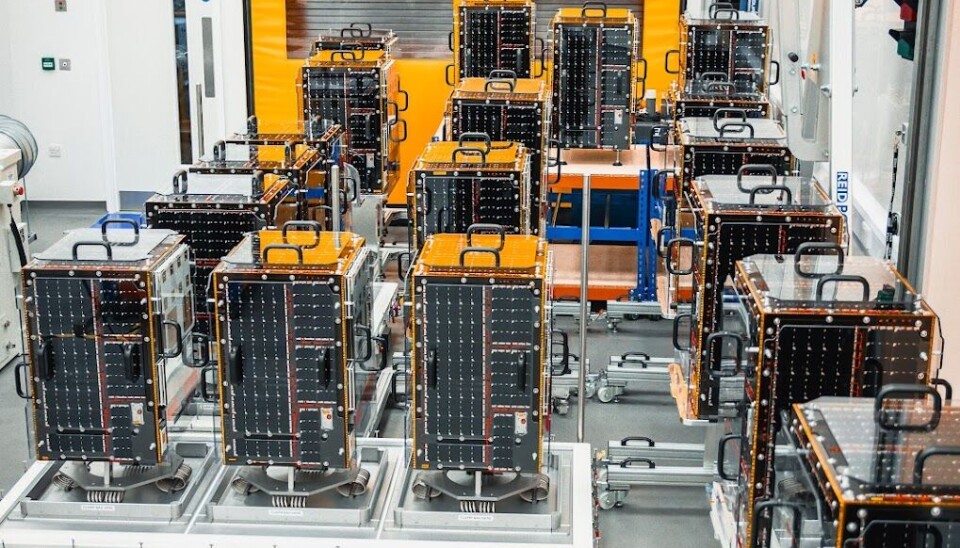
The approach is interesting: OpenConstellation satellites use the ConnectedCosmos constellation as a connectivity backbone, while the latter also provides point-to-point broadband. According to Open Cosmos:
"The constellation is deliberately designed around the requirements of government, institutional and commercial customers that need secure, resilient connectivity and clear custody of critical data."
REG AD
It is very much a European alternative to customers who are worried about existing services.
The service on offer from Open Cosmos will not, for example, be suitable for guiding drones traveling at high velocities, that isn't really the point, but it will provide sovereign communication channels that aren't beholden to the whim of a man and a big, red Off switch. Where the Starlink constellation stands at well over 10,000 satellites, the numbers proposed by Open Cosmos are far more modest and less likely to alarm astronomers in quite the same way.
Plus, the company has sector experience through its OpenConstellation platform (as well as custom spacecraft built for individual customers). And, unlike so many in the industry, its satellites and facilities exist beyond PowerPoint presentations. After all, we've seen them. ®
KioskNews shows a cleaned-up reading view extracted from the publisher’s page — the original always lives on their site, not ours.