Maya apiary found near Tulum reveals roots of beekeeping traditions still practiced today
Archaeologists exploring sites along the route of the Maya Train a few years ago uncovered a pre-Hispanic Maya bee house — a finding that has since shed light on how households from roughly 500 to 800 years ago may have produced honey.
The National Institute of Anthropology and History (INAH) said the structure was excavated in 2022 near Aktun Chen Natural Park, about 16 kilometers north of Tulum in the Riviera Maya.
On Tuesday, INAH released details from several years of analysis of the site, saying the apiary was likely used to raise Melipona beecheii, a stingless native bee whose honey, known as melipona honey, remains prized in southeastern Mexico.
It is used in foods, traditional remedies and other products.
The discovery also provides new clues to how Maya households raised bees alongside their other daily activities, such as tending crops.
The limestone structure measures 19.5 meters long, 3.9 meters wide and 1.2 meters high. Archaeologists believe it was a ná’ajil kab, or bee house, that held rows of hollow logs known as jobones for raising stingless bees.
Archaeologist Luis Ernesto Narváez Mac said in an INAH press release the site probably dates to the Late Postclassic period, from 1200 to 1521, but said ceramic analysis is needed to establish a more precise chronology.

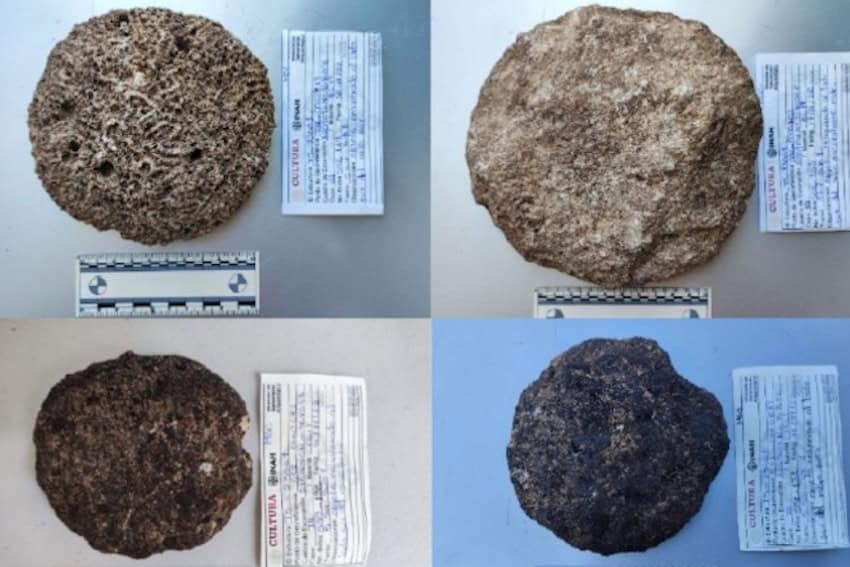
Excavators found 40 limestone and coral discs, 10 to 20 centimeters in diameter, near the structure’s walls. The discs likely served as lids for the log hives, INAH said.
They also recovered stone objects thought to be fishing-net weights, grinding stones and pottery fragments that may have come from vessels used to store honey.
Archaeologists said the bee house was part of a wider Maya household complex that likely included homes, storage spaces and maybe a shrine.
The find is separate from a 2024 INAH-announced discovery of three stone hive lids on a different Maya Train section in Quintana Roo.
Melipona bee populations in southeastern Mexico face threats from deforestation and pesticide use, while the decline of traditional beekeeping has reduced the number of people managing colonies — although one Mexico News Daily correspondent is bucking that trend.
MND has also explored and published the top five melipona honey skincare and beauty products.
KioskNews shows a cleaned-up reading view extracted from the publisher’s page — the original always lives on their site, not ours.