Saudi Arabia has not ruled out developing nuclear weapons, US intelligence warns - report

Classified US intelligence warns Saudi Arabia may still seek nuclear weapons, fueling bipartisan pushback in Congress against a proposed Trump administration civilian nuclear cooperation pact.

US intelligence assessments said Saudi Arabia has not ruled out developing a nuclear weapons program, according to classified documents provided to Congress and reviewed by officials who spoke to The Washington Post.
The assessment was included in classified documents submitted to Congress as part of a review of a US-Saudi agreement to expand civilian nuclear cooperation.
The intelligence assessment raised concerns among some US lawmakers over the agreement reached by US President Donald Trump’s administration, which would allow American companies to pursue tens of billions of dollars in nuclear energy projects in Saudi Arabia.
The agreement has also drawn scrutiny because it could eventually allow Saudi Arabia to enrich uranium to 20%, according to The Washington Post. The deal initially limits enrichment to below 5%, but allows the limit to rise to 20% after an additional study and written agreement.
The Washington Post did note that uranium enriched to 20% is still below weapons-grade levels.
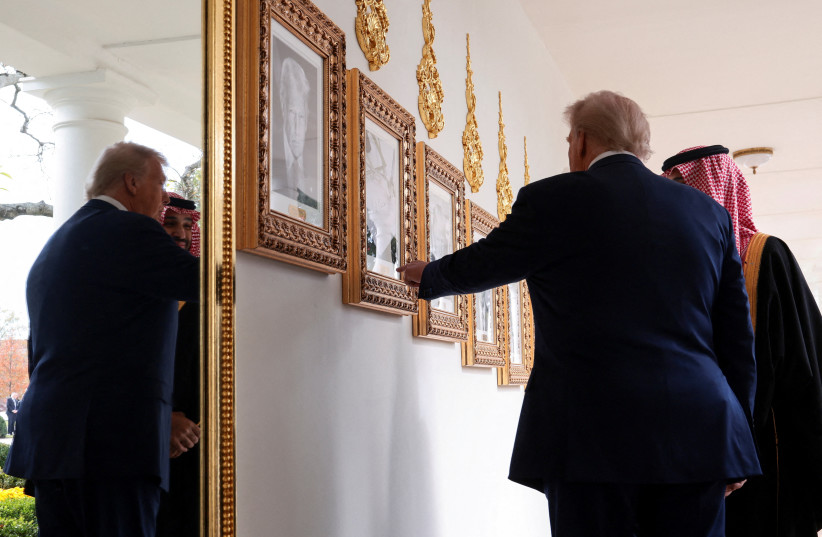
US Senators warn the agreement could give Saudi Arabia the ability to develop a bomb
The agreement is currently subject to a 90-day congressional review period, during which lawmakers can seek to block it.
A group of Democratic senators led by Ed Markey of Massachusetts and Jeff Merkley of Oregon said in a letter to Secretary of State Marco Rubio that the agreement could give Saudi Arabia the ability to enrich uranium and potentially develop nuclear weapons.
“The Trump administration is departing from precedent, adopting looser restrictions, and caving to Saudi demands,” the senators wrote.
Merkley told The Washington Post that the United States should not rely on assurances from the Saudi government regarding its nuclear intentions. He also questioned why Riyadh would seek the ability to enrich uranium domestically if its nuclear program were intended solely for civilian purposes.
The Saudi government did not respond directly to questions from The Washington Post but referred the newspaper to an earlier statement by Saudi Energy Minister Abdulaziz bin Salman, who said the program would be “peaceful” and developed with “the highest levels of responsibility and transparency.”
The State Department also defended the agreement, telling The Washington Post that the United States “does not and will not support a Saudi nuclear weapon program.”
The department said the agreement would expand nuclear energy cooperation while maintaining what it described as the strongest nonproliferation standards that could be achieved diplomatically.
The intelligence community's assessment was included alongside input from the State Department, according to US officials who spoke to The Washington Post on condition of anonymity because they were discussing classified information. The State Department's assessment was described as more confident in the agreement's safeguards and Saudi assurances.
The CIA declined to comment.
Another concern was that the agreement did not require Saudi Arabia to adopt the International Atomic Energy Agency's Additional Protocol, which gives the agency broader access to nuclear facilities and research sites.
Twenty nuclear nonproliferation experts, including former IAEA director general Hans Blix, warned in a letter to Congress this week that the inspection arrangements could make it difficult to determine whether Saudi Arabia was secretly developing nuclear weapons at undeclared facilities.

Saudi Arabia will develop a nuclear weapon if Iran does
Concerns over Saudi Arabia's nuclear ambitions have also been linked to comments by Crown Prince Mohammed bin Salman in 2018 that Riyadh would develop a nuclear weapon if Iran did so.
The Trump administration conducted joint Israeli strikes on Iranian nuclear facilities in 2025 and in 2026, but Iran's enriched uranium is believed to have survived the attacks under the rubble of the damaged facilities, according to The Washington Post.
The possibility of Saudi Arabia developing nuclear weapons has raised concerns among some US lawmakers that nuclear activity in the kingdom could contribute to a broader regional arms race.
The Trump administration has said the nuclear agreement is intended to strengthen US-Saudi ties and prevent Riyadh from deepening cooperation with countries including Russia and China.
The agreement could also have implications for US efforts to secure Saudi normalization of relations with Israel.
Trump has said normalization remains a requirement for the nuclear deal, although Saudi Arabia has not agreed to establish diplomatic relations with Israel while the Israeli government continues to oppose the establishment of a Palestinian state.
KioskNews shows a cleaned-up reading view extracted from the publisher’s page — the original always lives on their site, not ours.