Local cavers confront fear, discover hidden world in Samar
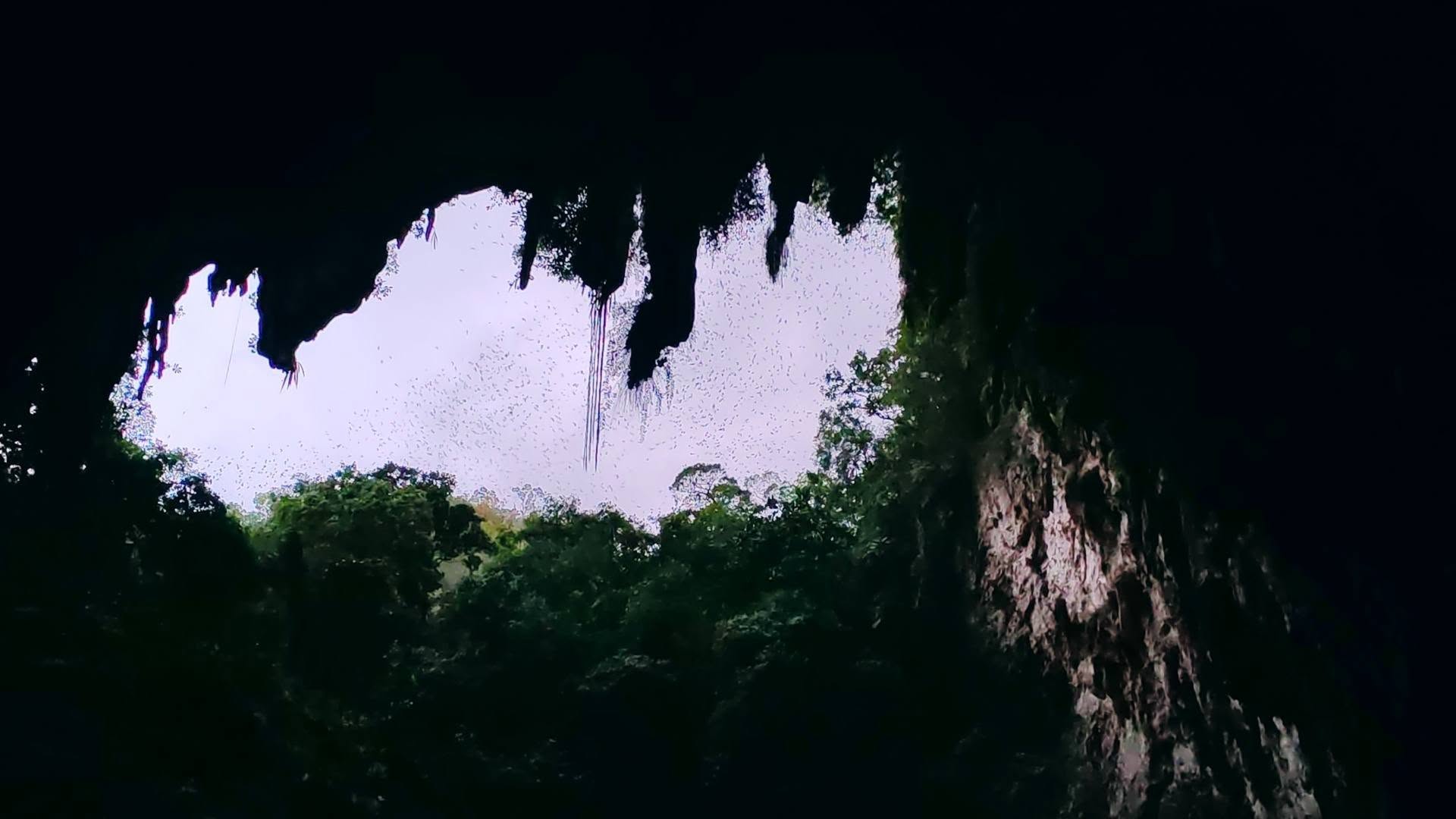
CALBIGA, Samar – For nearly an hour, Michael Salingsing, a 57-year-old teacher at Samar National School, sat patiently on a camp chair beside his tent near the mouth of Langun Cave, his Sony A7 IV camera pointed toward the dark opening.
He was waiting for the 5 pm bat exodus.
Then the first bats appeared.
Soon, the quiet of the late afternoon gave way to the sweeping movement of thousands of bats emerging from the cave and disappearing into the fading Samar sky.
Salingsing kept his camera trained on them. For him, the wait was part of the experience.
“It’s a different experience,” Salingsing said between shots.
Fear to fascination
For YouTuber Genesis Fortaleza, a member of the Calbayog Mountaineering and Outdoor Group (CMOG), the experience began with a different challenge: fear.
He had been hesitant to enter Langun-Gobingob, not only because of its reputation as the largest known cave system in the Philippines, but also because of the dangers he imagined waiting in the darkness.
He decided to go in anyway.
Fortaleza brought sets of lightings and a 360-degree camera, recording the cave’s formations and the bats circling near the campsite.
He had initially overthought the possible dangers of entering the cave, but eventually realized that unless he confronted his fear, he would never know what beauty was hidden below the surface.
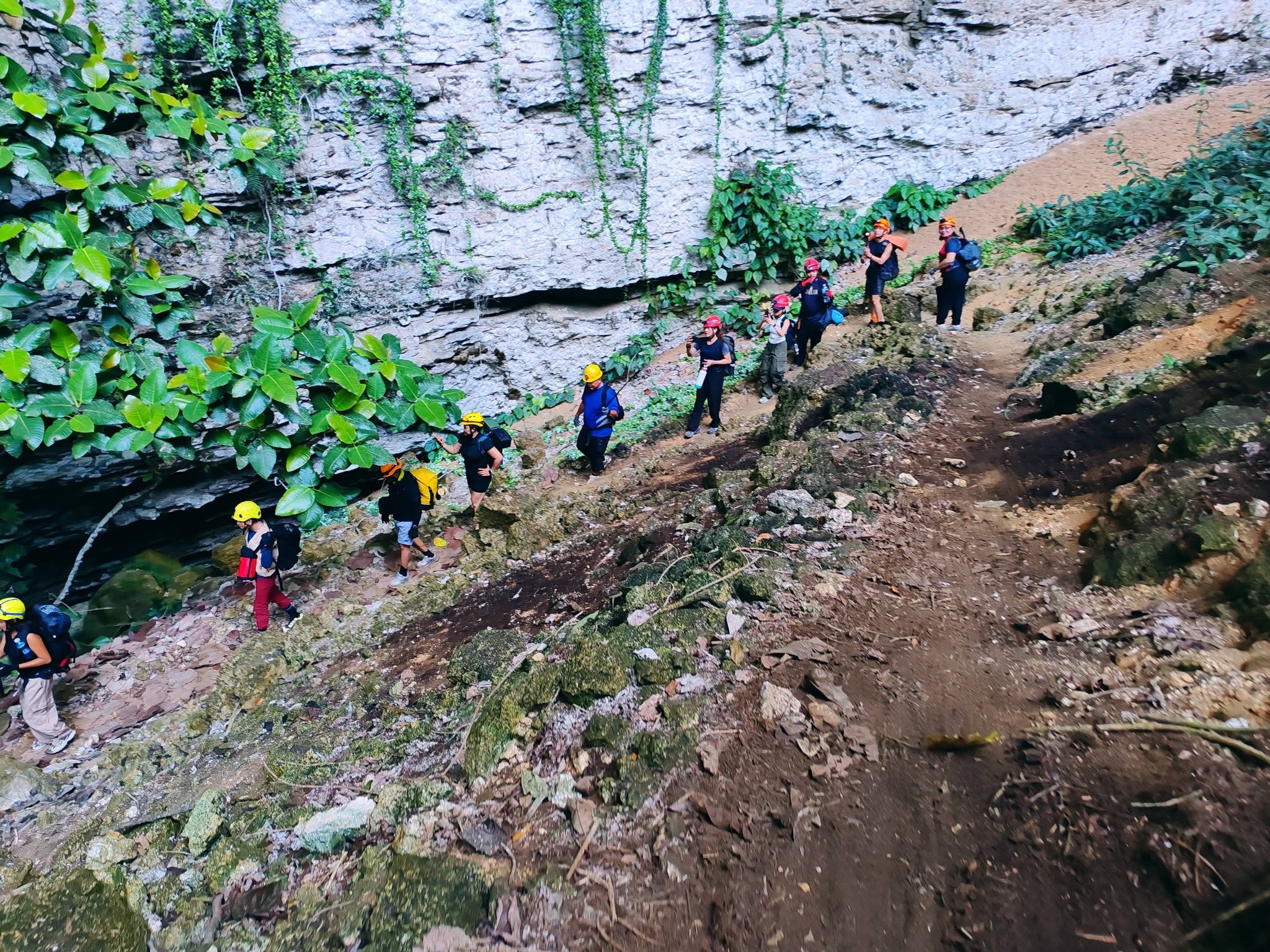
The journey was far from easy. The group descended steep sections, negotiated slippery rocks, walked through knee-deep mud and guano, and stood before towering formations that have developed over extraordinarily long periods.
With the guidance of the Speleo Samar PH team, however, the journey became more manageable. Once inside, the fear gradually gave way to fascination.
Fortaleza described the cave as another dimension, a quiet world of extraordinary beauty that is not easily seen by everyone.
“Minsan, kailangan mo talagang tumawid sa sarili mong dilim para lang makita ang totoong liwanag (Sometimes, you have to cross your own darkness to see the true light),” he said.
An adventurer but first-time caver, Jennifer Pallones admitted that the darkness was also something to overcome.
Pallones, also a teacher, said she was afraid to enter the cave, and it took a friend who had joined the activity to persuade her to try. She eventually went in.
After completing the experience, Pallones said she now felt ready to join another cave activity, having overcome her fear of enclosed or confined spaces.
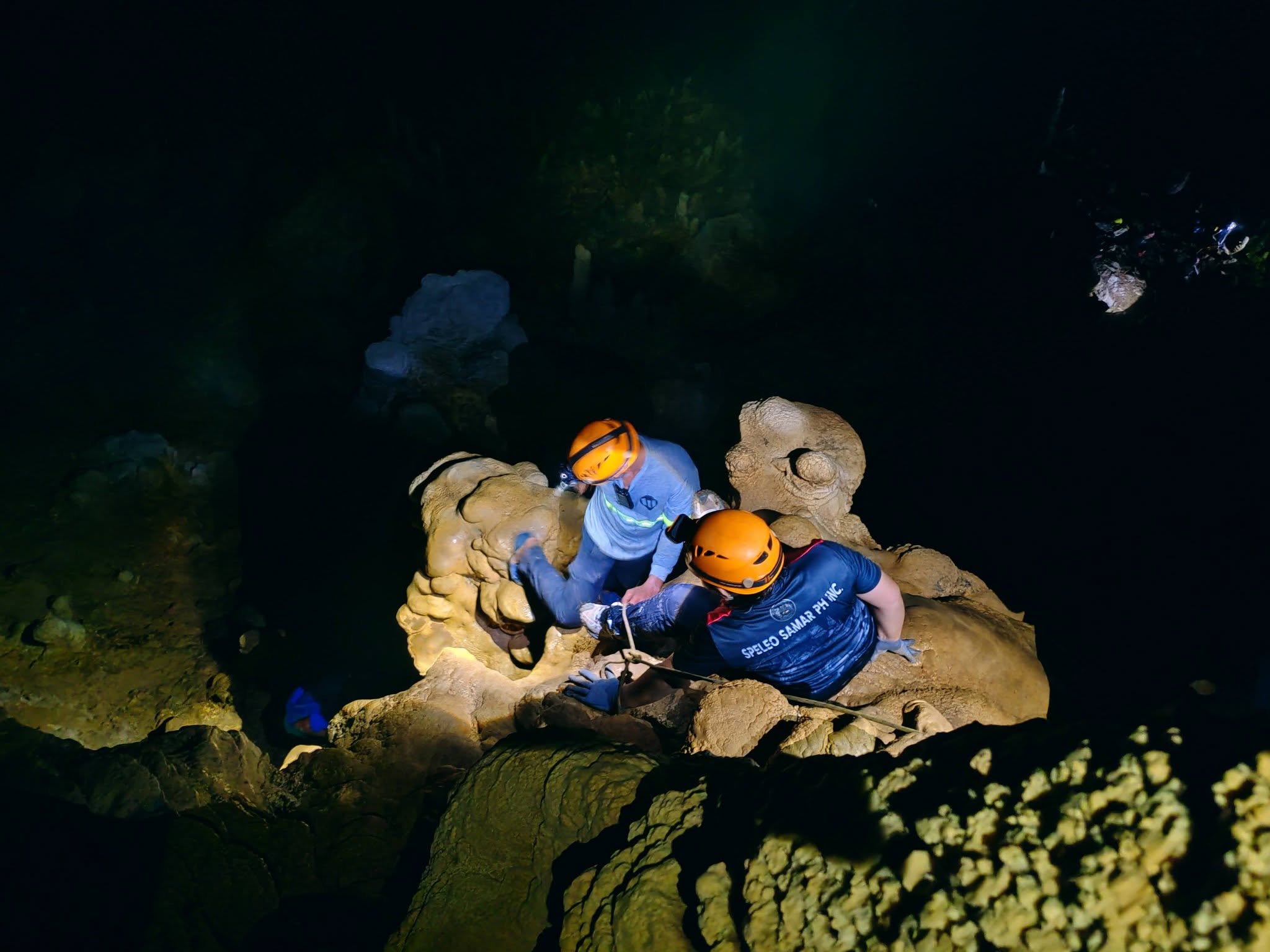
For Hope Doblon and other participants, the defining challenge came during a steep vertical descent.
“It was tough, but I’m glad I’ve survived it,” Doblon, a city government employee, said. “This is surely an addition to my caving experience, especially since I have a fear of heights.”
Enormous chambers
Langun-Gobingob in Barangay Panayuran in Samar’s Calbiga town is not an ordinary cave. It’s recognized as the largest known cave system in the Philippines, with an explored area reported at about 2,968 hectares and 12 immense chambers extending across roughly seven kilometers.
For people entering it for the first time, however, statistics quickly become secondary. Inside, the numbers become walls.
They become towering formations disappearing into darkness, enormous chambers swallowing the beam of a headlamp, and passages that make the outside world feel impossibly far away.
Participants Aura Anne Rose Tan, Rhea Libungan, Joel Lauron, Albert Dagal, and Jedee Magoncia, along with the other members of the group, experienced that underground landscape firsthand.
“Grabe, once-in-a-lifetime experience talaga ito, di na kami uulit (This is a once-in-a-lifetime experience, we won’t do this again),” participants joked as they confronted the steep wall descent.
The humor eased some of the tension, but the physical challenge was real.
Caving is not simply walking into a hole in the ground. It requires preparation, knowledge of the environment, appropriate equipment, teamwork and respect for the limitations of both the people and the cave.
The participants also got to experience the technical side of caving through a rope-assisted descent of a steep vertical section.
“Grabe, hindi kami na-orient beforehand na may ganito pala (We weren’t oriented beforehand that we’ll do something like this),” participants joked while trying to negotiate the descent.
For some, it was physically demanding. For others, it was a test of nerve.
Doblon’s fear of heights made the descent particularly challenging.
“It was botake (short for bonggang atake or major heart attack) and tough, but I’m glad I’ve survived it,” he said.
The experience left participants with a deeper appreciation of the skills and discipline involved in moving through underground environments.
Caving requires more than physical strength. It demands judgment.
A misplaced step can have consequences. A careless movement can damage a fragile formation. An inexperienced visitor can put both himself and his companions at risk.
That is why responsible caving places equal importance on safety and conservation.
Bats, crabs, gobies
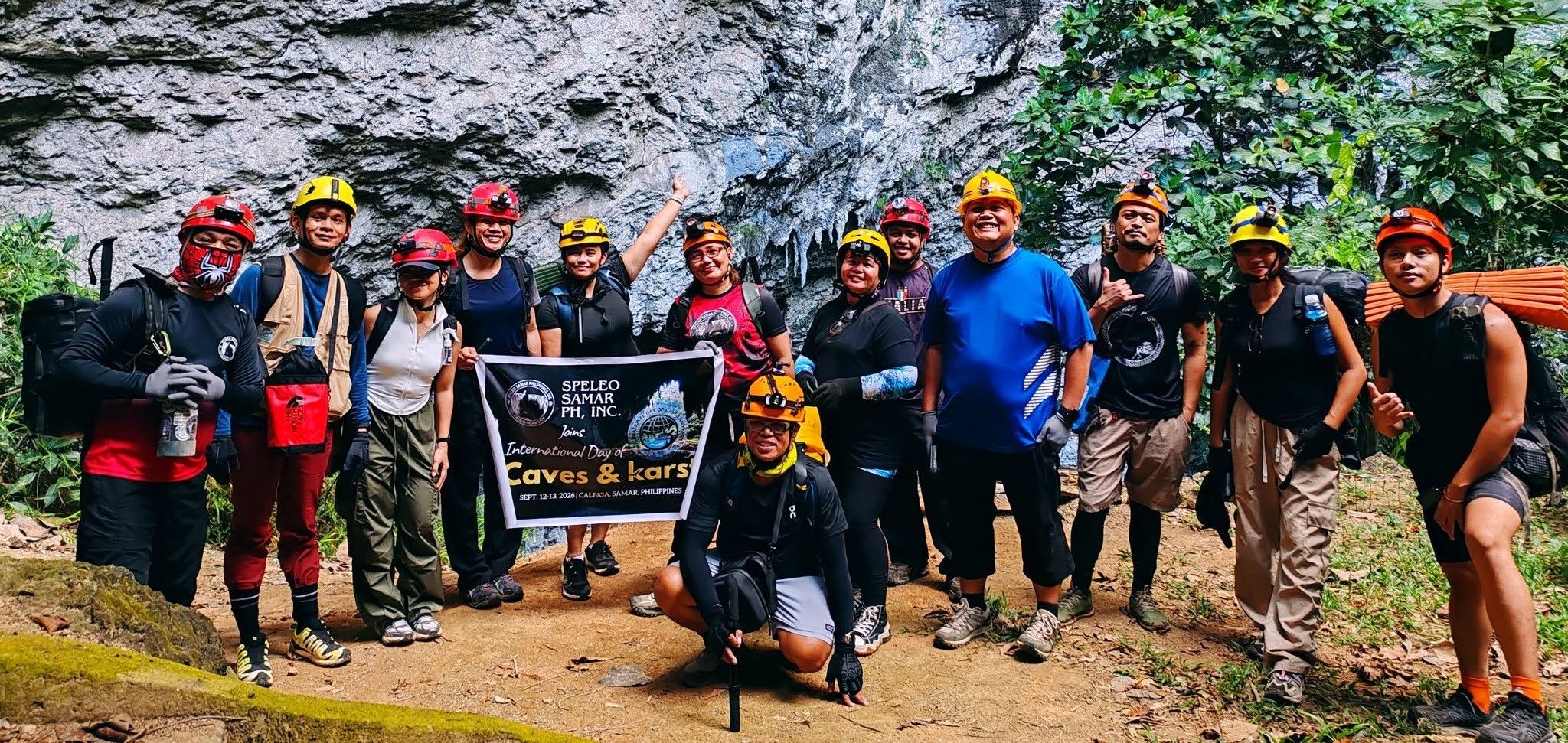
The timing of the activity wasn’t coincidence. The Speleo Samar PH Inc. joined the global observance of the first International Day of Caves and Karst on September 13, an annual observance proclaimed by UNESCO in 2025.
The organizers introduced participants to cave management and responsible caving, including the importance of minimizing disturbance to cave formations and wildlife.
For the visitors at Langun-Gobingob, the bats should not be merely part of the attraction as they’re using the cave as a roost and the surrounding landscape as part of the habitat they depend on.
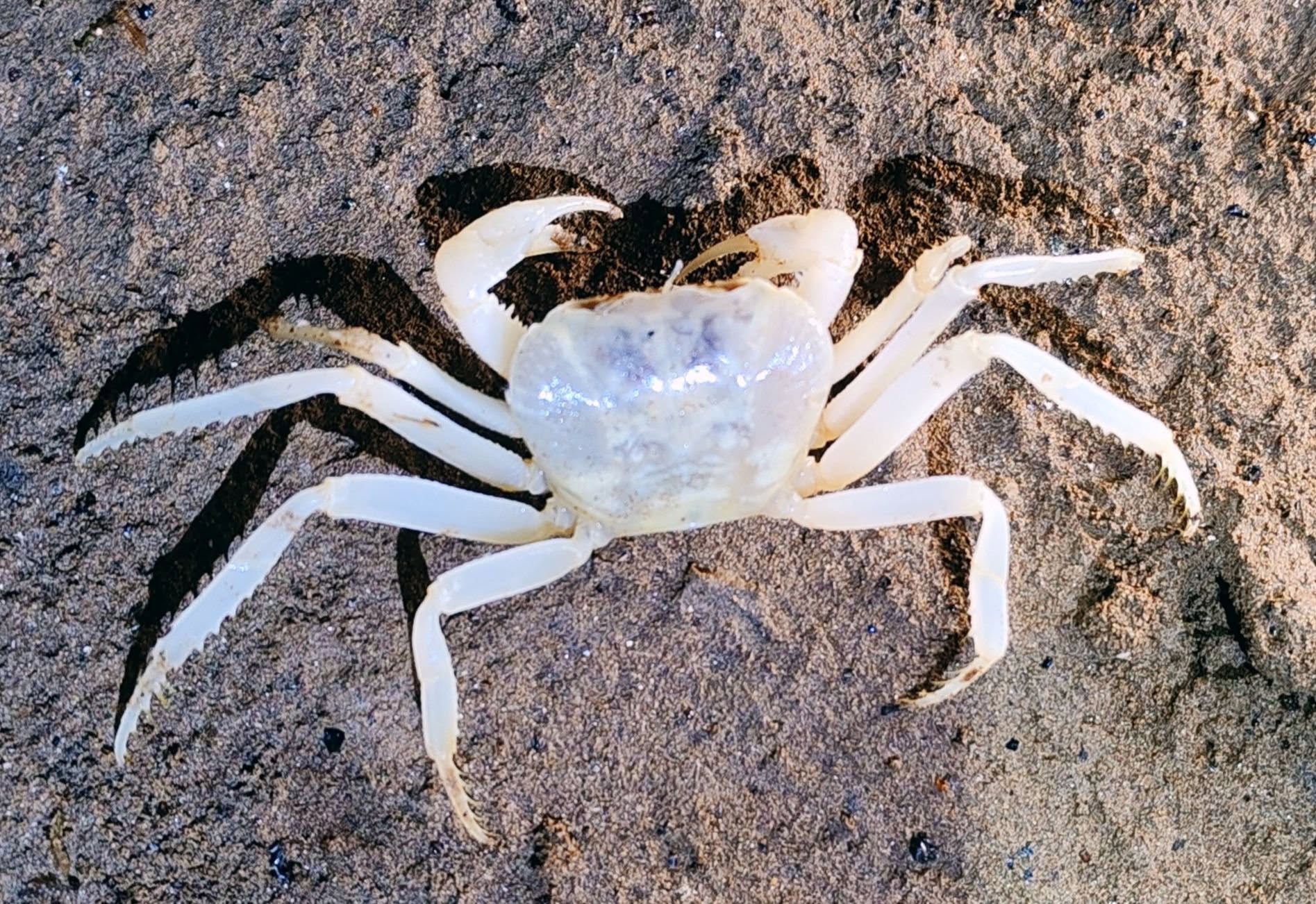
Deep inside the cave, pale freshwater crabs have also adapted to life underground.
Samar is known to harbor cave-dwelling freshwater crabs of the genus Sundathelphusa, some of which show adaptations associated with subterranean environment, including reduced eyes, lighter pigmentation and elongated legs.
The cave is also known for the blind cave gobies or the Caecogobius cryptophthalmus, a specie first documented during the 1987 Samar speleological expedition.
Such creatures offer a glimpse into an ecosystem that exists largely beyond human sight — and a reminder that every deeper exploration can reveal more of what remains to be understood and protected beneath Samar’s limestone.
Tourism with responsibility
The growing interest in caves can create opportunities for local communities.
Cave tourism can support guides, transport providers, accommodation, food services, and outdoor groups. It can encourage visitors to explore rural communities and create new opportunities for environmental education.
But tourism also brings pressure. More visitors mean more footsteps, more waste, and greater potential disturbance to wildlife and fragile formations.
A cave formation that took thousands of years to develop can be damaged in seconds.
Repeated disturbance can affect bats and other cave-dependent species.
Waste left underground can persist long after visitors have gone.
And because karst landscapes can contain interconnected underground drainage systems, disturbances on the surface can affect places below ground that visitors may never see.
That is why responsible cave tourism requires more than opening a cave to visitors. It requires trained guides, proper equipment, visitor orientation, safety protocols and clear conservation rules.
It also requires visitors to understand that they are entering an ecosystem, not merely an attraction.
The challenge is not to keep people away. It is to teach people how to enter without damaging what they came to see.
For the 13 people at the Langun Cave that day, they came in with different fears and expectations, but came out with different stories to tell.
The darkness revealed a world they had never known firsthand. It was not empty. It was alive.
And their responsibility now is to make sure it stays that way. – Rappler.com
Ricky Bautista was Rappler’s Aries Rufo Journalism Fellow in 2023.
KioskNews shows a cleaned-up reading view extracted from the publisher’s page — the original always lives on their site, not ours.