When Indira Gandhi Feared George Fernandes Would "Blow Her Up"
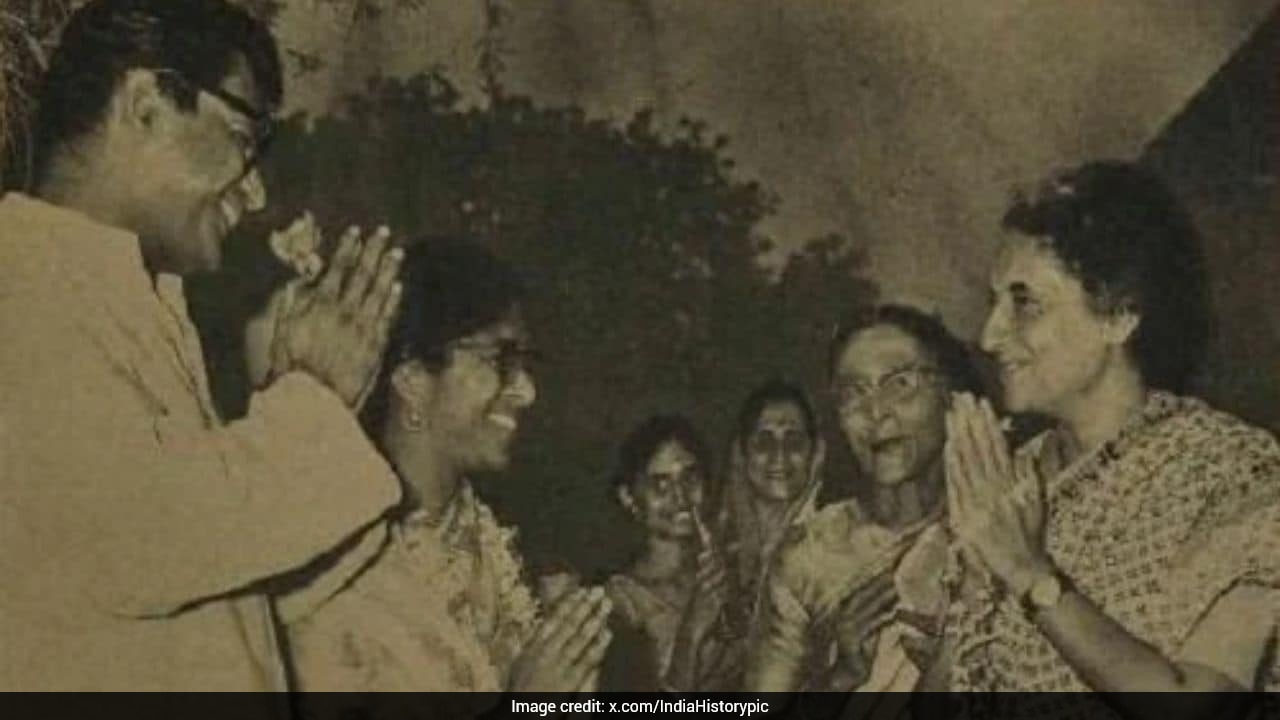
Congress MP Sonia Gandhi, in her book 'Beloning: A Journey of Love', recalled how her mother-in-law and former prime minister Indira Gandhi feared being assassinated by George Fernandes, the then defence minister of India.
Indira Gandhi's fear began after the assassination of former Bangladesh President Sheikh Mujibur Rahman on August 15, 1975. "Even though she had been warned of a potential attack on Mujib, the murder was still a shock for my mother-in-law. The choice of the date for the massacre was also curious - our Independence Day. While mourning Mujib and his family, Indira Gandhi could not overlook the possibility of a similar fate for herself and her family. She feared, above all, for Sanjay's safety," Gandhi wrote.
According to the Congress MP, the security chief had informed Indira Gandhi that her assassination had "certainly been considered within the group set up by the Railway trade unionist, George Fernandes".
In a letter to Hungarian-Indian social worker, Fori Nehru, Indira Gandhi said, "Fernandes had intended to blow me up in Banaras", the MP said in her book.
Indira Gandhi was assassinated by two of her own Sikh bodyguards on October 31, 1984.
"George Fernandes was the mastermind of a conspiracy to detonate bridges and vital rail and road links, with the objective of creating chaos and overthrowing the government. Indeed, explosives were collected and bombs set off in Banaras, Bombay, Bihar, and Karnataka, causing the plot to be uncovered in the month of June and Fernandes to be arrested. The Baroda Dynamite Case, as it came to be known, was brought against the saboteurs who had organised the smuggling of explosives to major cities," Sonia Gandhi wrote in her 544-page memoir.
She added, "The charges were dropped in 1977 by the new government six days after Mrs. Gandhi's electoral defeat, and all the accused released without verdicts or convictions."
Recalling the Emergency, Gandhi said that there were a lot of things written - true and false - about the period and Sanjay Gandhi's part in the "turbulent events of that time".
"Whatever his faults may have been, Sanjay was no coward," she said.
"He was in fact without fear to the point of being reckless, and as subsequent events showed he had enough in him to face situation and to fight his any had a significant role in decision-making during the Emergency to political leadership. What is undeniable, however, is that he had a significant role in decision-making during the Emergency period, despite lacking a constitutional locus standi for some of his political interventions," Gandhi wrote.
KioskNews shows a cleaned-up reading view extracted from the publisher’s page — the original always lives on their site, not ours.