AI-powered hearing aids: How they help you follow conversations in noisy places
The ticking of a clock. The hum of the air-conditioning. Even the sound of his own footsteps. These were some of the everyday sounds that suddenly stood out to Lim Chee Keong when he tried on his new hearing aids.
“I could hear the birds in the morning again, which I hadn’t realised I’d missed,” recalls the 58-year-old retired bank manager.
But the biggest difference was being able to follow conversations without guessing what had been said or simply smiling and nodding along.
Lim first noticed changes in his hearing in his early 50s, but dismissed them as people mumbling. The turning point came during dinner with old friends at a noisy restaurant, when he answered a question with something completely unrelated.
“I realised I was putting too much effort into simply keeping up with conversations. I booked a hearing test the following week.”
An online hearing test conducted by 20dB Hearing found that he had moderate to severe age-related hearing loss in both ears, affecting his ability to understand speech, particularly amid background noise.
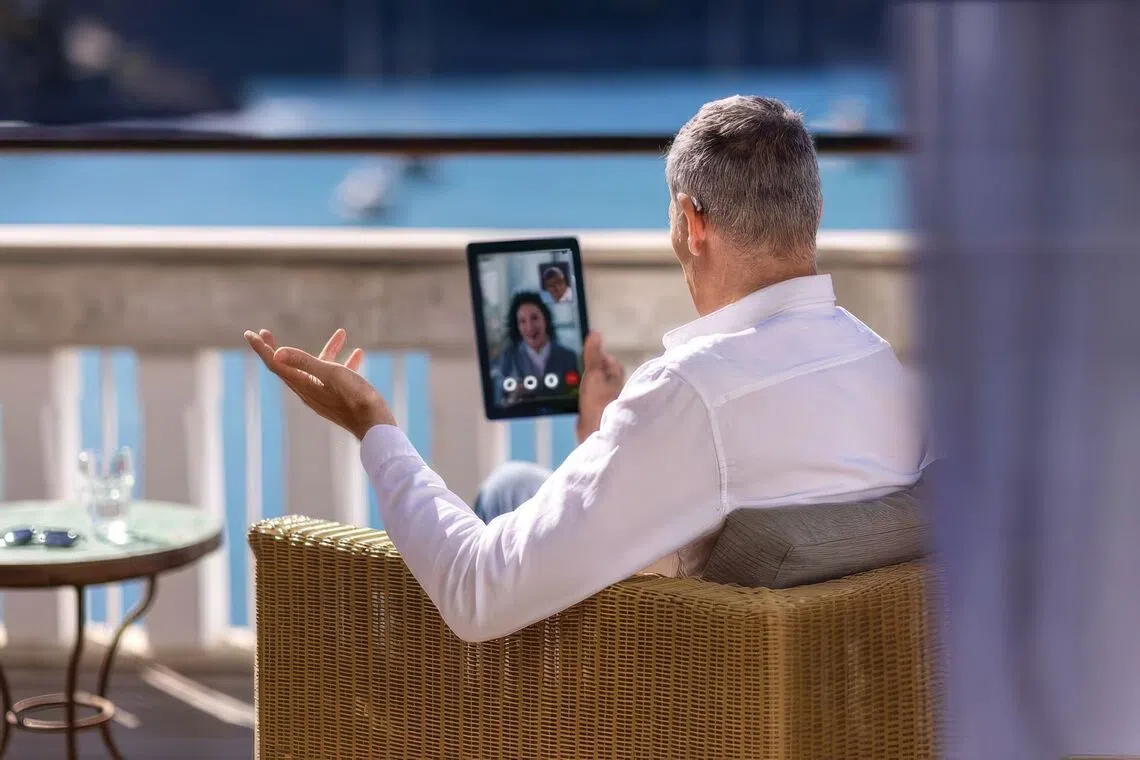
The Phonak Audeo Eon is designed to adapt to different listening environments, helping wearers follow conversations more easily.
PHOTO: 20DB HEARING
How do AI-powered hearing aids make speech clearer in noisy places?
Lim was fitted with the Phonak Audeo Eon Sphere (prelaunched exclusively at 20dB Hearing), which uses AI-powered technology, including Spheric Speech Clarity 3.0 and the Hypersonic chip, designed to help separate speech from background noise.
“I heard the chip helps tell the difference between someone talking and all the background clatter, which was exactly my problem in restaurants,” he says.
His experience highlights a common misconception: that hearing aids simply make everything louder.
Grace Wong, an audiologist at 20dB Hearing, explains that hearing loss often affects higher-pitched sounds first. Someone may hear a person speaking but struggle to make out certain words, especially in noisy places.
“Most people with hearing loss don’t need everything louder. They need extra help with certain pitches, usually the high-pitched consonants that make words clear,” she says.
Hearing aids can be programmed to provide more support for sounds a person struggles to hear. Newer AI-powered devices such as the Eon can also automatically adjust as listening environments change.
For example, someone may need different sound settings while travelling on a bus than when stepping into a noisy restaurant, says Kausellya Subramaniam, senior audiologist at 20dB Hearing.
The Eon is designed to recognise such changes and adjust how sounds are processed, reducing the need for wearers to change settings manually.
“Earlier generations already helped people hear better; the Eon takes another step towards helping the hearing aid understand the listening situation and respond accordingly,” she adds.
Wearers need not be tech-savvy, as many adjustments happen automatically. Those who want more control can use the myPhonak app to personalise their settings.
The Eon is also 25 per cent smaller and 20 per cent lighter than the previous Sphere model, and offers around 22 hours of battery life on a single charge, even under demanding conditions such as Bluetooth streaming and noisy environments.
For Lim, these improvements mean a less noticeable device and less frequent charging.
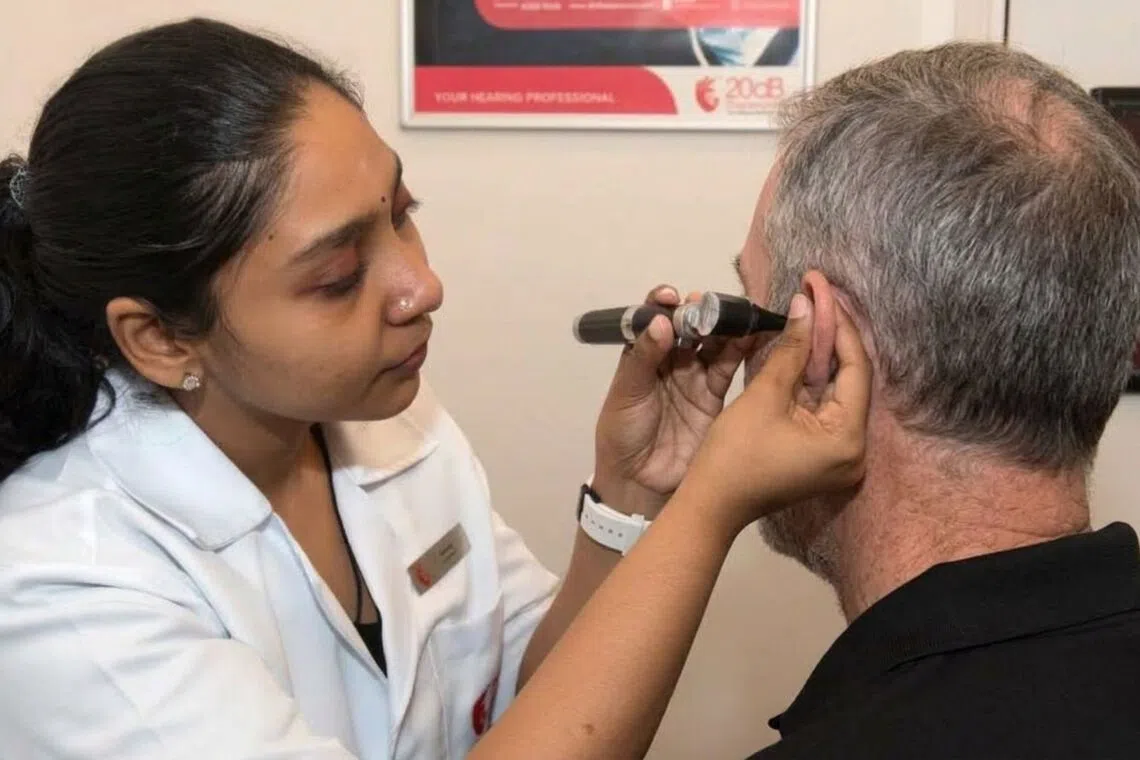
Senior audiologist Kausellya Subramaniam examines a patient’s ear as part of assessing their hearing needs.
PHOTO: 20DB HEARING
Why personalised fitting matters for better hearing
Even with advanced technology, finding the right hearing solution involves more than a hearing test.
Audiologists at 20dB Hearing also ask about patients’ routines, communication needs and situations they find challenging – from family dinners to workplace meetings.
“Test results show what a person can hear, but conversations show what they need to hear and how they live with their hearing loss,” says Wong.
Two people with similar hearing-test results may therefore need different solutions. Someone who spends most of their time at home, for example, has different listening needs from someone who frequently attends meetings or travels.
Personalisation continues during fitting and adjustment.
Lim recalls his audiologist programming his hearing aids and asking him to flag sounds that seemed too loud or unnatural.
“When I first put it on, the room suddenly sounded so sharp. It was a bit much for a day or two, but then my brain got used to it,” he says.
Kausellya compares the experience to entering a brightly lit room after being in the dark: the light is immediately there, but the eyes need time to adjust.
Similarly, while some wearers notice clearer speech quickly, others may need longer to get used to sounds they have not heard clearly for years.
She advises patients to wear their hearing aids for at least eight hours daily during the adjustment period. Follow-up appointments allow audiologists to fine-tune settings based on real-life experiences, with 20dB Hearing’s Product Lifetime of Aftercare Promise providing continued support throughout the lifespan of the device.
“The aid can process the sound adequately, but the user is the one who can give feedback to us about what feels too loud, too soft or not natural,” she says.
While AI can automate more of the listening experience, professional fitting and ongoing support remain important in helping wearers adapt.
For Lim, the difference is evident in everyday life.
“Day to day, things are just easier,” he says. “I’m not straining to follow conversations anymore, so I finish the evening with energy left over.”
Recently, he returned to a restaurant with the same group of old friends. This time, he could join in without guessing what others were saying.
“What matters most is that I’m back in the conversation.”
Book a hearing test for yourself or a loved one at 20dB Hearing.
KioskNews shows a cleaned-up reading view extracted from the publisher’s page — the original always lives on their site, not ours.