8 Most Powerful Superweapons In Sci-Fi Novels

Tom is a Senior Staff Writer at Screen Rant, with expertise covering everything from hilarious sitcoms to jaw-dropping sci-fi epics.
Initially he was an Updates writer, though before long he found his way to the TV and movies team. He now spends his days keeping Screen Rant readers informed about the TV shows of yesteryear, whether it's recommending hidden gems that may have been missed by genre fans or deep diving into ways your favorite shows have (or haven't) stood the test of time.
Tom is based in the UK and when he's not writing about TV shows, he's watching them. He's also an avid horror fiction writer, gamer, and has a Dungeons and Dragons habit that he tries (and fails) to keep in check.
Sci-fi novels contain fantastical and wonderful visions of future technology, but some incredibly terrifying ones too. Alongside imaginative approaches to concepts like interstellar travel and extraordinary medical breakthroughs sit devices capable of ending life on a truly unfathomable scale. No speculation about the potential for unchecked scientific progress is more harrowing than the superweapons the genre’s best authors have dreamed up.
The most powerful superweapons in sci-fi novels make a nuclear bomb seem like a child throwing a stone. While almost every galactic empire seems to possess a planet-destroying weapon or two, there are plenty of science fiction novels that envisage destruction on a far greater scale. Literary sci-fi’s greatest superweapons aren’t simply planetary threats: they can wipe out entire stellar systems, galaxies, universes, and even the laws of physics themselves.
The Molecular Disruption Device (AKA The Little Doctor)
The Ender’s Game Series By Orson Scott Card (1985-2021)
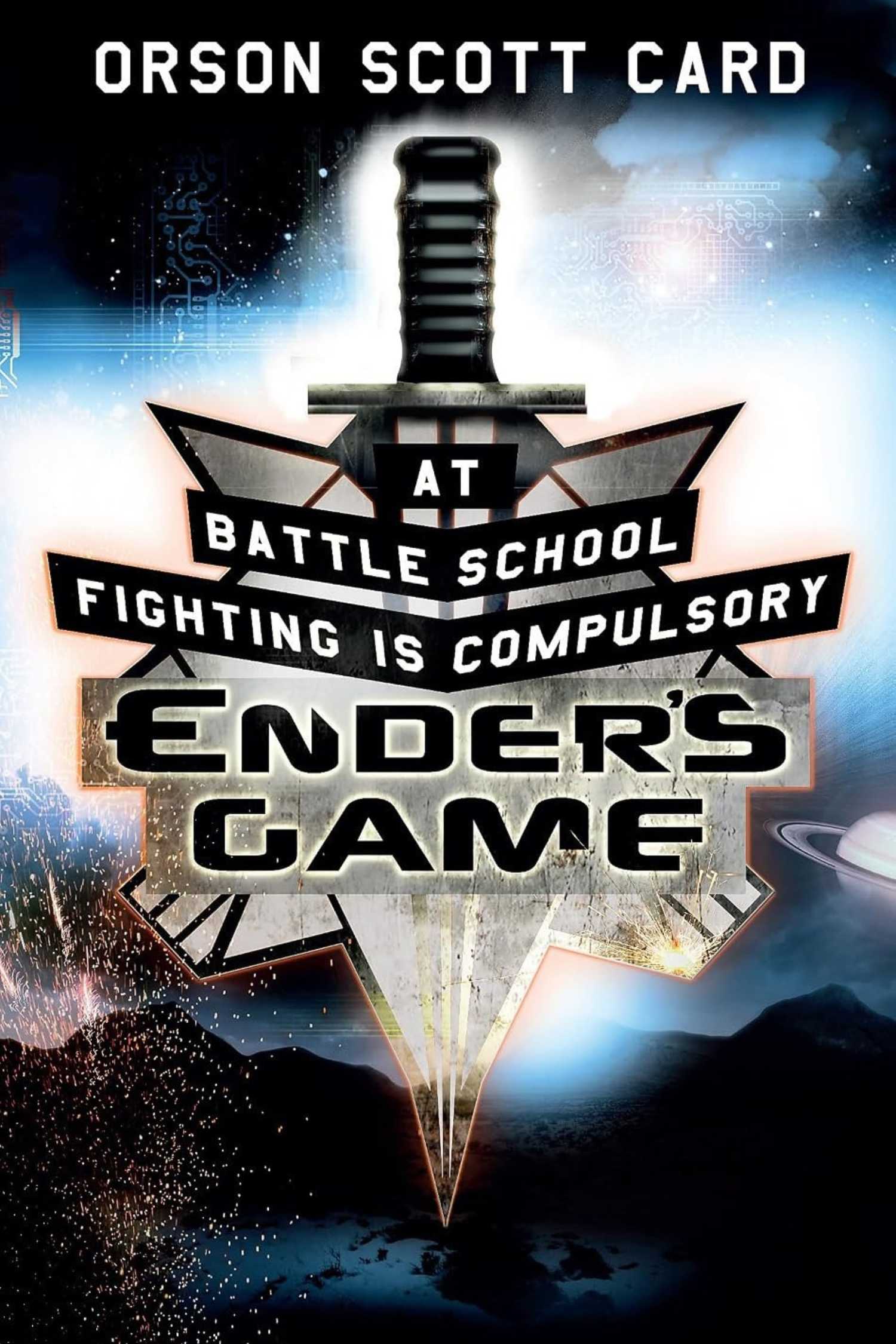
Many of the greatest sci-fi superweapons in books work by interfering with atomic bonds, and in few places is this explored with more deadly effect than the Molecular Disruption Device in Orson Scott Card’s Enders Game series. Nicknamed the Little Doctor, the M.D.D. generates a field that prevents molecules from holding together, with the effects spreading as a chain reaction across any matter caught up in the cascade. An enemy formation becomes its own means of annihilation when fired upon by the Little Doctor, as the destabilization spreads from ship to ship.
Against a planet, the destructive potential of this sci-fi superweapon reaches an entirely different scale. That possibility supplies the devastating conclusion to 1985’s novel Ender’s Game, which follows a gifted child trained to command humanity’s forces without knowing the distinction between simulated and actual combat is being deliberately concealed. The Little Doctor makes that deception catastrophic: a simulated tactical solution can become planetary extermination before its commander understands the consequences.
You can purchase Ender’s Game by Orson Scott Card here.
The Nova Bomb
The Commonwealth Saga By Peter F. Hamilton (2004-2005)
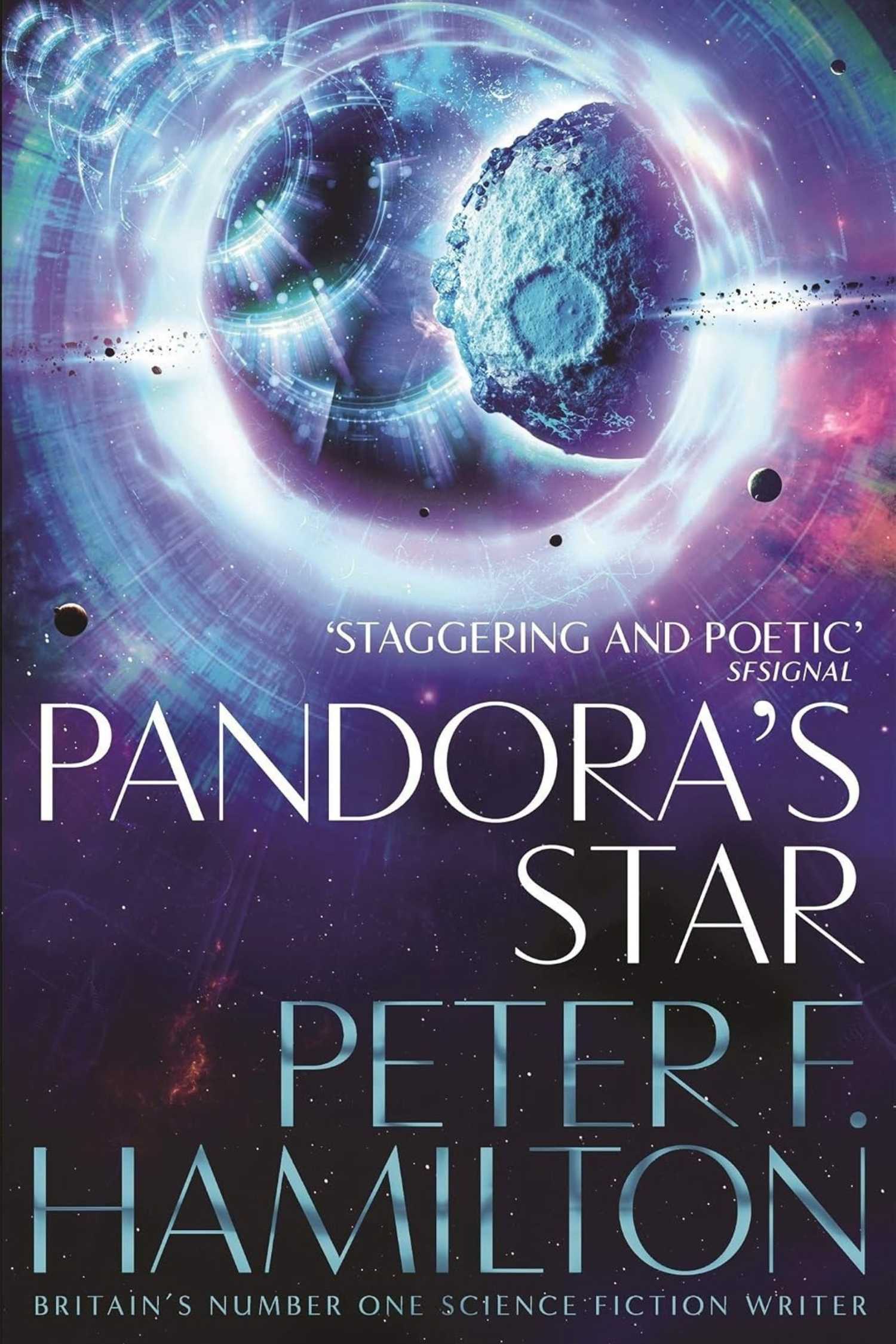
An astronomical mystery becomes an existential war with some truly terrifying interstellar weaponry in Peter F. Hamilton’s two-book Commonwealth Saga. Beginning with Pandora’s Star in 2004 and concluding with Judas Unchained in 2005, the story sees a prosperous human civilization whose investigation of an imprisoned star system exposes it to the violently expansionist and highly evolved beings known as Primes. The technological escalation that follows produces the nova bomb, a weapon whose target is the star sustaining an enemy’s entire system.
In a nutshell, Peter F. Hamilton’s nova bombs force any star they’re fired at to go supernova, though the underlying mechanics of its full effects are a little more complex. Delivering one into a star turns the enormous mass of the stellar body into a system-destroying presence, with other technologies in Hamilton’s vision of the future incorporated to magnify its destructive reach. That distinction makes it especially frightening: humanity doesn’t merely acquire a larger explosive, it figures out how to make the central stellar body of an inhabited star system the cause of that system’s destruction.
You can purchase Pandora’s Star, the first Commonwealth Saga novel by Peter F. Hamilton, here.
The Starbreaker
The Xeelee Sequence By Stephen Baxter (1991-2019)
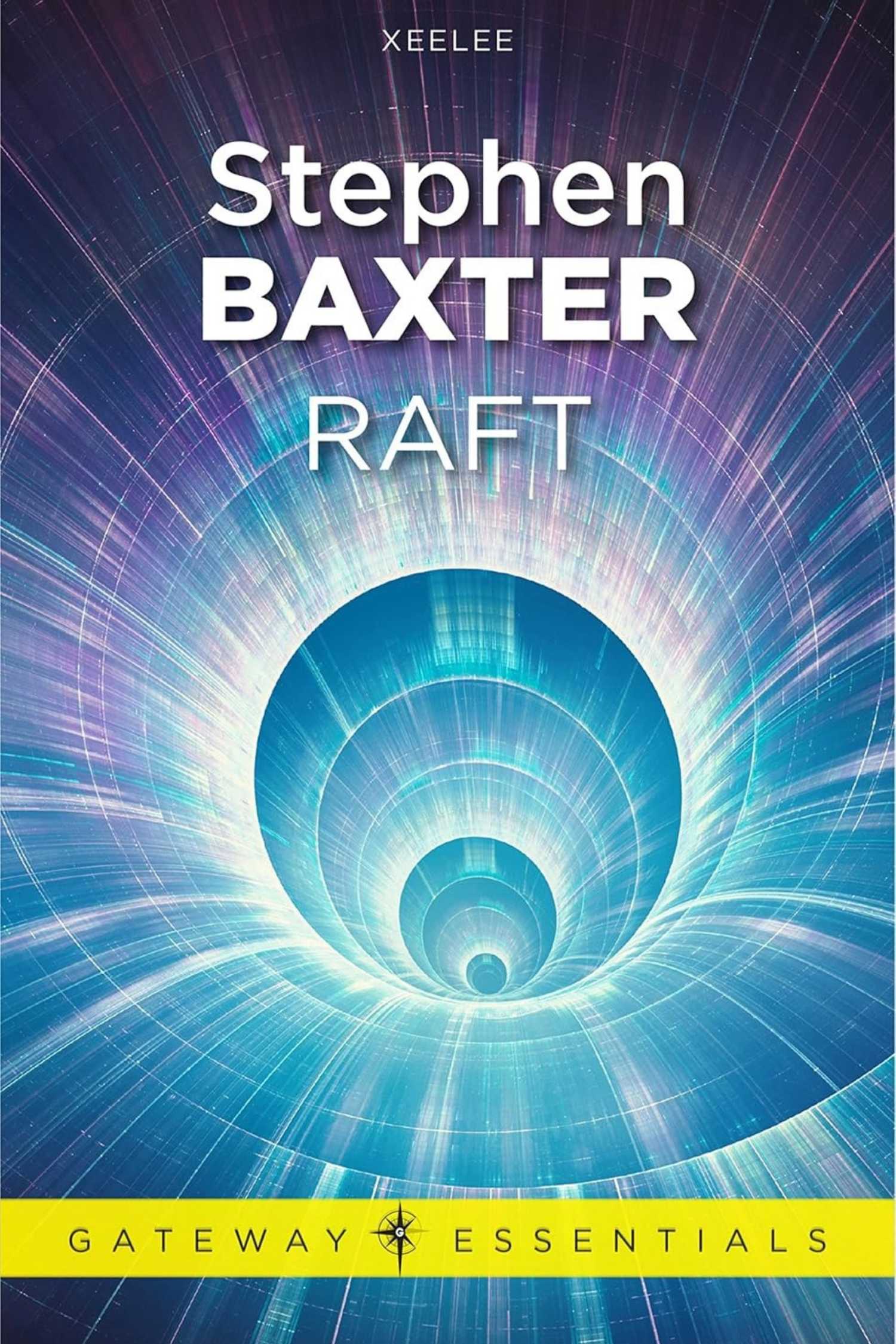
Few sci-fi superweapons represent the idea of technological superiority as efficiently as a star-destroying device resembling a handgun. The starbreaker from Stephen Baxter’s Xeelee Sequence projects a coherent beam of gravitational waves from a device that can fit in a hip-holster, with applications extending from devastating attacks on material targets to the dismantling of stars. The mismatch between its size and its power is truly disturbing, especially since it makes it crystal clear that humanity’s progress is almost meaningless besides Xeelee engineering.
Stephen Baxter’s Xeelee Sequence begins with 1991’s Raft, and its vast vision of the future centers on humanity learning their insignificance in a universe defined by a cosmic conflict between the godlike Xeelee and dark-matter life. The starbreaker is the perfect illustration of the disparity that defines the setting: even stellar destruction is a relatively simple local application of advanced physics for the species humanity finds itself facing.
You can purchase Raft, the first Xeelee Sequence novel by Stephen Baxter,here.
The Astrophage
The Sun Eater Series By Christopher Ruocchio (2018-2025)

The promise of a destroyed sun hangs over Christopher Ruocchio’s Sun Eater series from the beginning thanks to the terrifying sci-fi superweapon known as the Astrophage. The first novel in the series, 2018’s Empire of Silence, chronicles Hadrian Marlowe’s account of his transformation from an imperial nobleman into humanity’s most controversial savior. His war against the alien Cielcin eventually brings him into possession of ancient machines whose capabilities exceed anything human science could conceive. Among them is the Astrophage, a weapon that makes the series’ title brutally literal.
The Astrophage introduces an artificially generated singularity into a target star. Sustained by infalling stellar material, the black hole attacks the star from within, creating a catastrophic collapse. The ensuing stellar explosion threatens far more than the fleet or planet that originally justified its deployment. This is destruction whose consequences spread beyond the immediate battlefield, stretching to any neighboring star systems whether they’re inhabited or not. It’s one of many superweapons in sci-fi books that offer a decisive victory in an otherwise unwinnable war but at a cost that feels impossibly high to justify.
You can purchase Empire of Silence, the first Sun Eater novel by Christopher Ruocchio, here.
The Photoid
The Remembrance Of Earth’s Past Trilogy By Liu Cixin (2008-2010)
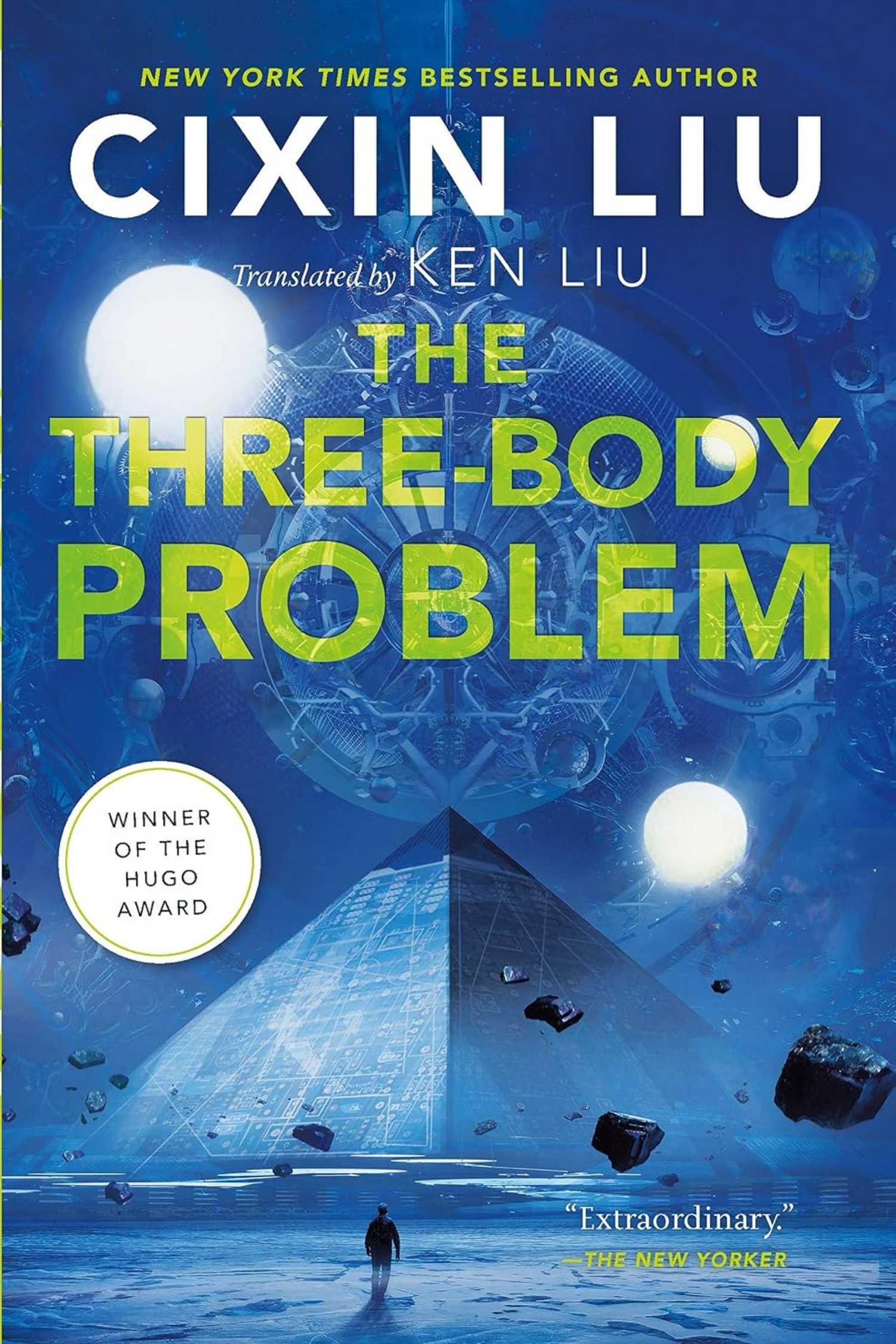
The most disturbing thing about the photoid from Liu Cixin’s Remembrance of Earth’s Past trilogy isn’t just how destructive it is, but how little attention its deployment appears to require. Cixin’s vision of intergalactic life is so terrifying because stellar destruction by advanced civilizations to eliminate potential competitors is routine. To the species humanity shares the universe with, making contact doesn’t seem to be an option. Once a species broadcasts its existence to the stars, its destruction inevitably follows. Photoids are one of the most disturbing clinical ways this is achieved.
Photoids are literally atomically small objects accelerated to near light speed and sent into the heart of a star. Instead of attacking every inhabited planet individually, an aggressor wipes out entire solar systems with a single shot. The simplicity of this sci-fi superweapon makes it disturbing to contemplate, as does how willing the civilizations possessing them are to using them. In Liu Cixin’s vision of interstellar community in the Remembrance Of Earth’s Past trilogy, a star’s destruction can be the routine consequence of someone elsewhere deciding that a species they’ve never directly encountered, even a peaceful one, is too much of a liability to allow to exist.
You can purchase The Three-Body Problem, the first Remembrance of Earth’s Past novel by Liu Cixin, here.
The Chaos Weapon
The Chaos Weapon By Colin Kapp (1977)

One of the scariest things about the most powerful sci-fi superweapons is that they don’t operate by causing large explosions or firing interplanetary laser beams. Many exploit scientific principles to cause destruction on scales that are simply incomparable with the conventional warfare of the present day, and this is definitely the case with The Chaos Weapon from Colin Kapp’s 1977 novel of the same name. In the story, humanity’s brightest minds begin dying at a rate that can’t be dismissed as coincidence. Apparent accidents and natural catastrophes conceal a coordinated assault, forcing investigators to consider the existence of a device capable of weaponizing probability.
The Chaos Weapon is already an incredibly cool sci-fi superweapon from a conceptual standpoint, but its physical presence is jaw-dropping. The device itself is powered by multiple stars and fired by focusing that energy through an arrangement of ten black holes. However, its most unsettling aspect is that its effects are almost impossible to distinguish from the universe’s ordinary hostility. The weapon doesn’t just attack civilizations, but their ability to recognize an attacker too. Before humanity can confront the enormous superweapon threatening it, it must establish that the mounting disasters are deliberate acts of war at all.
You can purchase The Chaos Weapon by Colin Kapphere.
The Dual-Vector Foil
The Remembrance Of Earth’s Past Trilogy By Liu Cixin (2008-2010)

Photoids aren’t the only horrifying sci-fi superweapons in Liu Cixin’s Remembrance of Earth’s Past trilogy, and compared to the author’s dual-vector foils, they look relatively tame. Dual-vector foils appear as small, apparently innocuous slip of paper traveling silently through the void, but their effects make them one of literary science fiction’s most horrifying instruments of mass extermination. The dual-vector foil contains a region of two-dimensional space isolated from its surroundings by a protective field. Once that isolation is deactivated, three-dimensional space begins collapsing into two dimensions. Everything caught up in the effect, and there’s no real way to prevent it.
Once a dual-vector foil is triggered in the Remembrance Of Earth’s Past novels, the solar system becomes an immense, lifeless image, and there’s nothing humanity can do about it. What’s more, its danger continues beyond the destruction of any single civilization: this weapon of dimensional warfare can progressively consume more and more space. Author Liu Cixin uses it to create a chilling scenario in which survival of the species relies on much more than building a bigger bomb than the enemy. The dual-vector foil’s extraordinary power is a superweapon that doesn’t cause direct destruction, but unleashes irreversible cosmic collapse from which none can escape.
You can purchase Death’s End, the Remembrance of Earth’s Past novel by Liu Cixin that details the impact of the dual-vector foil, here.
The Supernova Bomb
The Hitchhiker’s Guide To The Galaxy Series By Douglas Adams (1979-1992)

Universal annihilation arrives with a suitably absurd disguise in Douglas Adams’ third The Hitchhiker's Guide To The Galaxy novel, 1982’s Life, the Universe and Everything. However, while the idea of a cricket ball bringing about cosmic-scale destruction is comedic on the surface, the actual effects of this sci-fi superweapon are chilling. The supernova bomb is designed to connect the cores of stars through hyperspace and make them explode together. Its intended reach encompasses the universe, placing it far beyond weapons that destroy one planet or stellar system.
The sci-fi technology presented in The Hitchhiker’s Guide to the Galaxy novels is often so powerful and advanced that it’s deliberately absurd, and the supernova bomb proves just how terrifying this usually comedic tone can be when it’s applied to warfare. It’s a device small enough to be disguised as sporting equipment, but it has inconceivably destructive potential. That comic framing makes the bomb incredibly effective as satire of the real-world dangers of nuclear warfare, but doesn’t negate the fact that it’s one of the most powerful superweapons to ever grace the pages of a sci-fi novel.
You can purchase The Hitchhiker’s Guide to the Galaxy by Douglas Adams, here.
KioskNews shows a cleaned-up reading view extracted from the publisher’s page — the original always lives on their site, not ours.