Drug maker Rohto plans clinical trials in Hong Kong as OASES’ first Japan partner
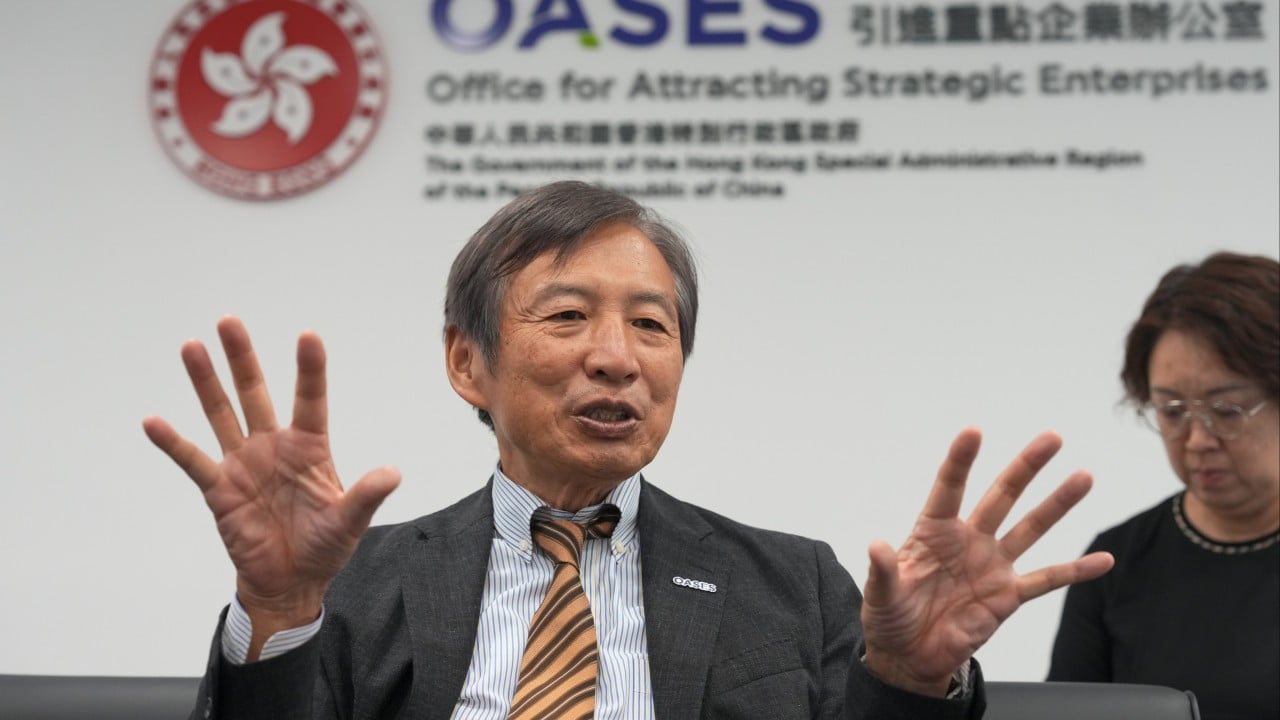
Top university research, cross-border data exchanges and access to mainland China’s large market have attracted Japanese firm Rohto Pharmaceutical to conduct clinical trials in Hong Kong, making it the first company from the country to partner with the city’s government under a flagship investment initiative.
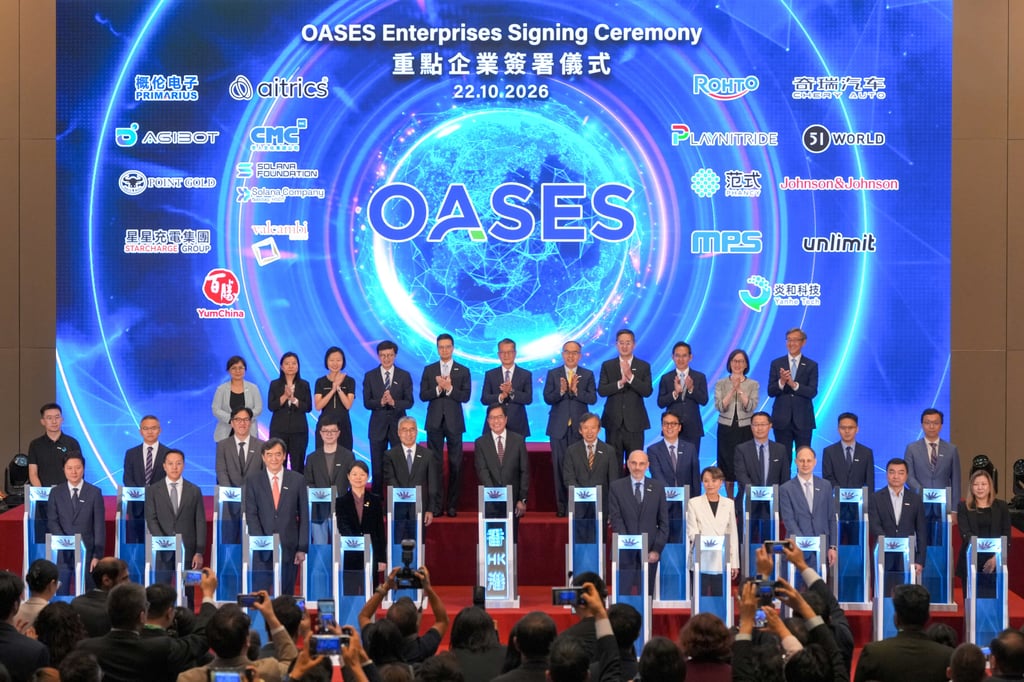
Rohto, known for its over-the-counter eye care and skincare products, is among the latest batch of 18 firms recruited by the Office for Attracting Strategic Enterprises (OASES), a government unit under the Financial Secretary’s Office tasked with attracting companies of strategic importance to Hong Kong.
Kunio Yamada, chairman and representative director of Rohto, told the South China Morning Post in an exclusive interview that Hong Kong’s top research capabilities and proximity to the mainland attracted the firm to expand in the city.
“The university research level in Hong Kong is very high,” said Yamada, who spoke through an interpreter late last month while in Hong Kong attending the OASES signing ceremony.
Hong Kong’s proximity to the mainland also allowed the company to benefit from opportunities in both business and research, he said.
“With Hong Kong’s connection to the Greater Bay Area, maybe later we can develop our business in mainland China ... we do look forward to making use of the patient pool for our research,” Yamada said.
He said the company would conduct clinical trials for drugs related to eyes, cancer and cell therapy.
Rohto’s products have been sold in the city for decades, with the company setting up a facility in Hong Kong Science Park in 2019 to conduct basic research on regenerative medicine, ophthalmology and other medical solutions.
Takashi Togasaki, managing director of the company’s research facility in Hong Kong, said the city’s integration with the bay area had sparked a “big change” for Rohto in considering its strategy to expand clinical trials in Hong Kong.
The bay area is a development blueprint by Beijing that aims to connect Hong Kong, Macau and nine cities in Guangdong province into a business and innovation hub.
With an expected measure allowing the flow of data and biological samples from Shenzhen to Hong Kong within the Hetao Shenzhen-Hong Kong Science and Technology Innovation Cooperation Zone, Togasaki said the company could potentially tap into data from nearly 90 million people within the region.
“We see Hong Kong as the ultimate gateway to the Greater Bay Area,” he said.
Yamada said the potential access to a wider population could help solve the problems they faced in cell therapy research.
“The size of the research in Japan is quite limited because of the population. If we have a larger population for the research, we can develop better drugs or medicines for these patients,” Yamada said. “Not only for the Japanese patients, but we can contribute more widely.”
The corporation has already partnered with four universities in the city and is discussing plans for trials and research with hospitals in Hong Kong and Shenzhen.
It is also considering setting up a facility in the Hetao cooperation zone.
As Hong Kong prepares to set up its own drug regulatory body to assess treatments without relying overseas regulators, Togasaki said it would be useful if the government could offer a pathway for conditional approval in regenerative medicine to speed up their roll-out, a practice that is being done in Japan.
Yamada said the corporation would increase its investment in Hong Kong in the coming three to five years, without elaborating on the amount, and would increase its staff size in Hong Kong from the current six people to about 10 to 15 people.
He voiced his optimism about the city’s development as the corporation pledged to expand its operations.
“For research, we do have confidence [in] Hong Kong,” he said, explaining why the company had chosen the city for investment.
KioskNews shows a cleaned-up reading view extracted from the publisher’s page — the original always lives on their site, not ours.