TREKKIE TOWN: SA goes boldly into space race despite technical black holes
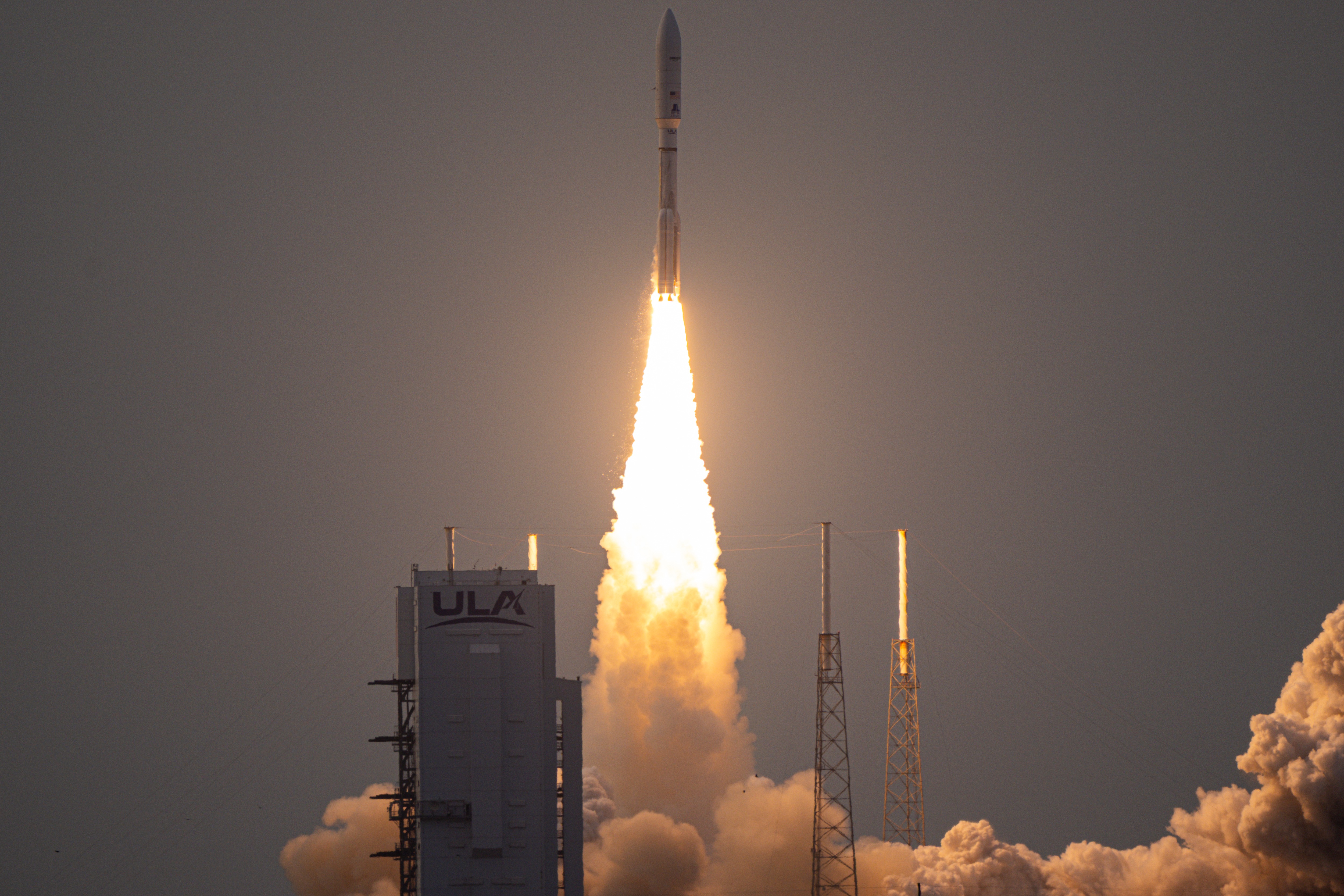
There were 116 products sourced from six South African space industry companies on board the SpaceX Transporter-14 launch in July 2025. It’s astonishing, then, that just two months earlier, it seemed like the regulators that hold the local operation fate of these companies in their hands couldn’t agree on which way was up.
But we have to go back further to trace the seeds of chaos. In 2015/2016, the Cabinet instructed the Department of Communications and Digital Technologies (DCDT) and the Department of Science, Technology & Innovation (DSTI) to draft a National Satellite Communication Strategy to end total reliance on foreign satellite providers and protect national sovereignty.
South Africa spends about R30-billion a year procuring external communication services, with direct cash outflows exceeding R1-billion annually for foreign satellite capacity. By contrast, procuring a locally owned telecommunications satellite with a 20-year lifespan is estimated to cost about R6-billion, keeping capital and job creation within the domestic economy.
The roadmap outlined
During the joint parliamentary briefing on 1 April 2025 between the Portfolio Committee on Communications and Digital Technologies and the Portfolio Committee on Science, Technology and Innovation, government officials finally outlined South Africa’s road map towards establishing a sovereign satellite capability.
In a LinkedIn post about that briefing, and in an interview with Daily Maverick earlier this year, industrial policy strategist and space compliance expert Natasha van Rooyen said it felt like an April Fool’s joke. To quote that social media synthesis, she said South Africa suffers from acute technical constraints:
“[SA’s] space sector stands at a pivotal crossroads. The recent #DCDT & #DSTI briefing to Parliament highlighted critical capability and capacity challenges that limit our progress – despite the country’s proven talent and potential. A shortage of systems engineers, constrained manufacturing capacity, and aging infrastructure continue to slow momentum just as global demand for satellite technologies accelerates.”
In that conversation with Daily Maverick, Van Rooyen stressed that South Africa’s legislative and standards framework had failed to keep pace with rapid technological advancements. She said that while the global sector moved towards orbital data centres and AI in orbit, South Africa lacked a dedicated technical standards committee for the space industry under the South African Bureau of Standards (SABS).
Without this committee, regulators like the Independent Communications Authority of South Africa (Icasa) lack a technical reference point to define responsible satellite ground station licences, host-nation frameworks for dual-use infrastructure, cybersecurity or data sovereignty requirements.
A view from inside the house
Addressing the International Space Summit Africa (ISSA) on the day Women’s Day 2026 was observed in South Africa, Minister of Digital Communications and Digital Technologies Solly Malatsi framed space infrastructure as a fundamental tool for socioeconomic inclusion and economic sovereignty.
/file/attachments/orphans/ED_594268_866551.jpg "Solly Malatsi Minister of Communications and Digital Technologies of South Africa. (Photo: Gallo Images/Luba Lesolle)")
“Technology is not a destiny [and] nowhere is that truer than in the space economy,” he said, emphasising that Africa’s role in the global space economy must be decided by African nations through deliberate policy. “Coverage is not inclusion,” he continued – the summit took place the week after the big Herotel x Amazon LEO announcement.
“When I travel to my home province of Limpopo in a small village … connection weakens… For thousands of households, this is not just an inconvenience. It is a permanent condition that limits what their lives can become. That is the gap that the space economy can help us close.”
He was, of course, celebrating South Africa’s first LEO satellite deal: “Low Earth orbit satellite services are part of South Africa’s digital future. Rather than wait a decade to develop domestic real capacity, we must create conditions for operators to serve our people now in a manner that supports both national interest and regulatory compliance.”
He then reverted to his usual satellite internet provider posture, which leans to include Starlink in the local mix. “Regulatory certainty and regulatory parity remain necessary conditions for investment at the scale our connectivity challenges demand,” he said, calling for clear, consistently applied regulations.
Soaring value of the global space economy
Former Space Foundation COO Shelli Brunswick said that the global space economy stood at $630-billion in 2023 (80% commercial) and is projected by the World Economic Forum to reach $1.8-trillion by 2035. SMEs represent 90% of global businesses and generate 50% of GDP, making space technology adoption vital for local entrepreneurs.
ISSA highlighted that space is no longer just about rockets or astronauts, but invisible infrastructure intersecting agriculture, logistics, disaster management, maritime safety, healthcare and education.
At the April 2025 briefing, DCDT director-general Nonkqubela Jordan-Dyani, DSTI director-general Daan du Toit and Sentech CEO Tebogo Leshope said the Presidency granted the final Socio-Economic Impact Assessment System (SEIAS) sign-off certificate on 28 March 2025, clearing the draft strategy for Cabinet submission.
Between then and now there were public workshops and comment analysis, and an updated SEIAS was conducted before returning to the Cabinet for final policy adoption.
In July 2026, the South African National Space Agency (Sansa) hosted the official launch of the Decision Support Tools. The event showcased Sansa’s new Earth Observation innovative intelligence and analytical capabilities that support evidence-based planning and governance across South Africa.
It has taken about a decade, but there is finally a phased approach to deploy the solution to South Africa’s space communications needs:
Phase 1 (immediate/years 1-3): Satellite Lease and “Condo-Sat” models (purchasing transponders/dedicated capacity on existing satellites) to meet urgent broadband and SA Connect targets.
Phase 2 (years 5-7): Full manufacturing, testing, launch and orbital slot positioning of a 100% SA-owned geostationary communication satellite, providing complete sovereign control over domestic data and security communications.
Applications for domestic spectrum and orbital slot assignments are actively being coordinated with Icasa and the International Telecommunication Union.
The strategy incorporates technical skills transfer programmes between Sansa, Sentech’s new training academy, local universities and international partners to bridge system engineering gaps.
There is little in the way of clearing the compliance hurdles at the SABS that may affect local space industry manufacturers when new US and EU regulations requirements come into play. But we hope that will not take another decade of parliamentary processes. DM
This story first appeared in our weekly Daily Maverick 168 newspaper, which is available countrywide for R39.
KioskNews shows a cleaned-up reading view extracted from the publisher’s page — the original always lives on their site, not ours.