German and Dutch strategic innovation agencies to collaborate on AI chip design
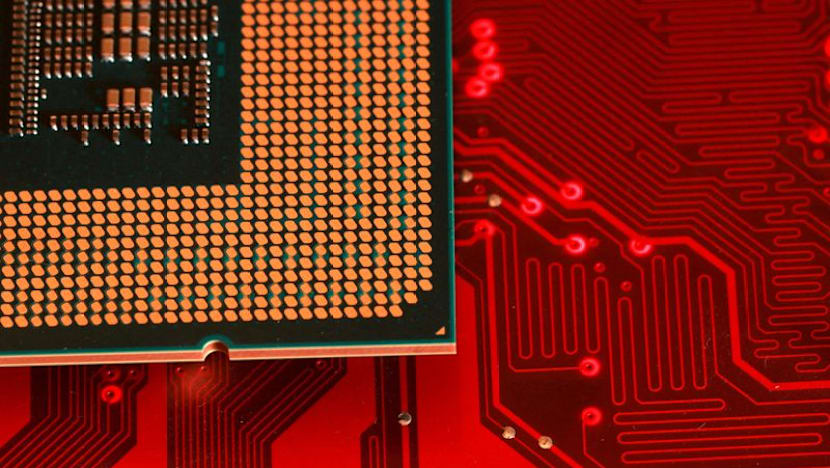
AMSTERDAM/BERLIN, Sept 23 : A new Dutch government agency set up to achieve strategic innovation will work with its German counterpart to pursue breakthroughs in AI computer chip design, it said on Wednesday, as part of European efforts to reduce reliance on US expertise.
The National Agency for Disruptive Innovation, or NADI for short, was set up this month with €500 million ($570 million) of government money as a Dutch equivalent of the US Defense Advanced Research Projects Agency.
Popularly known as DARPA, that agency was set up in 1958 in response to the Soviet Union's Sputnik launch and played a role in the technologies that led to the internet, stealth aircraft and GPS.
DRAWING ON ASML ECOSYSTEM
Co-founder of NADI, Jelle Prins, said that a partnership with Germany on chips was natural, given the strong ecosystem around equipment maker ASML in the Netherlands, and German strengths in research and manufacturing.
In the project, NADI and German counterpart, SPRIND, will commit €40 million over 20 months to groups of small teams using AI to accelerate the design of chips for training and "inference", or running, AI models.
Prins said NVIDIA chips are powerful but inefficient for inference tasks, comparing them to "doing your shopping with a truck" rather than a grocery cart.
In Europe, France established its defence innovation agency AID in 2018, Germany set up SPRIND in 2019 and Britain launched ARIA in 2023.
France's AID backed development of remote-controlled munitions capable of destroying armoured targets at a 50-km (30-mile) distance that are entering procurement by the French military.
SPRIND is separately running a €125 million challenge aimed at creating three European frontier-AI labs.
SPRIND’s head of challenges, Jano Costard, told Reuters the goal with chips was to achieve “several orders of magnitude acceleration” in a design process that currently takes years.
KioskNews shows a cleaned-up reading view extracted from the publisher’s page — the original always lives on their site, not ours.