The 10 Most Hopeless Books of All Time, Ranked


Jeremy has more than 2800 published articles on Collider to his name, and has been writing for the site since February 2022. He's an omnivore when it comes to his movie-watching diet, so will gladly watch and write about almost anything, from old Godzilla films to gangster flicks to samurai movies to classic musicals to the French New Wave to the MCU... well, maybe not the Disney+ shows.
His favorite directors include Martin Scorsese, Sergio Leone, Akira Kurosawa, Quentin Tarantino, Werner Herzog, John Woo, Bob Fosse, Fritz Lang, Guillermo del Toro, and Yoji Yamada. He's also very proud of the fact that he's seen every single Nicolas Cage movie released before 2022, even though doing so often felt like a tremendous waste of time. He's plagued by the question of whether or not The Room is genuinely terrible or some kind of accidental masterpiece, and has been for more than 12 years (and a similar number of viewings).
When he's not writing lists - and the occasional feature article - for Collider, he also likes to upload film reviews to his Letterboxd profile (username: Jeremy Urquhart) and Instagram account.
He has achieved his 2025 goal of reading all 13,467 novels written by Stephen King, and plans to spend the next year or two getting through the author's 82,756 short stories and 105,433 novellas.
Sign in to your Collider account
There are comfort shows and maybe some comfort movies and books, too. Well, comfort games and comfort music… they probably exist, too. Point is, there are lots of pieces of entertainment, both modern and released years ago, that are made to hopefully make you feel good, even if it’s a story that puts you and some of the characters through hell before hope is found (oh hey there, It’s a Wonderful Life and The Shawshank Redemption).
As for stories without hope, they're below. Specifically, these are some of the very best – and most – hopeless books ever published. They're hopeless for different reasons, and they're not necessarily the saddest of all time, either. Something can be sad and supremely bittersweet, while these books are more about despair, ultimately having a heavy focus on the bitter with little – if any – by way of stuff that’s sweet.
10 'The Handmaid's Tale' (1985)
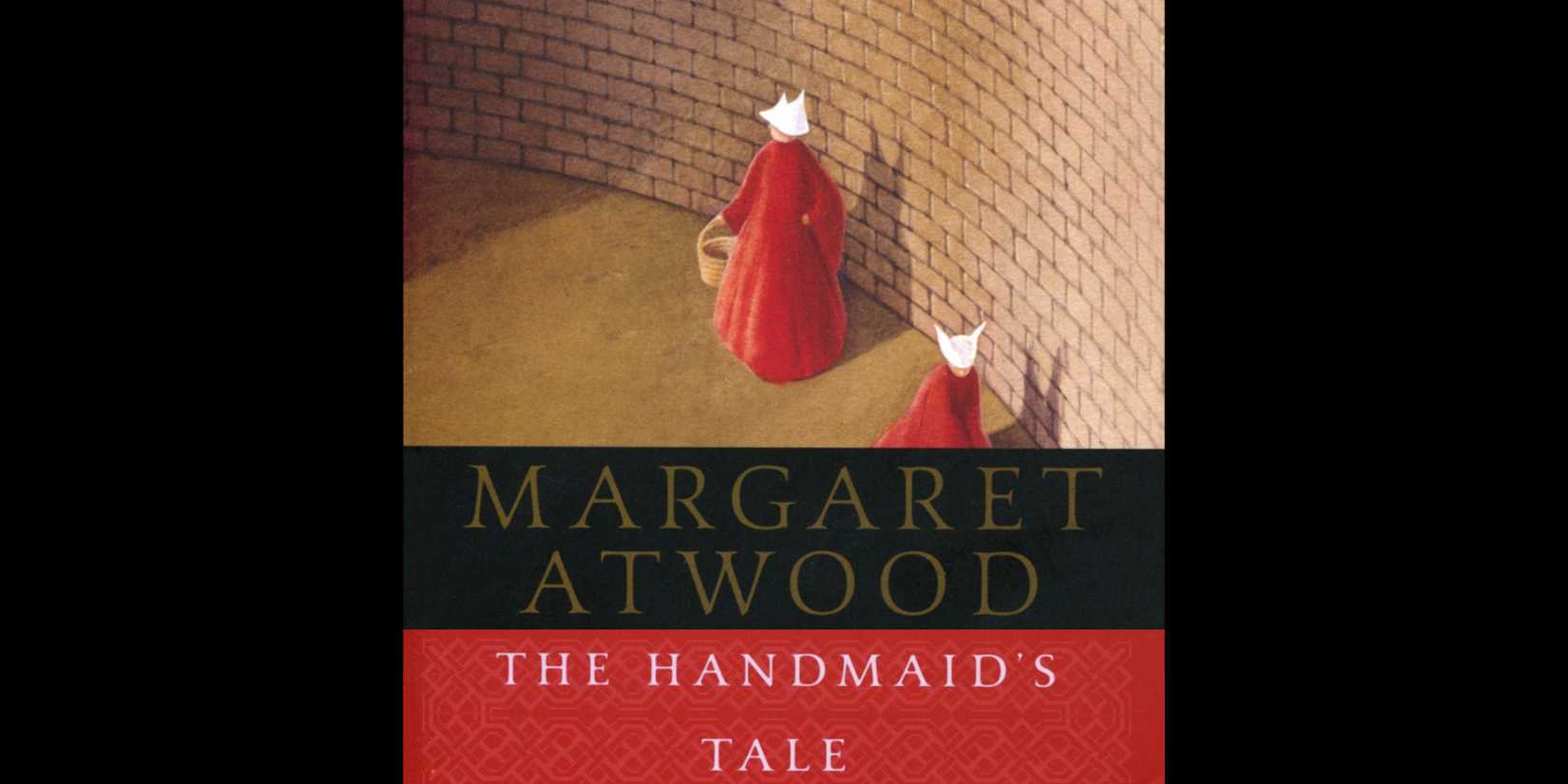
The TV series of The Handmaid’s Tale might be more well-known in recent years, just because it’s more recent and all, and it also expands its source material because it goes on for multiple seasons, but the comparatively compact novel is no slouch in the hopeless department. It’s a dystopian book, so that’s to be expected, but it’s particularly grim because the dystopian elements here really don’t feel all that far-fetched, nor too futuristic.
It’s enough to make calling The Handmaid’s Tale (1985) a science fiction book feel like a bit of a stretch, and if you did want to call it that, then it’s definitely the sort of thing where any sci-fi elements prove pretty subdued. There’s extreme patriarchal values, oppression based on gender, and widespread infertility here, among many other grim things, and you have to navigate this whole bleak world through the “tale” of one woman stuck in the middle of it all. It’s an important and worthwhile book, but definitely a challenging one to read (for good reason, of course).
9 'Pet Sematary' (1983)

While Pet Sematary doesn’t have the most character deaths of any Stephen King book, given its relatively small character count (and the fact that something like The Stand kills off most of the planet early on, and then it’s also pretty cutthroat towards all the survivors), it might well have some of the most impactful deaths the author’s ever written. That’s certainly saying something.
Further, Pet Sematary is all about death and grief, all in a particularly uncompromising way, and it does that Monkey’s Paw thing in an interesting, visceral, and uncomfortably gritty manner, with its focus on a family who lose a pet, and then some other things, but they happen to live next to a cemetery that seemingly brings things back to life, but with a cost. If you want to see old-school Stephen King at his most unapologetically feel-bad, this is probably the novel you should start with, because it’s almost guaranteed to rattle you on at least a few occasions throughout.
8 'Gravity's Rainbow' (1973)

On paper, Gravity’s Rainbow might not sound all that intense, since it kind of has a protagonist in the form of Tyrone Slothrop, and he might be more of an idea than a person. He goes around Europe while World War II’s being fought, seemingly hunting for a strange missile, but also, he gets into some non-war and non-missile-related shenanigans along the way.
So do countless other characters, with some of them also wanting what Slothrop might want. You’ve got some stretches of Gravity’s Rainbow that are darkly funny, admittedly, but there’s too much that’s disturbing, perplexing, and genuinely revolting to not count it as one of the most upsetting books potentially even published. It’s an epic, so parts of it might be kind of fun (and definitely creative), but you're not left feeling anything close to good once you’ve battled through the whole darn thing.
7 'Nineteen Eighty-Four' (1949)

There’s a lot of despair throughout Nineteen Eighty-Four, but it makes sense for the despair to be there, since it’s one of the quintessential works of dystopian fiction and all. It might well be the definitive novel that fits within that general category, and it’s the kind of thing you know about to some extent even if you haven’t read it, thanks to some of George Orwell’s creative choices here extending and pervading beyond the original text.
It’s all very soul-crushing and upsetting, but for good reason, and the emotional punch packed here (a timeless punch at that) is a big reason why people do still care about Nineteen Eighty-Four.
There are all the terms from the novel that have entered the English language, or are used to describe everyday things, and then also parts of Nineteen Eighty-Four that feel prescient and/or continually relevant, as depressing as that may be to think about. It’s all very soul-crushing and upsetting, but for good reason, and the emotional punch packed here (a timeless punch at that) is a big reason why people do still care about Nineteen Eighty-Four more than three-quarters of a century on from its publication.
6 'The Big Nowhere' (1988)
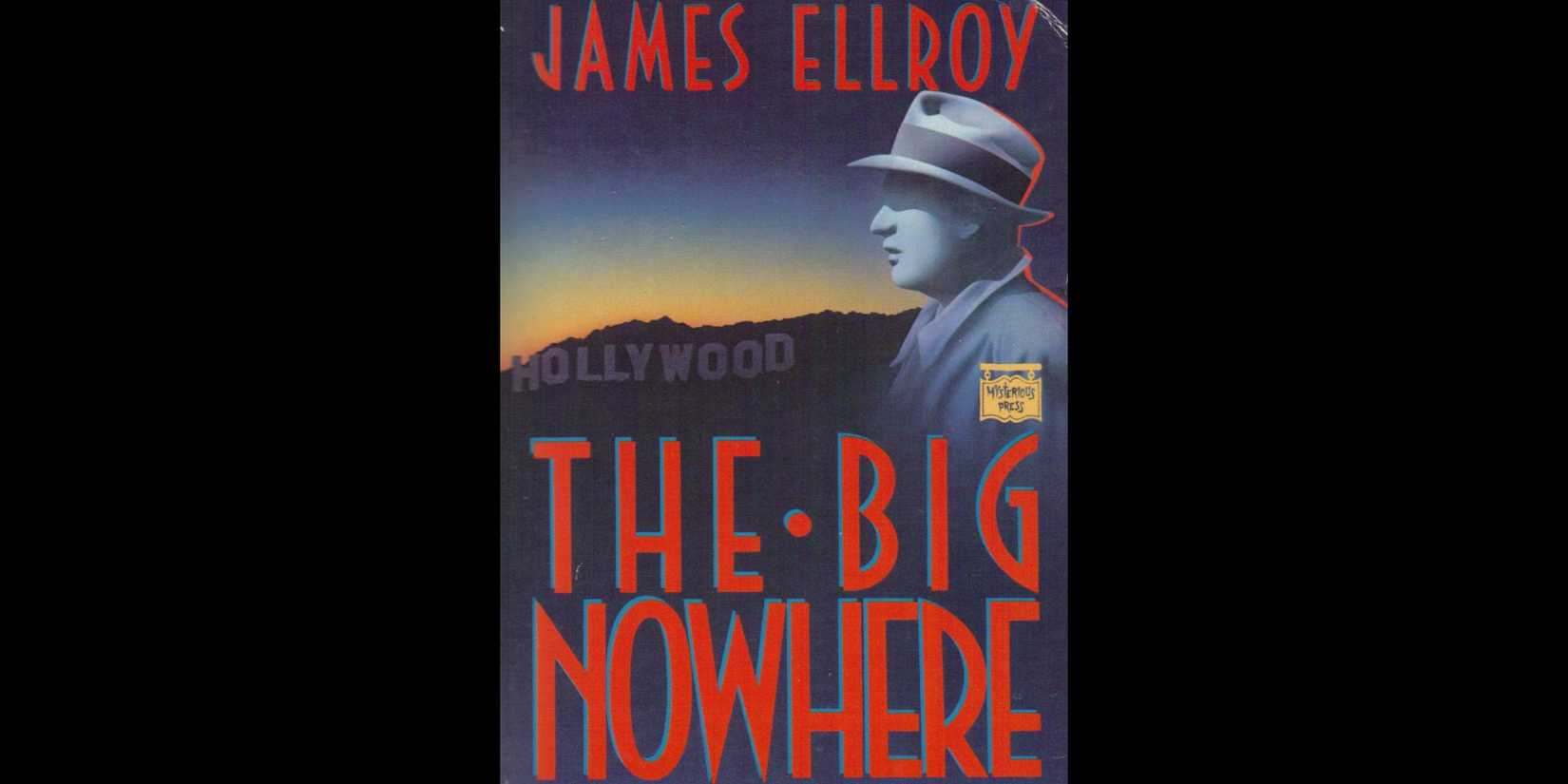
The Big Nowhere is by James Ellroy, and sits between his two most well-known novels in his L.A. Quartet series: The Black Dahlia and L.A. Confidential. The former is harrowing but not 100% hopeless, more so, like, 75 to 80% hopeless, while the latter is pretty hopeless overall, but doesn’t feel quite as bad if you go ahead and tackle it not long after finishing The Big Nowhere.
To be Ellroy’s most upsetting and confronting crime novel is no easy task, but that’s what The Big Nowhere well and truly is. It takes all the typically dark noir conventions you'd expect and pushes the bunch of them to the extreme, basically. Everyone is a different shade of grey, and the whole world is absolutely miserable and deadest on making basically everyone dead, sooner rather than later. If pushed any further, it’d probably become unintentionally comedic, but Ellroy, at least with this novel, knew just how to approach that line and dance on it for a few hundred pages without fully/actually crossing it.
5 'Libra' (1988)

It’s about the John F. Kennedy assassination, so Libra is already going to be heavy-going because of that, but it goes the extra mile because of its approach to that already difficult and hugely consequential subject matter. It is the best book about the event (and there are so many), with a rather radical approach in the sense that it makes Lee Harvey Oswald the closest thing to a main character, exploring what he’s going through psychologically in the lead-up to what’s always inevitably going to happen.
Also, fear not if you're worried about this pedaling a conspiracy theory, because Libra is wholly historical fiction, and it’s more about conspiracies in general (and why they exist at all) rather than about a specific one relating to JFK. It’s all nuanced, intelligent, and continually paranoia-inducing, mining an unbelievable amount of terror out of the unknown, being one of those rare genuinely life-changing books in the process (for better or worse).
4 'Revival' (2014)

Much of what was already said about Pet Sematary can be said about Revival, which isn't a sequel by Stephen King to that other classic, but it does feel like a follow-up of sorts (maybe in the spiritual sense?) three decades later. There is a character in this that loses a lot, and that sets him on a dangerous path, because he devotes the rest of his life to trying to either raise the dead or communicate with those in the afterlife.
Of course, things don’t go well along the way, but what’s remarkable here is just how bad they get, and also how unsettling the final few chapters of Revival prove to be, even by Stephen King’s standards. It’s one of his best books of the last couple of decades for sure, and definitely worth a read if you want something that’s about as upsetting as Pet Sematary… or perhaps even more so.
3 'Blood Meridian' (1985)

If Blood Meridian ever got made into a movie, Judge Holden would probably enter the ranks of the best monsters in cinema history, even if he’s not technically a monster… or is he? Like, he’s part of a band of characters who go around hunting and killing people for money, and then seemingly for the hell of it, so none of them are even close to good people, but he’s the worst of a bad bunch.
Blood Meridian is also about as violent as a book could possibly get, and while it’s one of the best Western books of all time for sure, it’s also one of the most utterly miserable. Everything you’ve heard about this book and the ways it’s controversial are true, and while it is worth reading if you’ve got a strong enough stomach, definitely don’t read it while eating. Or in public. Or before bed. Or… actually, wait – is it truly worth reading?
2 'The Trial' (1925)

Since it’s pretty slim, and also not too horrific in terms of content, The Trial is probably the easiest book to read in this whole ranking. It finds some other ways to be utterly hopeless and grim, though, which is the main thing. Being confronting is a way to make something hopeless, sure, but it’s not everything, because you can also have a novel be about an unlucky person living in a cursed and confusing society and have that be one of the most lacking-in-hope things ever written.
That is The Trial, in a nutshell. A man is arrested, but the crime he’s accused of committing isn't clear, and all his attempts to make sense of his situation cause things to get worse. It’s Franz Kafka’s masterpiece, partly because it is fairly long by his standards, though The Metamorphosis is also great and easy to recommend for similar reasons, albeit it’s a bit more of a work of horror, and it’s also a novella, rather than a novel.
1 'Blonde' (2000)

You could almost call Blonde a work of horror, though if you think that’s a stretch, then maybe it’s worth singling out as one of the most horrifying books of all time, in any event. It’s a testament to how a story can be tremendously upsetting and frightening without traditional horror elements, and it’s even more mortifying if you enter into it expecting some kind of even semi-biographical novel about Marilyn Monroe.
She is indeed the focus here, but Blonde doesn’t aim to cover all the expected life events in the expected way, taking some familiar beats and making them more mortifying (more often than not), and then at other points employing some real artistic license, imagining what Monroe might've gone through and perhaps more unnervingly what she could've been thinking at the time. She’s used here as a look into an exploitative industry (Hollywood, basically), and then some broader social/cultural/gender-related issues, too. If there’s something that people find heavy-going, it probably shows up at one point or another in Blonde. It’s a nightmare of a book, and perhaps even the most hopeless and despairing of all time.

Blonde
8 10
- Release Date
- September 28, 2022
- Runtime
- 2h 46m
- Director
- Andrew Dominik
- Writers
- Andrew Dominik, Joyce Carol Oates
KioskNews shows a cleaned-up reading view extracted from the publisher’s page — the original always lives on their site, not ours.