New Zealand PM sees path back to office but vote 'too close to call'
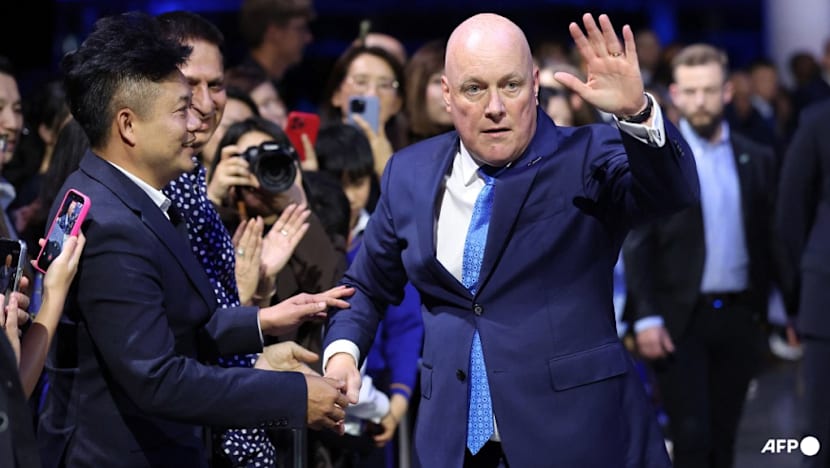
WELLINGTON: New Zealand Prime Minister Christopher Luxon said Sunday (Nov 8) his right-wing coalition had a path back to office, while conceding the vote was too close to call definitively and compromise would be needed after a hard-fought campaign dominated by cost of living issues.
Neither Luxon's National Party nor the centre-left Labour won enough seats in parliament to form a government without minor parties in an election that put the two main parties neck and neck at 29 per cent - just a few thousand votes separating them.
Preliminary results had National winning the most seats, which would give them a very slim majority of just two if combined with their coalition partners - the populist NZ First and the libertarian ACT.
"National is once again the largest party in parliament, and we have a pathway to forming the next government," Luxon said in Auckland to chants of "three more years" from supporters.
"But right now it is too close to call."
He said he would run a caretaker government until the final votes were tallied on Nov 27.
Those hundreds of thousands of "special votes" - which include those from New Zealanders living abroad - could tip the balance of the poll.
"With those final results there can then be meaningful negotiations," Luxon said.
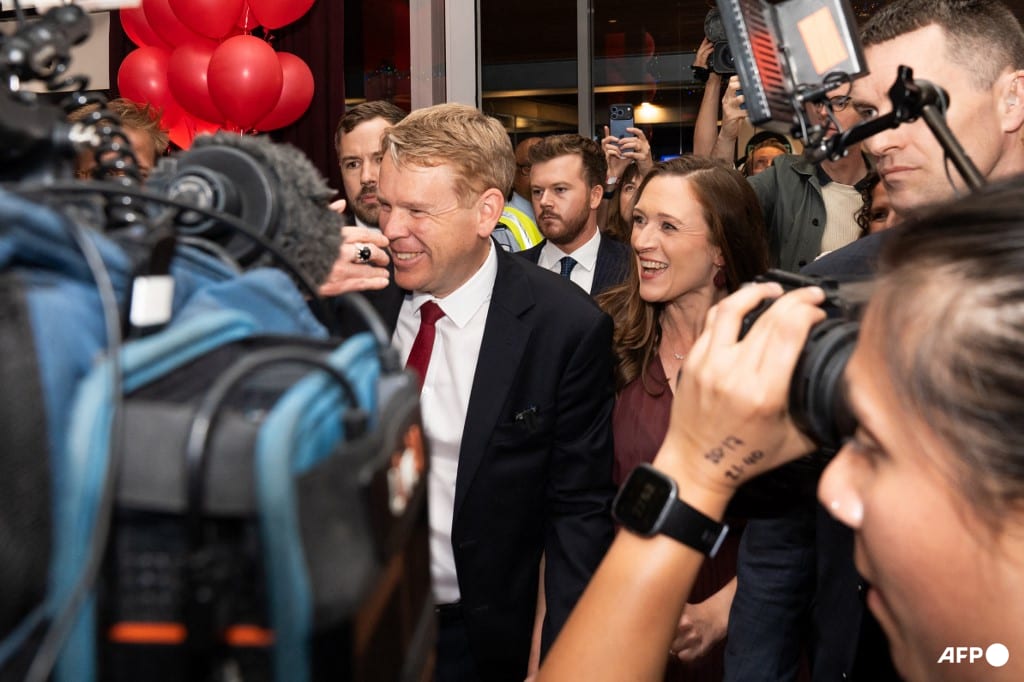
At an event with supporters in Upper Hutt, near Wellington, Labour leader Chris Hipkins arrived late to cheers of his nickname "Chippy" - greeted with adulation even as he accepted that his party may not play a role in the next government.
"New Zealand has spoken. It may take us a little bit longer to figure out exactly what it is that you've said," he told supporters.
"Our next parliament is going to require all of us to compromise, to work together, and to find common ground," he said.
"If we have the privilege of forming the government after this election, when the results are finally known, we will get straight to work," he added.
"But if we don't, we will continue to stand up for the people who need a strong voice in parliament and work every day to earn the confidence of New Zealanders."
CENTRIST UPSTART
This week's knife-edge poll drew intense attention to the country's minor parties, in particular the upstart centrist Opportunity Party.
Under the country's mixed-member proportional representation (MMP) system, voters must tick two options - a general party list as well as an individual member to represent their electorate.
Results put Opportunity winning over five per cent - the threshold needed to gain seats in parliament without an electorate candidate win, which could give the party a kingmaker role in the next government.
Leader Qiulae Wong has vowed a kinder, gentler politics and said she could work with whichever party wins the most seats.
"You guys have voted for unity over division," she said as votes rolled in.
"You have voted to change New Zealand politics for good."
She told state broadcaster 1News that she had both Luxon's and Hipkins' phone numbers ready.
COST OF LIVING
Kiwis are struggling to make ends meet - the price of basic goods remains stubbornly elevated, and unemployment at its highest in more than a decade.
The war in the Middle East and the subsequent global fuel shock have been widely blamed for the hit to New Zealand's economy.
Luxon had hoped his right-wing coalition could cling to power with promises of "no new taxes", after three fractious years in office, two failed bids by his own party to oust him as leader and an economy in the doldrums.
And while National have a path to power, they would do so without several of their most senior and highest-performing members.
Deputy leader and Finance Minister Nicola Willis will not return to parliament due to her party's poor performance in the party vote.
And Chris Bishop, the minister for housing, infrastructure and transport, looks set to lose his Hutt South seat.
KioskNews shows a cleaned-up reading view extracted from the publisher’s page — the original always lives on their site, not ours.