Failure to ratify the EU trade deal would cost Australia far more than beef
Australia and the European Union agreed on a comprehensive free-trade agreement (FTA) in March, after nearly eight years negotiating and much political rancour.
The agreement abolishes almost all bilateral tariffs, covering 98% of Australian goods exports and broadens our export base at a time of high US tariffs.
Seven months on, the fight has moved to Canberra. Although the government signed the treaty, parliament must pass the laws required to give it effect, such as changing tariff schedules.
Passage through the lower house is certain. In the Senate, however, Labor holds 30 of 76 Senate seats and needs nine extra Senate votes, from a mix of Coalition, Greens, One Nation, and cross-bench senators.
The Coalition is split
With 27 Senate seats, the Coalition’s position matters most, but it is split.
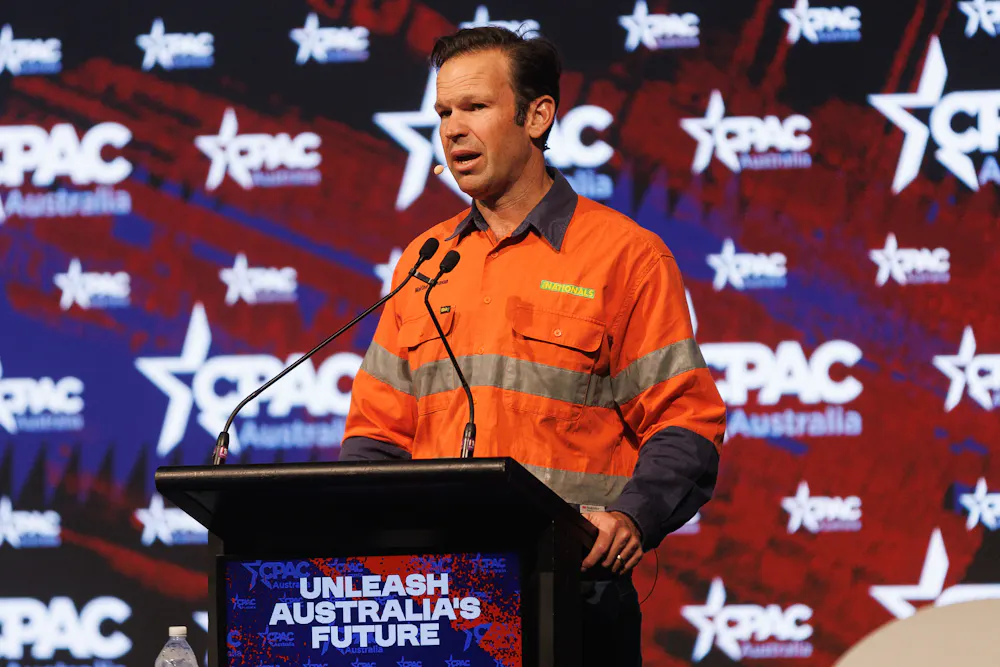
In mid-October Nationals Senate leader Matt Canavan and Nationals frontbencher Bridget McKenzie said the Coalition would oppose the deal, citing insufficient gains in beef, lamb and dairy.
Liberals quickly contradicted them, though some share concerns about the agreement’s commitments on climate and labour rights to meet the International Labour Organization’s rules.
Those concerns are overstated. The Paris Agreement climate? commitments are voluntary and can be revised, while the deal requires no new International Labour Organization ratifications.
If Liberal leader Angus Taylor sides with the Nationals, Labor would need the Greens’ ten senators. However, under new leader David Shoebridge, the Greens may seek to drive harder bargains in legislative negotiations with the government.
The alternative — all four One Nation senators, combined with all five independent senators — seems unlikely.
Why not renegotiate the deal?
Some have suggested the deal should be renegotiated to achieve even greater market access.
Could we go back for more? No. European Commission spokesperson Olof Gill told Politico last week:
Once negotiations are done, they are done.
Farrell shows farmers the beef
Trade Minister Don Farrell told ABC Radio National the beef industry wanted A$3 billion in new trade and he got them $2 billion. He said “the rest of the Australian economy” should not be penalised because of that.
While still well short of sales to China, Japan or the US, the deal sharply lifts Australia’s dedicated quota from 4,400 tonnes to 35,000 tonnes once phased in, with the current 20% tariff scrapped from day one.
In 2019, during the first Trump administration, Europe handed the United States a dedicated 35,000-tonne share of the grain-fed beef quota. This came at the expense of non-US suppliers, including Australia. Successive Coalition and Labor governments have tried to claw back Australia’s share.
Farrell argued that one sector’s disappointment should not deny opportunities to everyone else:
My job is to represent the national interest, not just one section of the Australian economy.
That is the judgement governments must make. Trade negotiations involve compromise. Neither side gets everything it wants.
Australia’s trade agreements have often attracted criticism, but implementation has generally had bipartisan support.
Critical minerals have been overlooked
The focus on agricultural exports also overlooks many other opportunities, notably critical minerals — the materials needed for batteries, wind turbines, electric vehicles and defence equipment.
The International Energy Agency identifies financing and supply-chain concentration as major challenges. China’s dominance in refining makes developing alternatives difficult.
Australia has substantial resources of critical minerals. What we lack are buyers, lenders and capital. Mine developers need long-term purchase contracts, known as offtake agreements, which help convince financiers a project will generate reliable income.
Europe’s Critical Raw Materials Act says by 2030 no more than 65% of any strategic mineral should come from a single country. The FTA supports cooperation on mining, processing and investment. It gives European businesses greater confidence to commit to Australian projects.
Arafura’s Nolans rare earths project near Alice Springs illustrates the opportunity. Government agency Austrade reports an A$84 million investment from Germany’s state development bank KfW and a long-term supply agreement with turbine manufacturer Siemens Gamesa.
Nolans is designed to combine mining and processing on site. That is the onshore processing every Australian politician says they want. The Minerals Council recently backed the EU deal for that reason.
These arrangements show how European customers and financing can support Australia’s mining sector. The trade deal with the EU unlocks more of these opportunities.
Remember the rules-based order?
Recent experience — ever since US President Trump’s “Liberation Day” tariffs —demonstrates that allies are not protected from US trade barriers. Nor can we forget China’s use of economic pressure against Australian exporters of wine, barley and lobster.
Australia is wedged between a protectionist ally and a coercive customer.
The answer is not to abandon either relationship. Rather, it is to build more options. Europe’s market of about 450 million people, investment capacity, and closer security relationship with Australia make it an important partner that, like Australia, still believes in rules.
Ratification is now or never
Europe’s window will not stay open for ever. Ratification needs a “qualified majority” of EU governments, or at least 15 of 27 countries holding 65% of the population.
Politico is calling the year ahead a perfect political storm. A succession of national elections clouds the horizon with Spain on November 29, France and Italy in 2027, while Germany’s coalition is under serious strain from far-right challengers.
Failure to ratify now, on either side, would confront much more challenging political dynamics in Europe and Australia. It is this deal or none.
The Coalition started this in 2018 because it was the right call. It still is. Let’s not allow the perfect to get in the way of the good.
Read more: Why Australia’s trade deal with Europe hinges on a forgotten promise - and a handshake
KioskNews shows a cleaned-up reading view extracted from the publisher’s page — the original always lives on their site, not ours.