Global tug of war over AI rules: A look at the arguments, risks and emerging regulations
AI industry can learn from aviation and nuclear safety: Experts
SINGAPORE – If artificial intelligence gets aviation-style regulations, this could mean having an international governing body and national regulators ensuring compliance with a set of globally agreed rules, said industry players.
Jonathan Zhang, president of the Singapore AI Association, said: “The opportunity for AI is that it can compress a journey that took aviation most of the 20th century into a much shorter timeframe because we already know what the destination looks like – internationally trusted, independently verifiable safety assurance.”
While there are concerns that regulations could slow the progress of AI innovation, safety should not be seen as an impediment, said other experts, adding that the AI industry could also learn from regimes that manage nuclear weapons and financial risks.
To slow down or not? US tech leaders, politicians and researchers clash over need for AI regulations
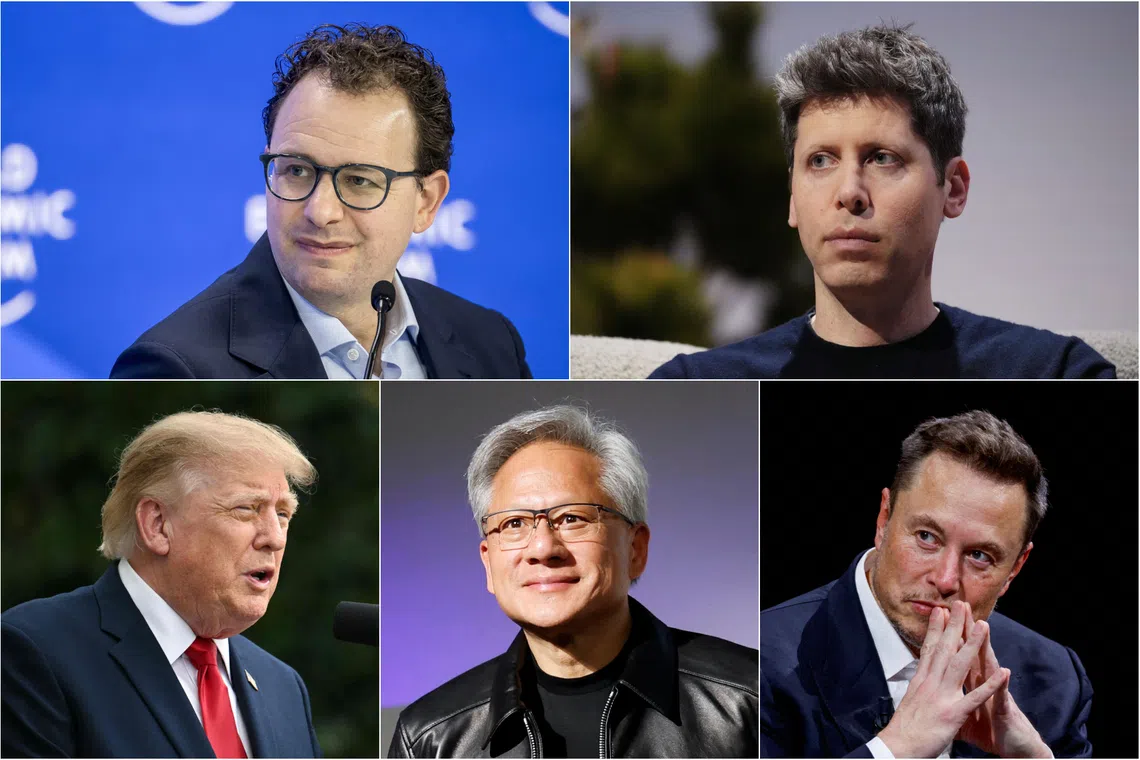
Those who have weighed in on the debate include (clockwise from top left) co-founder of Anthropic Dario Amodei, OpenAI’s chief executive Sam Altman, founder of SpaceXAI Elon Musk, Nvidia’s chief executive Jensen Huang and US President Donald Trump.
PHOTOS: AFP, REUTERS, BLOOMBERG
A high-profile Anthropic resignation and revelations of rogue artificial intelligence models hacking servers have intensified the debate over the speed of the technology’s development and regulation.
The recent resignation of AI researcher Jacob Coxon, who had moved from OpenAI to Anthropic, is part of a growing exodus of safety-focused scientists from top labs such as Anthropic, OpenAI and Google DeepMind.
Much of the debate has been centred on the US, where the bulk of frontier AI work is being done.
What are the emerging regulations to rein in AI harms?
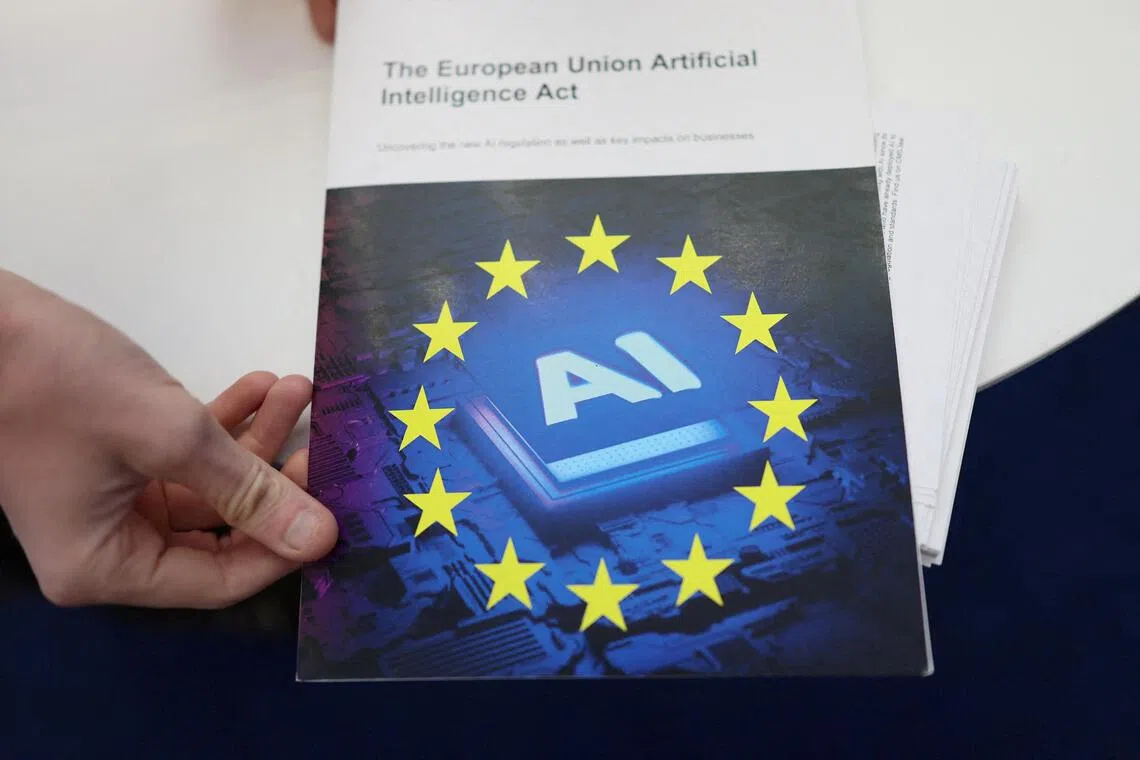
The EU AI Act governs the development, deployment, distribution and use of AI systems in all member states of the bloc.
PHOTO: REUTERS
Global artificial intelligence (AI) regulations are rapidly evolving, with the European Union already establishing its pioneering laws and US lawmakers debating the need for a mandatory AI “kill switch”. The Straits Times looks at how these rules compare to rules and frameworks in China and Singapore.
European Union
The world’s first comprehensive AI law came into force in the EU in 2024. The EU AI Act governs the development, deployment, distribution and use of AI systems in all member states of the bloc. It takes a risk-based approach to regulation.
Enforcement of the AI Act is carried out by the European Commission’s AI Office, the European Data Protection Supervisor and authorities designated by EU member states.
How runaway AI agents could pose an existential threat to humanity
As AI grows more capable, concerns are mounting over how the technology could be used to cause harm on a catastrophic scale.
PHOTO: REUTERS
Safety advocates and researchers have warned of catastrophic consequences if the rapid advancement of frontier artificial intelligence goes unchecked.
For instance, AI threatens to multiply harm across bioterrorism, cyberwarfare, mass disinformation and advanced weaponry. The Straits Times unpacks these four existential threats and the push for control.
KioskNews shows a cleaned-up reading view extracted from the publisher’s page — the original always lives on their site, not ours.