Mainland Chinese arrivals to Hong Kong beat ‘golden week’ forecast in just 6 days
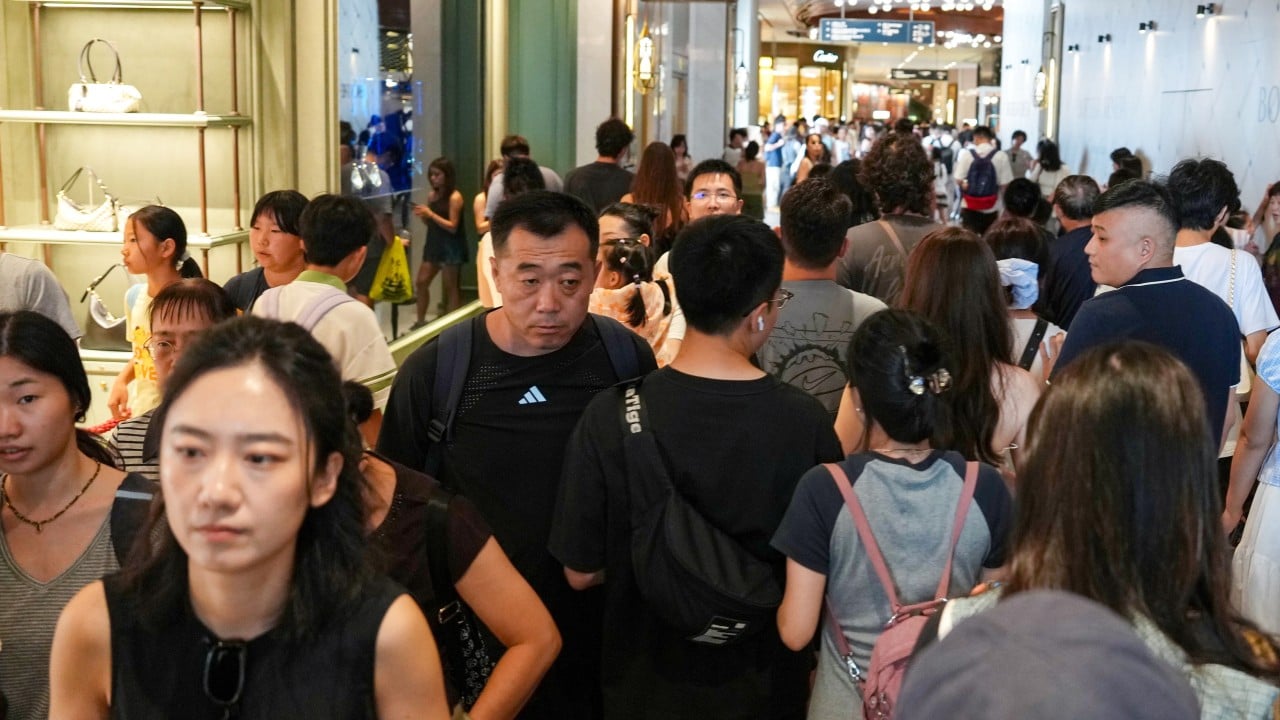
Mainland Chinese visitor arrivals in Hong Kong exceeded the government’s forecast for the entire National Day “golden week” holiday in the first six days, as major shopping centres and hotel operators reported brisk business.
The city recorded 1.3 million mainland visitor arrivals over the first six days of the week-long break, up by 11.6 per cent from the same period last year and surpassing the government’s forecast of 1.29 million for the entire holiday, according to Immigration Department figures.
Echo Huang Shaomei, executive director and CEO of New World Development, said footfall at the group’s flagship K11 Musea mall reached a record for a National Day golden week holiday, while tourist spending rose by 26 per cent year on year.
She said jewellery and watches remained popular with mainland visitors, with one transaction worth nearly HK$2 million (US$254,846).
She added that sales of athleisure products also grew strongly, driven by the opening of American brand Alo Yoga’s first store in the country.
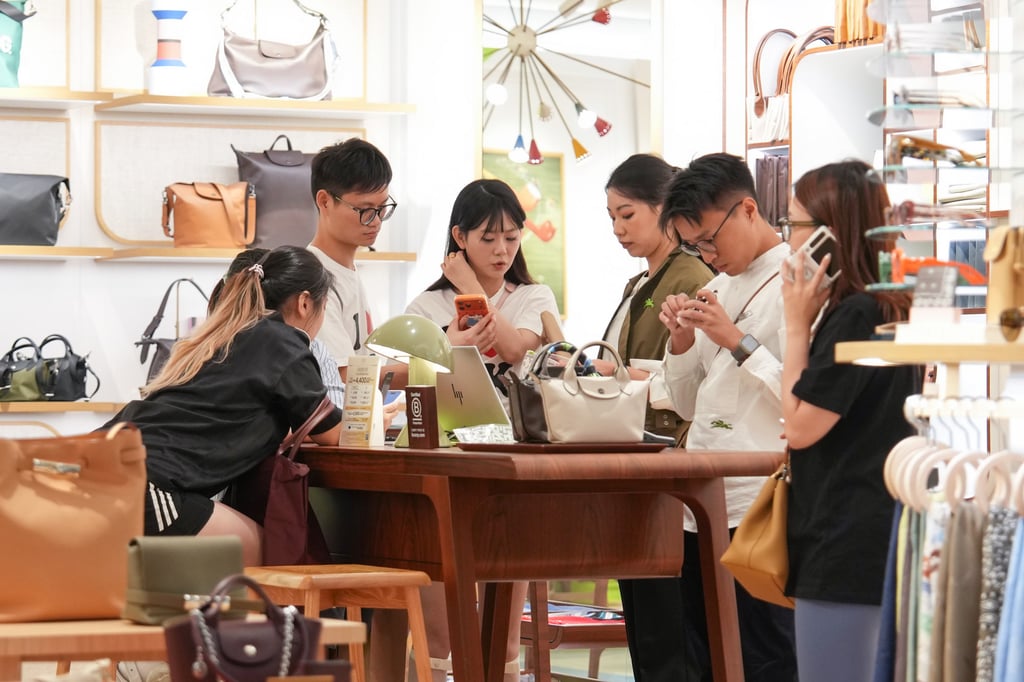
“This further underscores the success of the brand upgrade programme that our team has pursued over the past two years, strengthening K11 Musea’s position as a premier destination for visitors during peak tourism seasons, while continuing to attract and broaden its high-net-worth customer base,” Huang said.
She added that more internationally renowned brands were set to open at the shopping centre in the fourth quarter.
A Henderson Land Development spokeswoman said spending on jewellery, electronics, premium dried seafood and dining was strong. Rewards and promotions targeting residents and tourists had helped stimulate consumption, she said.
“Overall, both footfall and turnover at the group’s major shopping malls recorded double-digit year-on-year growth,” she said.
The developer attributed the gains to government efforts to promote major events, a stabilising trend in Hongkongers travelling to the mainland to spend and its own marketing campaigns.
Judy Chow Shuk-man, general manager for leasing at Sun Hung Kai Properties’ leasing agency, said many restaurants at Moko in Mong Kok and New Town Plaza in Sha Tin served two or more sittings at dinner.
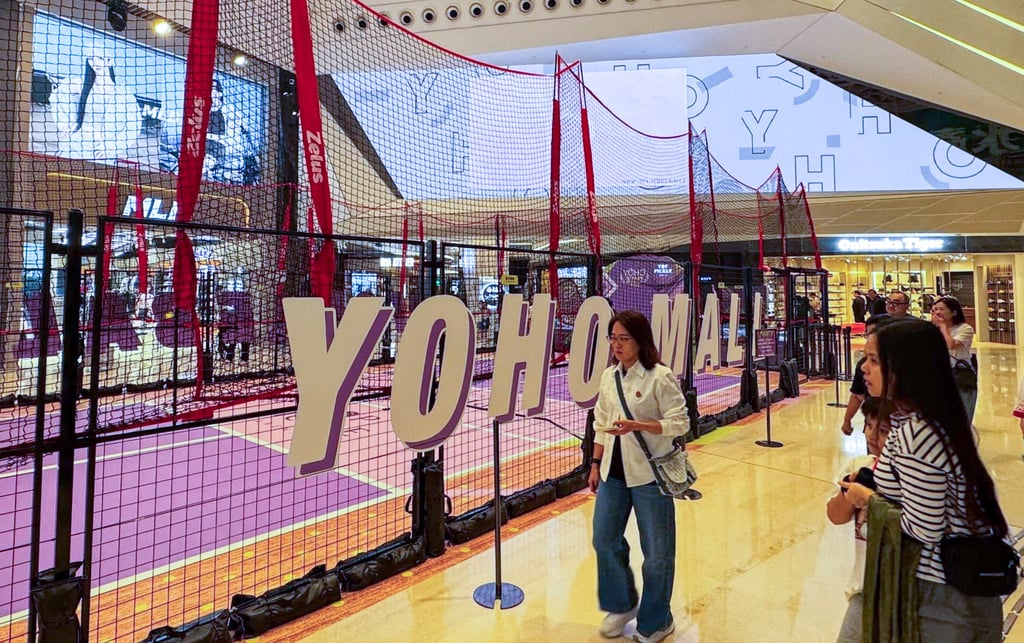
At Yoho Mall in Yuen Long, new brands attracted families from within and outside the district, with long queues during peak dinner hours, she said. Spending per head was similar to last year.
“The trend of residents heading north has stabilised significantly,” Chow said. “Yoho Mall has carried out a large-scale refresh of its brands this year, introducing more than 75 new brands.
“Together with different themed activities, this has successfully retained many local family customers.”
She said the mall’s proximity to border crossings also made it convenient for visitors from elsewhere in the Greater Bay Area.
Chow said themed pop-ups at New Town Plaza, including a Miss Dior cafe and shops featuring Pompompurin and Harry Potter, had attracted residents and tourists. Moko also recorded a marked increase in overseas visitors, including those from Southeast Asia.
The developer was confident about the outlook for retail and dining businesses in the fourth quarter, she said, with Halloween, Christmas and New Year’s Eve offering further opportunities to boost spending
Swire Properties said its malls, including Pacific Place in Admiralty, Cityplaza in Taikoo Shing and Citygate Outlets in Tung Chung, recorded higher sales over the past week.
Peter Tam, deputy general manager of Metropark Hotel Mong Kok, said the hotel had performed strongly during the holiday, “hitting 100 per cent occupancy” from October 1 to 3, with the average daily rate peaking at HK$1,300.
“Demand was led by solo travellers, with only a small group component at the start of the holiday, underpinned by mainland leisure travel,” he said.
Tam added that most guests booked short stays of two to three nights. Room rates peaked in the first three days before falling notably by October 6.
Many mainland visitors also headed to ecologically sensitive areas in Sai Kung.
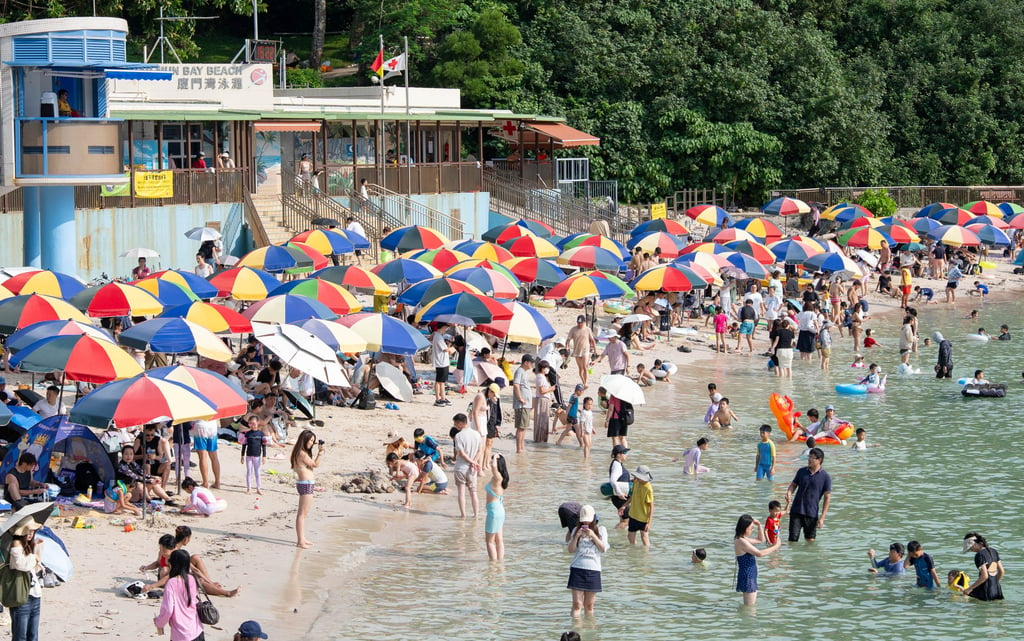
Sai Kung district councillor Chris Cheung Mei-hung said some locations came under pressure and facilities had not fully kept pace with numbers, although crowd control during the holiday was better than in previous peak periods.
“These include Kiu Tsui Chau and Hap Mun Bay. On October 1, some 1,160 visitors headed to Po Pin Chau and about 2,020 to Kiu Tsui Chau, while a green group recorded more than 3,000 people landing at Hap Mun Bay in a single day,” he said.
Cheung described high visitor numbers but low spending as “a warning sign”, pointing to changes in behaviour.
“Many visitors now are backpackers or people who take ‘fast-paced’ trips, going straight to Po Pin Chau or Kiu Tsui Chau but leaving quickly, often without stopping in Sai Kung town centre,” he said.
“While some restaurants around Sai Kung Pier have seen an increase in business, others are still empty with hardly any customers.”
KioskNews shows a cleaned-up reading view extracted from the publisher’s page — the original always lives on their site, not ours.