Climate change pushed Earth to its limits in 2026, researchers find
Climate change pushed the Earth's environmental system to, and perhaps beyond, its limits in 2026, as several of its "vital signs" reached record extremes, researchers said in a new report on the state of the global climate.
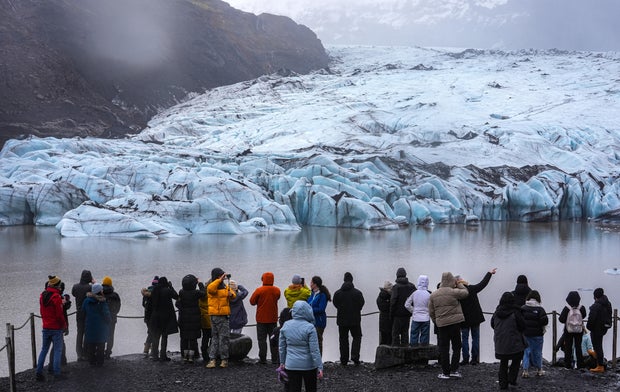
Of the 16 climate markers that researchers consider integral measures of how the Earth is doing, seven are currently at record extremes, while multiple others show evidence of accelerating or abruptly shifting, the report published Wednesday in the peer-reviewed journal BioScience said.
The markers include greenhouse gases, temperature, glacier mass, oceans, wildfires and the planet's energy imbalance, which refers to the difference between the amount of energy the Earth absorbs and the amount it radiates back out into the atmosphere.
Researchers warned in the report that the planet's climate "is moving deeper into uncharted territory."
"Earth's life-support systems are being pushed beyond stable limits, with changes unfolding faster than our ability to respond," the report said. "Across the globe, extreme heat, floods, droughts, storms, and wildfires are no longer rare events but defining features of a changing planet."
A record year
July 2026 broke records as the warmest month ever for the contiguous United States, while the country as a whole was experiencing what turned out to be the hottest summer it had ever seen.
Globally, ocean temperatures also reached new heights in July, the report said, while data show that carbon dioxide levels in the atmosphere are higher now than at any other time in the last 2 million years. Heat waves scorched Europe, killing an estimated 14,000, and baked portions of the U.S., too, fueling wildfires that burned millions of acres of land.
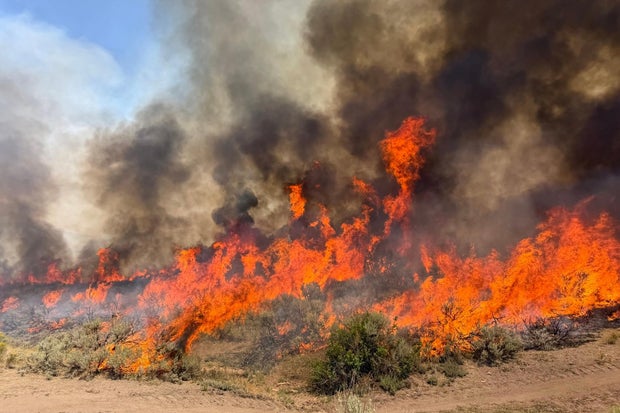
Climate change appears to be accelerating, and its effects are becoming more intense, the researchers warned. They noted that the patterns they'd observed while compiling the report had raised concerns about their potential to cross a point of no return, one at which their impacts on various ecosystems would be irreversible.
In 2025, coral reefs became the first environmental system on Earth to reach a climate "tipping point," with researchers saying the damage could be permanent.
Global warming is happening more quickly now than it was a few decades ago, according to the new climate report, which said the rate of warming has sped up, increasing from roughly 0.05 degrees Celsius per decade between 1880 and 1970, to 0.19 degrees Celsius per decade between 1970 and 2010, and 0.36 degrees Celsius per decade between 2010 and 2024.
"Rapid destabilization"
Faster warming increases the likelihood of crossing tipping points from which different environments can't bounce back, and it also risks destabilizing the delicate balance between them, researchers said.
For example, greenhouse gas emissions from melting permafrost, wildfires, or other natural sources, which are all triggered by the temperatures associated with global warming, could essentially become a cycle that fuels itself.
Amplified sea ice loss, ecosystem degradation and carbon emissions could also begin to create their own self-perpetuating feedback loop — the crux of the "hothouse" climate trajectory, where various tipping points act as catalysts that push global warming far past humans' control.
"We are witnessing the rapid destabilization of the Earth's climate system," the researchers said. "This is no longer a warning for the future; it is a diagnosis of the present."
However, the report noted that worsening trends in fossil fuel combustion and other emissions, the main drivers of the extreme changes it centers on, have been accompanied by positive shifts in renewable energy use.
But the researchers emphasized that any progress seen so far "remains far below the scale and speed needed to stabilize Earth's climate system."
"Rapid reductions in greenhouse gas emissions, effective adaptation, ecosystem protection, and transformative societal change remain essential to reducing climate risks and securing a more resilient and sustainable future," they said.
In:
Wildfires, dangerous air quality "will become more and more prevalent," climate scientist warns
KioskNews shows a cleaned-up reading view extracted from the publisher’s page — the original always lives on their site, not ours.