Why Hong Kong wealth managers want broader access to mainland China’s Nasdaq-style markets
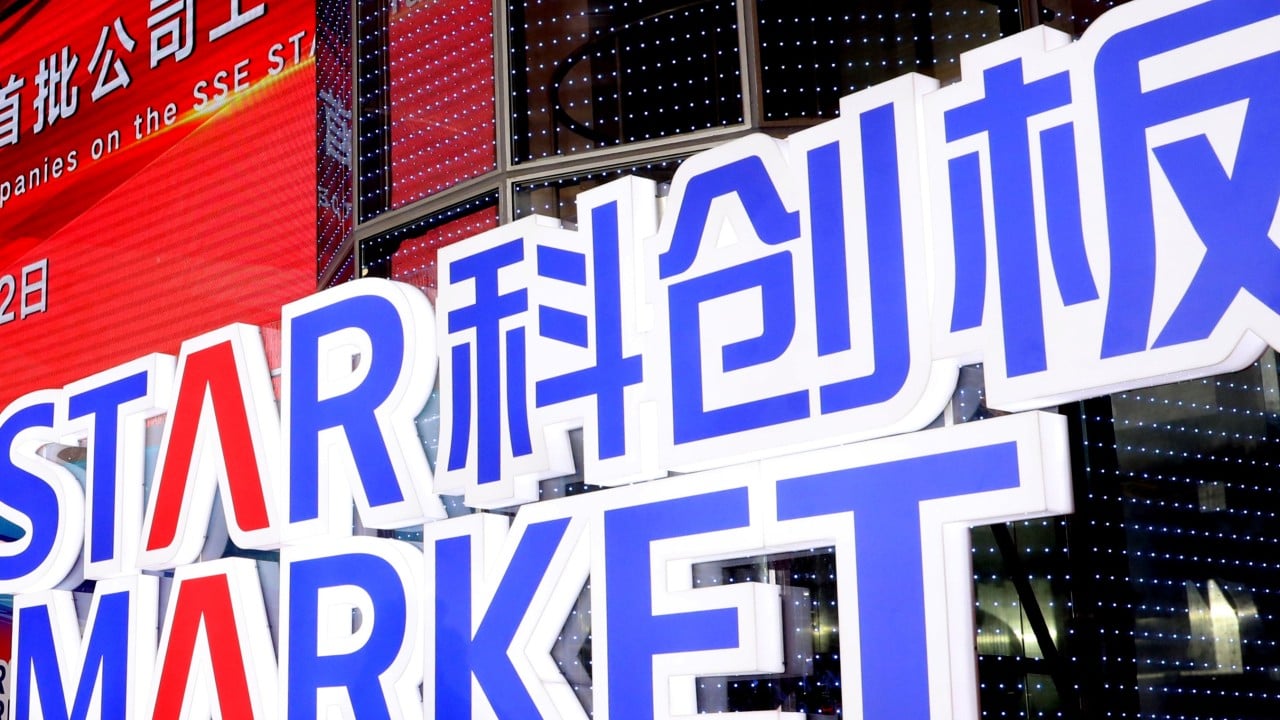
Most asset managers in Hong Kong expect broader access to mainland China’s two Nasdaq-style stock markets to strengthen the city’s private wealth business, an industry survey shows, as hard-tech firms continue to attract investors despite a recent pullback.
The report, released by the Private Wealth Management Association (PWMA) and KPMG China, surveyed most of the association’s 44 institutional members, ranging from Agricultural Bank of China (Hong Kong) to UBS, as well as asset managers and senior executives in Hong Kong.
Some 91 per cent of respondents supported wider access for qualified professional investors to shares traded in Shanghai’s Star Market and Shenzhen’s ChiNext, according to the 11th annual Hong Kong Private Wealth Management report released on Thursday.
The findings indicated that the industry expected a broader range of regulated investment products to further strengthen Hong Kong’s role as a gateway between mainland China and international capital markets.
“Expanding regulated investment channels, enhancing product breadth and strengthening international wealth corridors are key to sustaining Hong Kong’s leadership as a global cross-boundary wealth centre,” said Vivien Khoo, CEO and managing director of the PWMA, in a statement on Thursday.
The report comes as Hong Kong’s equities lag many global markets amid limited exposure to semiconductor firms and memory chipmakers benefiting from the artificial intelligence hardware boom, while the Star Market and the ChiNext host a greater concentration of Chinese companies across the technology supply chain.
Seventy-nine per cent of respondents said Greater Bay Area initiatives linking Hong Kong with mainland China economic hubs like Shenzhen and Guangzhou would be “critical or moderately important” to their offshore Hong Kong business over the next five years.
Overseas institutional investors can trade mainland China-listed shares through the Stock Connect scheme – which links the mainland and Hong Kong markets – and the Qualified Foreign Institutional Investor programme. Participation remains subject to restrictions, including a 10 per cent ownership cap in a single listed company for any one institution.
China Securities Regulatory Commission chairman Wu Qing said in June that the regulator would support foreign investors seeking to establish wholly owned subsidiaries or joint ventures for securities and futures businesses in China, as part of efforts to further open the country’s stock market, which is valued at more than 100 trillion yuan (US$15 trillion).
Amy Lo Choi-wan, chairman of the PWMA executive committee and CEO of UBS Hong Kong, also noted the city’s resilience and the adaptability of its industry and talent pool amid persistent global geopolitical tensions, adding that it remained “a trusted platform for managing and booking wealth” for clients.
With Hong Kong retaining its position as the world’s largest cross-boundary wealth management centre, 94 per cent of surveyed firms said they were “moderately or highly optimistic” about the market’s prospects over the next five years.
KioskNews shows a cleaned-up reading view extracted from the publisher’s page — the original always lives on their site, not ours.