Proposal to harvest organs from Egypt’s death-row inmates sparks controversy
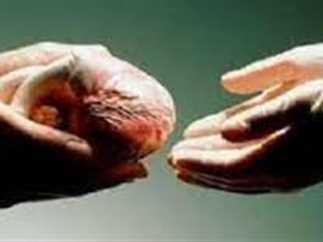
A proposal by professor of critical care medicine at Kasr Al-Ainy Faculty of Medicine, Hossam Mowafy, regarding harvesting organs from individuals sentenced to death has sparked controversy and raised medical, legal, and religious questions.
Mowafy called for a definitive ruling on the legal and religious status of the idea—specifically whether organs could be harvested before or after the execution of the sentence.
He addressed inquiries to the Public Prosecutor and the Al-Azhar Grand Sheikh, seeking clarification on the compatibility of such a measure with Low and Sharia provisions, particularly given the critical need for life-saving organ transplants among some patients.
The Fatwa Secretary at Dar al-Ifta, Hisham Rabie, explained that transplanting organs from the deceased to the living is allowed in principle, according to established fatwas in Egypt and rulings by various Islamic jurisprudence councils; however, he emphasized that this practice is subject to specific religious guidelines.
A question of free will
He noted that a key requirement is that the consent to donate must stem from free will and a person of full legal capacity, free from coercion or any form of physical or psychological pressure.
The circumstances of a death-row inmate, along with the associated constraints and psychological pressures, Rabie said, raise questions about full consent, thereby posing an obstacle to authorizing the proposal in its current form.
A lawyer before the Court of Cassation and the Supreme Constitutional Court, Amr Abdel-Salam, said that the proposal conflicts with the regulations governing organ transplantation.
He explained that donation requires free and informed consent, and that the consent or testamentary directive must be formally documented in accordance with legal procedures.
Abdel-Salam added that the status of a person sentenced to death raises issues regarding the existence of free will—whether before or after the sentence is carried out—noting that the restrictions imposed on such individuals mean that utilizing their organs for donation requires an explicit legal basis.
He pointed out that the Egyptian Constitution enshrines the inviolability of the human body and stipulates that organ donation after death requires consent or a documented will; he emphasized that the state does not gain the right to dispose of a person’s body simply because a death sentence has been issued.
Abdel-Salam explained that Article #60 of the Constitution establishes the inviolability of the human body, while Article 61 defines the donation of tissues and organs as a “gift of life,” permitted either during one’s lifetime or after death through consent or a documented will.
Resolving the proposal requires considering these constitutional and legal parameters, alongside the religious and ethical aspects associated with organ donation, he said.
Formal declaration
The founder of the Liver Oncology Unit at the National Liver Institute, Mohamed Ezz al-Arab, said that Law #5 of 2010 on organ transplantation allows for post-mortem organ donation – provided there is a formal declaration of intent to donate.
He emphasized that the use of a deceased person’s organs cannot be separated from the wishes they expressed prior to death.
Ezz al-Arab stressed that the crucial factor is not merely the medical viability of the organ, but the existence of a legal declaration—documented in official records—that reflects the donor’s free will.
He explained that post-mortem donation must be based on a declaration made by the individual before death; the absence of such a legal declaration could raise concerns regarding potential coercion or pressure exerted on the individual prior to the procedure.
KioskNews shows a cleaned-up reading view extracted from the publisher’s page — the original always lives on their site, not ours.