US police report raises more questions about Chinese researcher Wang Danhao’s death
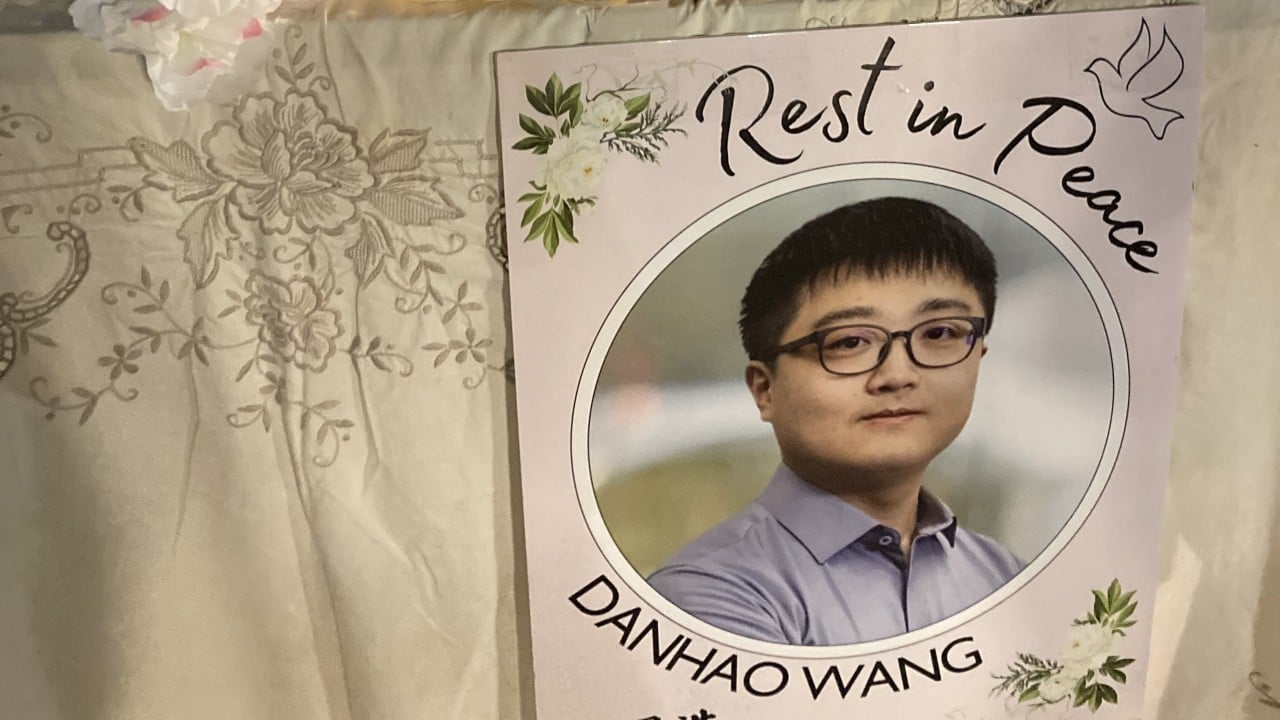
A heavily redacted police report has deepened the mystery surrounding the death of a young Chinese semiconductor researcher at the University of Michigan, who took his own life soon after what US federal agents described as a routine and voluntary interview.
On the cold morning of March 18, Wang Danhao, 31, spoke with two Department of Homeland Security (DHS) officers for about 10 minutes outside his rented home in Ann Arbor. When one officer offered to end the interview because of the weather, Wang suggested they continue talking at a nearby coffee shop, where the conversation lasted another 30 minutes.
Late the next night, Wang arrived at the university’s GG Brown Building with red eyes and appeared to have been crying. Moments after meeting a colleague who wanted to ask him about a research paper, Wang attempted to take his own life by falling and died from his injuries in hospital about two hours later.
However, critical information – including the names of the federal officers, what prompted them to approach Wang and key details of their conversation – was withheld in the 39-page University of Michigan police report seen by the South China Morning Post.
Mingwei Yan, an Ann Arbor-based lawyer handling Wang’s estate proceedings, said the extensive redactions had left the family with few answers. “It feels a little intentional,” she said, adding that she was considering objecting to the redactions in an effort to obtain more information.
One of the most striking redactions appeared in the report’s final timeline. For March 18, the day Wang was questioned by the federal agents, two events are timestamped to the minute – 8.44am and 11.42am – but everything about what happened is blank.
After Wang’s fall on March 19, police found his blood-soaked backpack containing a Homeland Security business card and a separate piece of paper bearing the words “Customs + Border Protection” and the name of an official. Neither official can be identified from the report.
The report also omits the name of the lawyer Wang spoke to for 2½ hours on the morning of his death. But the lawyer, John Minock, had already spoken on the record to the SCMP in July, saying he had expected his name to appear in the police report.
The redactions are only part of the mystery – nothing else in the report readily explains why Wang would have taken his own life so suddenly.
01:48
US bans imports of new Chinese robots and power inverters in latest tech crackdown
Shortly before his death, Wang told the colleague that Minock had reassured him the federal questioning was “nothing serious”. Police found no suicide note and nothing in an initial check of his text messages suggested he was suicidal, depressed or in distress.
Yet DHS remained involved even after Wang’s death. On March 20, university police contacted the agency and discussed working together on further interviews with witnesses and university staff.
The agency later obtained a search-and-seizure warrant for Wang’s phone, laptop, USB drive and portable hard drive, according to the report. University police handed over the devices, along with a copy of data they had extracted from his phone.
The SCMP also learned that the same two DHS officers took part in hours-long questioning of one of Wang’s colleagues at the airport months later as he was returning to China with his ashes.
The SCMP reported previously that Wang had been preparing for a new chapter in his life before his sudden death. He had secured a faculty position at the University of Science and Technology of China in Hefei, his alma mater, and planned to return to China in May. He was also planning to marry his fiancée in the summer.
His colleagues said his scientific work would leave a lasting mark. In an email sent days after Wang’s death, University of Michigan engineering dean Karen Thole described him as a “promising and brilliant young mind” whose semiconductor research published in Nature “stands as a landmark”.
In the police report, Mingyan Liu, a chair professor of engineering at the university, told investigators that Wang’s research had been published “at the highest level”, calling it “a huge accomplishment for any researcher”.
If you have suicidal thoughts or know someone who is experiencing them, help is available. In Hong Kong, you can dial 18111 for the government-run Mental Health Support Hotline. You can also call +852 2896 0000 for The Samaritans or +852 2382 0000 for Suicide Prevention Services. In the US, call or text 988 or chat at 988lifeline.org for the 988 Suicide & Crisis Lifeline. For a list of other nations’ helplines, see this page.
KioskNews shows a cleaned-up reading view extracted from the publisher’s page — the original always lives on their site, not ours.