Supreme Court calls for setting human trafficking apart from voluntary sex work
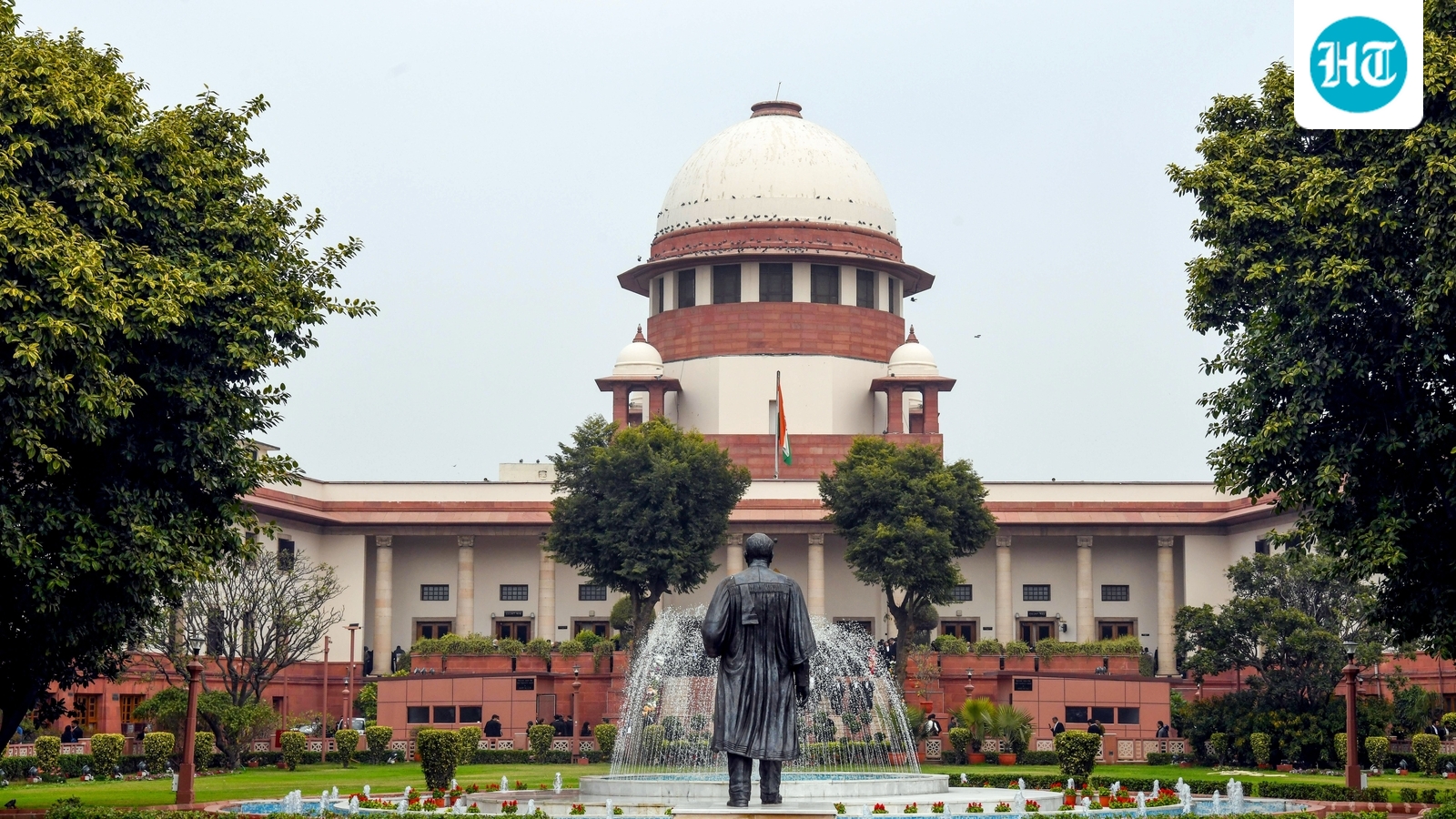
The National Judicial Academy has been asked to frame guidelines for magistrates, while the Centre must submit a fresh compliance report before the next hearing

 Prefer HTon Google

The Supreme Court has moved to protect adult women engaged in voluntary sex work from being subjected to the same legal process as victims of human trafficking, directing the National Judicial Academy to frame a uniform protocol for magistrates to determine whether rescued women were forced into commercial sexual exploitation or were engaged in the work voluntarily.
The court said magistrates across the country must be trained to conduct a mandatory “threshold inquiry” into the circumstances of every adult woman rescued during anti-trafficking operations, even if she claims that her work is voluntary. The exercise is intended to distinguish genuine trafficking victims requiring protection from adult sex workers who should not be subjected to intrusive judicial proceedings or compelled into rehabilitation merely because they were at the site of a raid.
The directions, issued recently by a bench of justices JB Pardiwala and R Mahadevan, build on the court’s May 29 judgment in a 2004 public interest litigation filed by NGO Prajwala. The court has now sought to ensure that its extensive victim protection framework is implemented uniformly, acknowledging that judicial directions often risk remaining confined to judgments without any reliable assessment of their impact on the ground.
Also read: Govt ends segregation of sex workers, brothel-keepers from female prisoners
“Once these directions are committed to the paper in the form of a judgment, the matter marks its abrupt end,” noted the bench, expressing concern that courts often have no means of knowing whether the frameworks they prescribe are making a measurable difference in people’s lives or what obstacles are impeding their implementation.
The latest order followed a compliance review in which the court found that several states and Union territories had yet to implement four additional directions issued in May. It also asked the Union government to obtain detailed compliance reports from all stakeholders involved in the victim protection plan and directed the petitioner and the Centre to suggest concrete mechanisms to track its progress and effectiveness.
Senior advocate Aparna Bhat, appearing for Prajwala, submitted a detailed compliance table identifying the responsibilities assigned to the various stakeholders under the May judgment. The bench commended the exercise, saying it would help monitor compliance with its directions. Additional solicitor general Aishwarya Bhati presented the Centre’s status note on steps taken so far.
Also read: Nurpur drug trafficker’s assets worth ₹48 lakh forfeited
Magistrates must distinguish consent from coercion
The central concern behind the latest directions is the danger of treating all women found during anti-trafficking raids as a single category, irrespective of whether they have been trafficked, are being coerced into sex work or have chosen it voluntarily.
In its May 29 judgment, the Supreme Court held that the Immoral Traffic (Prevention) Act, or ITPA, must not be used to subject adult voluntary sex workers to the same rescue, custody and rehabilitation procedures meant to protect victims of trafficking. It underscored that prostitution, in itself, is not an offence under the law and that voluntary adult sex workers must not be arrested, penalised, harassed or victimised during raids merely because they are found in a brothel.
Drawing on the Law Commission’s 64th report and its earlier ruling in Budhadev Karmaskar Vs State of West Bengal (2022), the court said the statutory framework was never intended to interfere with the lives of adults who engage in sex work of their own volition. The Law Commission specifically reasoned that the question of rescuing a woman does not arise when she is engaged in prostitution voluntarily.
The May judgment noted that the existing framework under ITPA sections 15, 16 and 17 could bring a wide range of women within the same process, from those trafficked against their will to those who had chosen sex work for themselves. A mandatory preliminary judicial determination was therefore necessary to prevent voluntary adult sex workers from being drawn into a deeper inquiry into their age, character, antecedents and family circumstances, which could keep them away from their lives and families.
Also read: How SC reimagined the fight against human trafficking?

Threshold inquiry must assess consent, coercion and safety risks
Under the framework laid down by the court, a magistrate must examine the rescued adult woman’s consent and wishes, her account of whether her work was voluntary, the social worker’s assessment, the possibility of threats, coercion, force or undue influence, and any safety concerns that could expose her to immediate danger or re-trafficking if released.
The inquiry is mandatory even when a woman says she is engaged in sex work voluntarily. The court has cautioned that traffickers may tutor or intimidate victims into claiming that their work is voluntary, or into refusing rehabilitation, to ensure their return to the trafficker’s control. Magistrates must therefore assess the totality of the circumstances rather than treat a statement of consent as conclusive.
At the same time, the court made clear that the possibility of coercion cannot become a justification for indiscriminate detention. The May judgment held that a victim’s consent must be the primary consideration in decisions on long-term custody in a protective home or restoration to her family. A magistrate may depart from her expressed wishes only in exceptional circumstances, such as when her safety is at risk or her consent is found to be the product of coercion, tutoring or undue influence, and must record reasons in writing.
AHTUs as police stations
The court also stressed that rehabilitation cannot be imposed against a victim’s will as a matter of routine. The State’s obligation is to provide the support and means necessary for rehabilitation, while respecting the individual’s choices, dignity and circumstances.
To translate these principles into consistent judicial practice, the bench has now requested the National Judicial Academy to prepare comprehensive guidelines for magistrates conducting the threshold inquiry. Prajwala may assist the academy in framing the protocol, which is intended to ensure that the May judgment is implemented in both letter and spirit across the country.
The directions concerning the threshold inquiry and primacy of consent apply to adult victims of trafficking for commercial sexual exploitation. Child victims are governed by the separate procedure under the Juvenile Justice Act, 2015, through child welfare committees.
Also read: Courts can’t suggest custodial quizzing, says Supreme Court
Anti-Trafficking Units and Compliance Measures
The court also directed all state and Union Territory governments to give Anti-Human Trafficking Units (AHTUs) the status of police stations by issuing appropriate notifications in accordance with law. The Union government has been asked to take up the issue with all states and Union territories and ensure that the notifications are issued at the earliest.
The direction seeks to give effect to a measure already contained in the May judgment. Formal notification of AHTUs as police stations is important to ensure that specialised units tasked with investigating human trafficking can function within a clear legal framework, rather than have their role undermined by gaps in their formal status and authority.
The court’s broader intervention arose from Prajwala’s plea seeking a dedicated investigating agency to tackle cyber-enabled human trafficking and sexual exploitation, alongside a victim-oriented approach under the ITPA. The NGO had argued that the existing law did not adequately address the rehabilitation of rescued victims and risked clubbing them with those responsible for the offences.
Also read: Supreme Court directs mother to take 7-year-old daughter back to US by Dec 31 in custody dispute
In its May judgment, the Supreme Court had laid down an extensive victim protection plan under Article 142 of the Constitution and dealt with the proposal for an Organised Crime Investigation Agency. It had also made recommendations for the Union government’s consideration.
The court has now directed the Centre to ensure that all states and Union territories fully comply with four additional requirements set out in the May judgment -- notifying recognised welfare institutions and organisations for the purposes of the ITPA; preparing state-wide lists of eligible social welfare workers for advisory boards and magistrates’ panels; designating a police nodal officer; and designating a government nodal officer. The bench said these arrangements were essential for implementing the victim protection plan at the ground level.
The Union government has been asked to file a fresh status report by the next hearing on December 14. Prajwala is also expected to inform the court about the progress made by the National Judicial Academy in preparing the magistrates’ protocol, while both sides must propose practical ways to monitor compliance and measure the plan’s real-world impact.

Utkarsh Anand is the National Legal Editor at Hindustan Times, where he leads the newspaper's coverage of the Supreme Court, constitutional law, the judiciary and the Union law ministry. He joined Hindustan Times in 2020 after stints at Press Trust of India (PTI), The Indian Express and CNN-News18, and has over two decades of experience reporting on law, governance and public policy. His work has focussed on some of India's most consequential constitutional and legal developments, including the Supreme Court's judgments on Article 370, marriage equality, decriminalisation of homosexuality, the Babri Masjid dispute, electoral reforms and judicial appointments. He specialises in making complex legal proceedings and judgments accessible to readers while examining their wider social and political impact. Beyond daily reportage, Utkarsh has led investigative projects and enterprise reporting that have shaped public debate and prompted institutional responses. His work has received several journalism awards, including the Ramnath Goenka Excellence in Journalism Award. As National Legal Editor, he has also played a key role in expanding Hindustan Times' legal journalism footprint, mentoring reporters and strengthening coverage across platforms. A Chevening South Asia Journalism Programme Fellow, Utkarsh regularly writes analyses on the judiciary and constitutional issues, and his reporting is widely followed by lawyers, judges, policymakers, academics and readers seeking clarity on India's evolving legal landscape.Read More

KioskNews shows a cleaned-up reading view extracted from the publisher’s page — the original always lives on their site, not ours.