Natureland founder Fion Wu on why robot massages could be the chain’s next big move
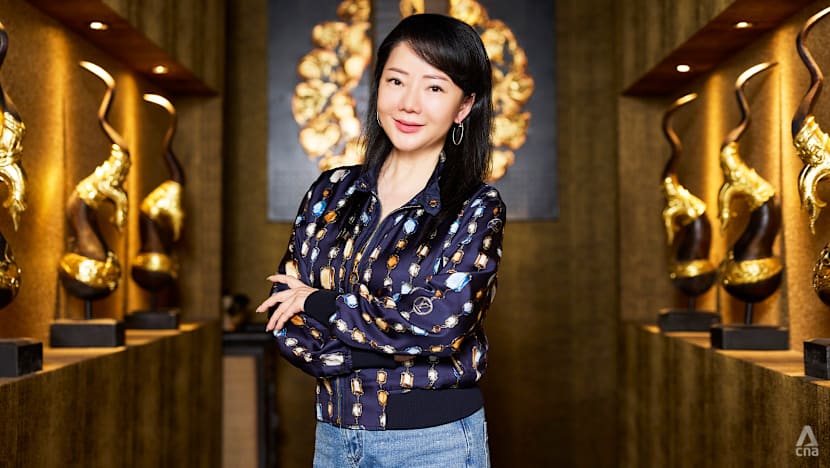
For over a decade, weary, sore and tightly knotted Singaporeans have flocked to Natureland for respite. Many are repeat customers, trooping in solo, with their partners or even their entire families, expecting to be revived by a pair of human hands and a healing touch.
Soon, however, those hands may face competition from another source: robots. After all, as we have seen this year, robots can already perform kung fu and clock a faster 100m time than Usain Bolt’s world record, so there’s no reason they won’t excel at massage therapy, right?
By the end of 2026, Natureland Wellness Group is expected to launch Natureland Plus, a new concept combining AI-powered wellness assessments, smart therapy machines and robotic massage technology.
But before you start imagining R2-D2 or Optimus Prime diligently loosening the knots and soothing the aches in your neck and shoulders, Natureland founder and CEO Fion Wu would like to make one thing clear: The machines are not there to replace human therapists. They are there to augment them.
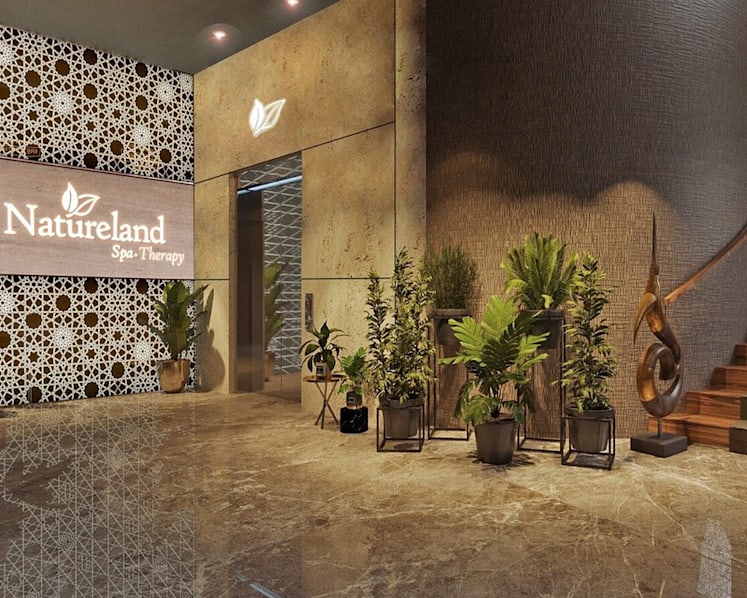
“They can support human hands – not replace them,” she said on a call from her hometown of Chongqing, where she was on holiday.
Natureland is, after all, a business built around people, not an app that pings you to stand up and move every hour. But after more than a decade of steady expansion, Wu has run into a problem that many labour-intensive businesses will recognise: There are only so many skilled hands to go around.
“We now have almost 600 therapists and staff. I think most of the therapists in Singapore are already working in our company! So we need to do something that will allow us to continue expanding, and I think this could be one way,” she explained.
THE NEXT GENERATION OF MASSAGE
Natureland Plus is expected to be the group’s first significant departure from its traditional format.
Wu said the concept, planned for a location along Orchard Road, will combine conventional massage services with technology. The new model will feature AI-driven assessments designed to scan a customer’s physical condition and recommend suitable treatments, alongside smart therapy machines and robotic massage technology.
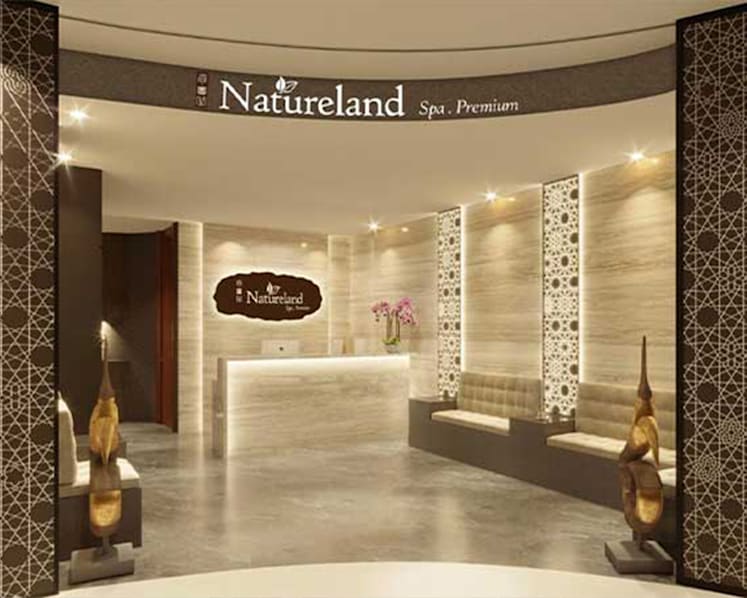
The robots, she said, can offer something human therapists cannot always guarantee: consistency. “Everybody has their own style,” she said of human therapists. “But robots can bring the benefit of consistency of pressure.”
She described a system that can scan a customer’s back and identify treatment points, with pressure adjusted according to individual preferences. Want it lighter? Fine. Want it hard enough to feel like you’ve been tenderised for dinner? Also, presumably, fine.
There could also be treatments combining machine and human therapy. “For example, when the robot is doing a slimming treatment, maybe the human therapist can simultaneously do a head massage,” she explained.
Natureland Plus will also offer shorter treatments of between 15 and 30 minutes, aimed particularly at time-poor working professionals, as well as potentially more affordable options.
Wu said a traditional one-hour full-body massage currently costs around S$75 (US$59). A robot-only treatment could cost around S$50 to S$55, although details are still being finalised.
The broader idea is to make regular treatments more accessible. “At the moment, our price is still kind of premium,” she said. “It’s not really expensive, but customers cannot afford to come every week or daily.”
With the new concept, she hopes they can. “Maybe once or twice a week.”
Her customers, too, have changed. “Last time, [it was] always middle-aged people – those in their 40s, 50s and 60s,” she said. “Now we also see customers in their 20s.”
And they’re not just getting younger – they’re also more receptive to self-care routines. Recovery, after all, has become a wellness category of its own. Just look at the popularity of ice baths and cold plunges.
“Nowadays, this is part of people’s routine,” she said. “Like exercise and eating well.”
Customers are also asking more questions – about techniques, benefits and the therapists themselves.
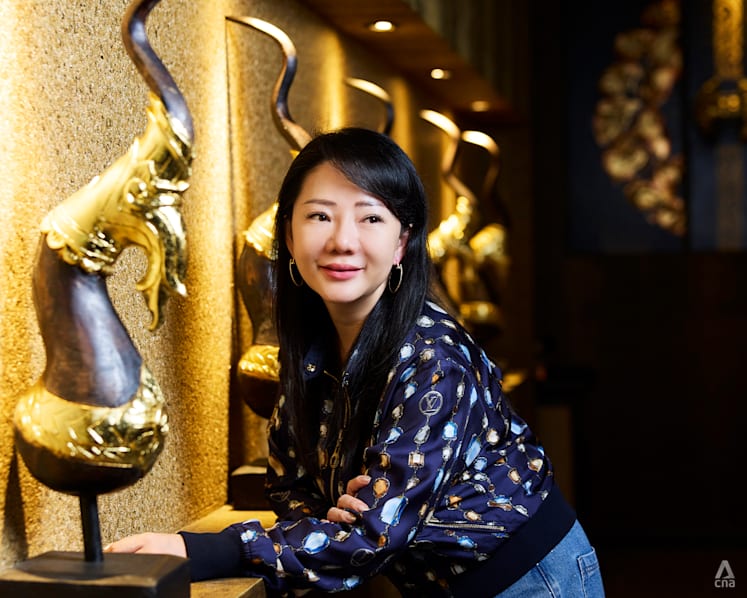
ARE ROBOTS REALLY THE SOLUTION?
Wu has long wanted to expand Natureland’s footprint, but manpower constraints limited how quickly the company could scale. Cuts to foreign worker quotas for the services sector, announced in 2019 and phased in over 2020 and 2021, threw another spanner in the works.
“Nowadays, manpower continues to be a problem, especially when it comes to skilled therapists,” she said. “The average age [of the therapists] is increasing, and there are fewer people entering the profession.”
In past years, mall operators and landlords would approach Wu about opening new outlets on their premises. But she turned many of them down because of the manpower crunch.
Wu said the chain – which currently has 15 outlets – has generally expanded by around one outlet a year. If technology can take on some of the workload – or allow therapists and machines to work in tandem – it could give Natureland room to accelerate.
Her ambition is to eventually open two or three Natureland Plus outlets a year, if suitable locations can be found.
THE SWEET SPOT
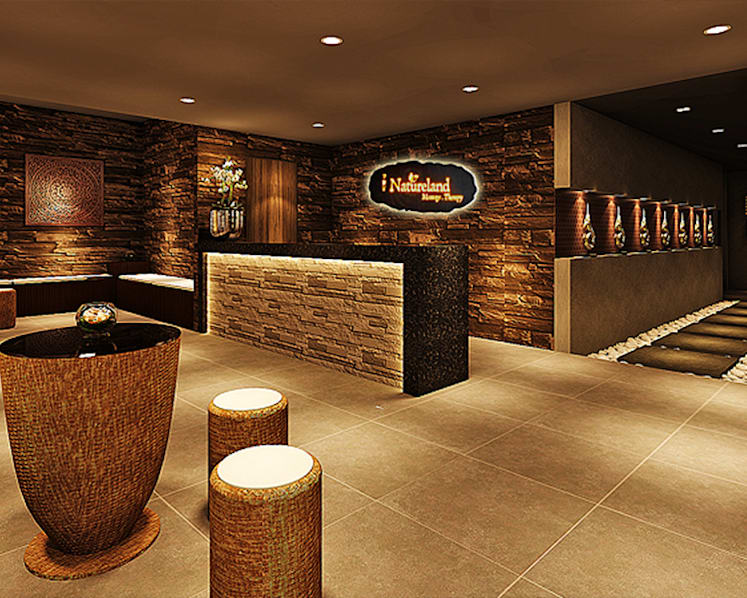
Wu spotted a different gap when she started Natureland in 2013. Back then, she said, Singapore’s massage landscape was largely divided between luxury hotel spas and neighbourhood outlets.
“You either had a luxury spa in the hotel or a neighbourhood spa,” she said. “There was a gap.”
Wu wanted to occupy the middle ground, a space that operators such as Spa Esprit were also targeting.
Image-wise, it needed to look polished and professional, but not so luxurious that a massage became an occasion-only indulgence saved for milestones or weekend getaways.
Natureland’s concept was also shaped by Wu’s background and her experience growing up in China, where massage and spa-going have long been part of everyday culture. “Massage and spa is a traditional culture here,” she offered. “Not only in Chongqing, but in the whole of China.”
Wu started her first business – in F&B – around 30 years ago, gradually winding it down after launching Natureland. The transition may seem unexpected, but she sees a clear connection between the two.
During her restaurant years, she spent time with the owners of larger F&B brands and picked up some fundamental lessons. “Systems, service, consistency,” she said. “As long as we are in customer service, all are important.” Those principles would later shape Natureland.
HAPPY THERAPIST, HAPPY CUSTOMER
The massage business, as it turns out, is particularly difficult to standardise. In F&B, owners can replicate recipes and menus and install the same equipment – from ovens to coffee machines – across their outlets to ensure consistency.
A massage therapist, of course, is harder to replicate.
To get around this, the company regularly updates its standard operating procedures and works to maintain consistency across therapists, customer service staff and outlets. It also generally hires therapists with two to three years of experience rather than complete newcomers.
There is some irony, then, in Wu introducing technology that can theoretically deliver precisely the same pressure, in precisely the same place, every time – after more than a decade of trying to create consistency among hundreds of individuals.
Wu, however, believes the human element still matters most.
She takes pride in the fact that many employees have stayed with the company over the years. Her approach to retention is to give them room to grow within the organisation. Some therapists have become trainers, while others have moved into management or customer service roles.
“We treat our therapists as our partners,” she said.
She also places considerable emphasis on transparency and fairness, particularly when it comes to income and commissions. A queue system is designed to give each therapist a fair turn.
Then there are staff incentives, including company dinners during festive periods.
“Happy staff means happy customers,” she said. Massage is a form of physical touch, and Wu believes a therapist’s mood and energy can be felt by the customer. “When you have positive energy… it’s easy to pass this on to the customer as well.”
LEARNING TO LET GO
Natureland’s new direction comes as Wu’s own leadership style is changing. A mother of three, aged 15, 10 and seven, she said motherhood taught her an important lesson: patience.
“You cannot control everything,” she said.
In the past, Wu said, she was more inclined to talk and expect people to follow her decisions. “Nowadays, I think I’ve changed how I lead. More listening, less pushing.”
She also wants to build a company that doesn’t depend entirely on her. “I want to have a trusted team to do it.”
There is a neat parallel here. Just as Wu is learning to relinquish some control as a founder, Natureland is trying to reduce its dependence on individual human labour through technology.
Neither, she insists, means removing people from the equation. After 13 years of building a business around human hands, Wu is shaping Natureland’s next chapter with some mechanical assistance.
Whether Singaporeans are ready to entrust their knots, aches and perpetually overworked shoulders to a robot remains to be seen. But Wu is adamant about one thing: The machines are not here to take over.
KioskNews shows a cleaned-up reading view extracted from the publisher’s page — the original always lives on their site, not ours.