An impossible equation: Eisenkot won the mandate, but can he secure a coalition? - analysis
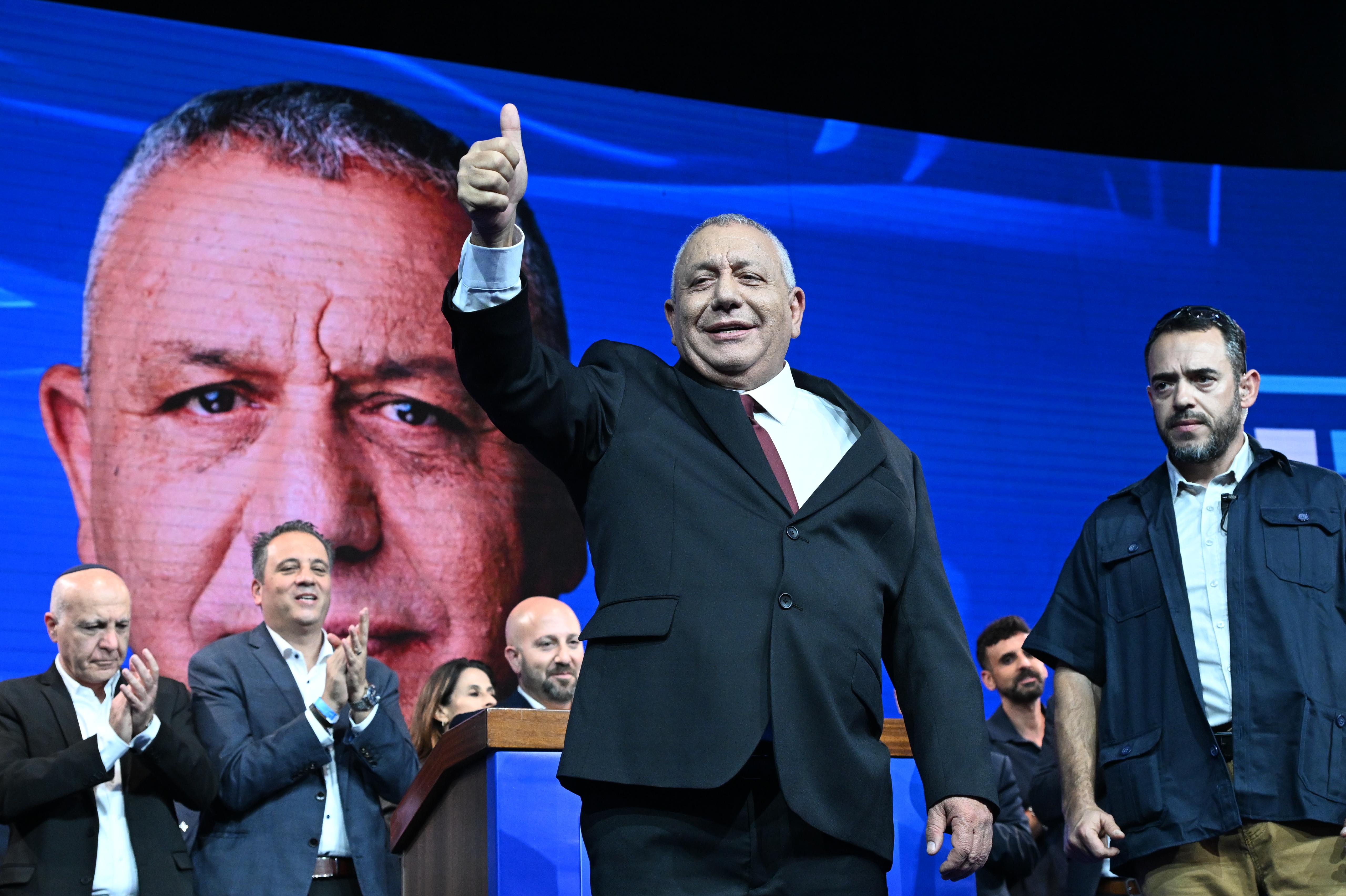
President Isaac Herzog announced on Saturday that he would task Yashar party chairman Gadi Eisenkot with forming Israel's next government, after 67 MKs recommended him for the position, compared with 46 who backed Benjamin Netanyahu and seven who abstained.
Eisenkot was invited to the President's Residence on Sunday at 5 p.m. to receive the mandate, but the majority that emerged in support of his nomination remains far from enough to swear in a government.
The disagreements among his potential coalition partners are so deep that Herzog himself sought clarification over the weekend on how Eisenkot intends to overcome them.
Following the round of consultations he held last week, the president conducted additional consultations over the past 24 hours through telephone conversations with several party leaders. He did not speak with everyone: Some observe Shabbat, at least one was unavailable, and further conversations with every faction were unnecessary.
The inquiries focused on a practical question: How does Eisenkot intend to establish a stable coalition when Avigdor Liberman rules out a government dependent on Arab parties, the B'Yachad party emphasizes its commitment to a coalition of those who serve, haredi conscription, and equality in sharing the burden, while the haredi parties demand legislation regulating the status of yeshiva students and oppose recruitment targets and sanctions?

The recommendations gave Eisenkot a clear advantage but did not resolve this contradiction. Of the 67 MKs who recommended him, 19 belong to the Arab parties. The Zionist change bloc holds only 48 seats.
To establish a majority government with 61 MKs and the haredi parties, Eisenkot needs both United Torah Judaism's seven seats and Shas's six.
However, Shas chairman Arye Deri recommended Netanyahu, and sources in haredi circles say it is hard to imagine Shas even entering coalition negotiations with Eisenkot.
"It was no coincidence that Deri recommended Netanyahu," haredi sources said.
They stressed that even if United Torah Judaism agrees to begin talks, and even if understandings are reached with the party, an outcome that is neither clear nor guaranteed at this stage, that does not mean Deri will join the effort.
Without Shas, the change bloc and United Torah Judaism would have just 55 MKs.
Between the haredim and the veto
Liberman, for his part, has given Eisenkot his full backing to try to form a government.
The Yisrael Beytenu chairman does not intend to demand a rotation agreement in exchange for his support, either as a condition for recommending Eisenkot or as part of the understandings concerning the next Knesset speaker.
He has also withdrawn his objection in principle to partnering with the haredi parties and agreed to consider compromises on the conscription law based on the framework he proposed in 2018.
Haredi sources say the mutual veto between Liberman and the haredi parties has been lifted on both sides, and that contacts are already taking place between figures in the haredi parties and associates of the Yisrael Beytenu chairman.
According to the sources, the haredi parties have a long history of cooperation with Liberman, and their familiarity with him over the years has created a level of trust that may even exceed the trust they place in Eisenkot.
The alternative route, establishing a minority government with the help of abstentions by the Arab parties, faces firm opposition from Liberman.
The Yisrael Beytenu chairman has made clear that he will not agree to a government established with the support of Ra'am or the Joint List, or even through their abstention.
Sources in haredi circles believe that if Eisenkot pursues this scenario, the haredi parties will vote against a minority government dependent on the Arab parties, and they expect Yisrael Beytenu to do the same.
These are assessments rather than official voting decisions, but they illustrate the difficulty facing Eisenkot. If Liberman maintains his position, abstentions by the Arab parties will not be enough to guarantee the government's swearing-in.
According to the haredi sources' assessment, Eisenkot could therefore struggle to form a government through either of the two main options available to him: bringing the haredi parties into a coalition or establishing a minority government.
Eisenkot is not rushing to abandon the possibility of initially forming a national emergency government comprising the change bloc and expanding it later.
On Friday, he published four principles for participation in his government: recognition of Israel as a Jewish and democratic state, acceptance of the values of the Declaration of Independence, mandatory military, national, or civilian service, and recognition of Hamas as a terrorist organization alongside a commitment to dismantling its military and governing capabilities.
He also warned against those who would obstruct the establishment of a government for personal reasons.
The statement was intended to define common ground among potential partners, but it still does not answer the question of the conscription law.
The haredi parties want to regulate the status of yeshiva students, while some of the Zionist coalition partners demand substantial haredi enlistment and equality in sharing the burden.
Difficulty is not limited to just Liberman
Naftali Bennett has so far refrained from publicly committing to a framework that would include compromises with the haredi parties.
His party has clarified that his silence should not be interpreted as consent and recalled his commitment to a "revolution of those who serve."
Meanwhile, Yair Golan reported progress in the talks and meetings between the negotiating teams of the Democrats and Yashar.
Even if understandings are reached among the Zionist parties in the bloc, it will still be necessary to persuade the haredi parties to accept a conscription arrangement and the secular partners to support it.
The question is not merely who will agree to sit around the negotiating table, but what legislation they can all agree to vote for.
Battle for control of the Knesset
Alongside the coalition negotiations, the change bloc plans to begin exercising its power in the Knesset immediately after its swearing-in on Tuesday.
The first move is an attempt to replace Knesset Speaker Amir Ohana.
Liberman prefers Yair Lapid for the position, but no candidate has been agreed upon yet.
The bloc is also examining the establishment of special committees, advancing a state commission of inquiry into the events of October 7, and repealing laws promoted by Netanyahu's coalition.
A vote to replace Ohana on the day of the Knesset's swearing-in is not guaranteed, and even a majority in favor of replacing him would not necessarily be enough to form a government.
Nevertheless, replacing the Knesset speaker would allow the change bloc to influence the parliamentary agenda even before a solution to the coalition crisis is found.
If Eisenkot fails, Liberman sees himself as a suitable and experienced candidate for the next attempt, although the mandate would not automatically pass to him.
For now, the ball is in Eisenkot's court. He is expected to receive the mandate on Sunday and will then have to turn 67 recommendations into agreements among parties that have yet to agree on what kind of government they are prepared to establish.
KioskNews shows a cleaned-up reading view extracted from the publisher’s page — the original always lives on their site, not ours.