UK signals ‘openness’ to Germany joining GCAP fighter jet programme
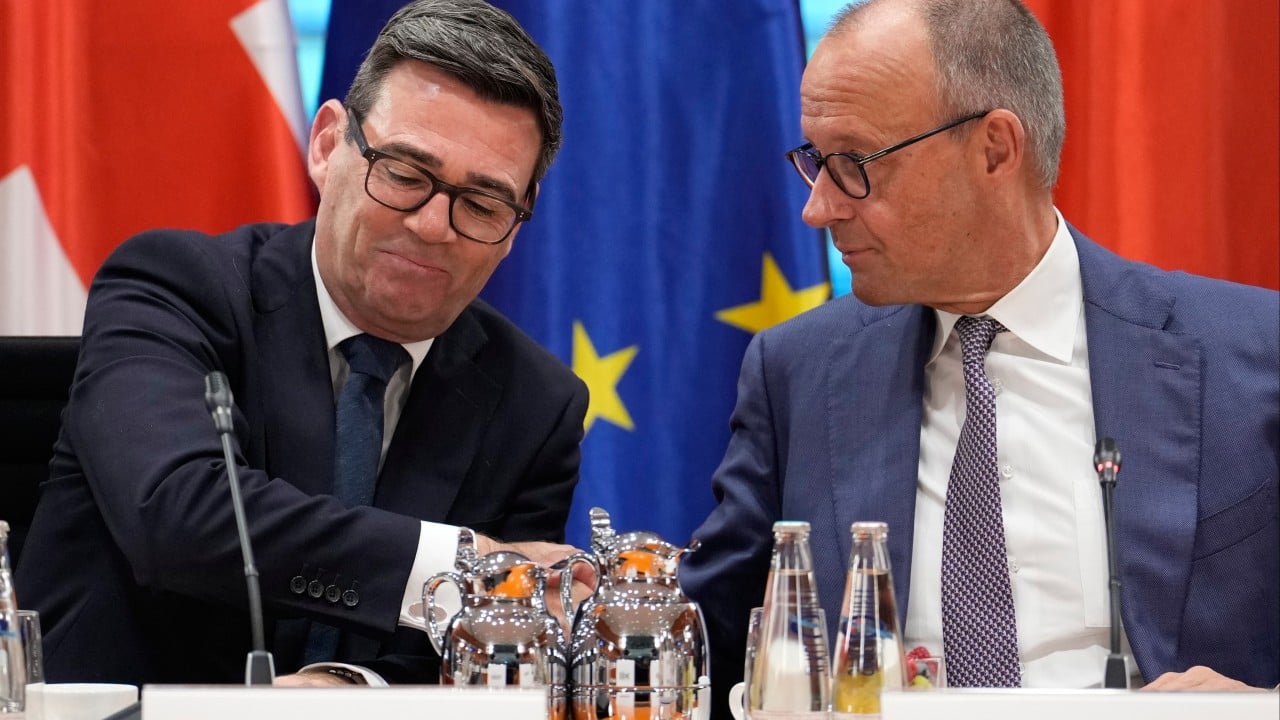
The United Kingdom is “open” to Germany joining an international coalition to build the next generation of fighter jets, British Prime Minister Andy Burnham has announced.
Speaking in Berlin on Thursday, during his first visit to the German capital since taking office, Burnham said he “indicated” to Chancellor Friedrich Merz Britain’s “openness” to the country joining the Global Combat Air Programme (GCAP).
Initially a pact between the UK, Italy and Japan to build a sixth-generation fighter jet, GCAP welcomed Canada as an “observer nation” in July.
Informally dubbed “Tempest”, the new jets will be equipped with technology including AI and next-generation sensors, as Western nations seek to maintain air superiority over threats from rival powers like Russia and China.
Germany’s own FCAS fighter jet project with France collapsed earlier this year.

Burnham travelled to Berlin on Thursday for talks with Merz focused primarily on security, including the launch of a new security partnership aimed at hybrid threats.
The pair also ratified the UK-German Kensington Treaty, which was signed in July last year and commits the two nations to deeper cooperation on science, technology, defence, security and growth.
“We are talking today about defence collaboration, and I’ve indicated to the chancellor, in our discussion prior to this ratification, our openness to Germany joining GCAP, the next generation of fighter aircraft,” Burnham said, speaking alongside Merz at the Chancellery.
“And that is something that we seek to progress in the coming period, working with our partners Italy and Japan, in relation to that as well.”
There has been mounting speculation that the founding countries of the GCAP could open the door to Germany after the FCAS collapse.
Germany is viewed by some defence experts as a suitable partner given its growing military budget and the fact that it already works on the Eurofighter Typhoon with the UK and Italy.
From Britain’s point of view, adding another country at a time when its military budget is under strain would help share the cost burden, but Japan may need convincing. Italy has also said in the past it would be open to new countries joining to help share the cost.
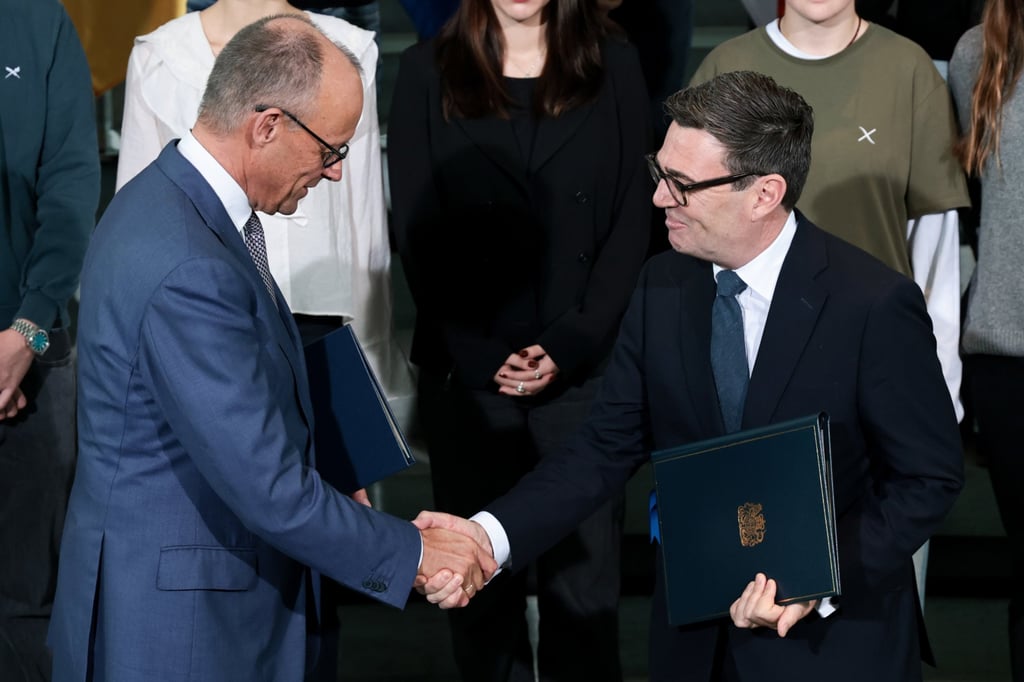
In brief remarks to journalists, Burnham also stressed the importance of countering hybrid attacks, saying it was something both countries were “facing on a regular basis”.
Last month, the British government summoned a senior Russian diplomat to protest against an “egregious and reckless attack” at Germany’s Leipzig airport, a major international freight hub used for providing support to Ukraine.
A drone carrying explosives was found near Ukrainian cargo planes in August, but failed to explode and was subsequently defused.
Investigators suspect a second drone collided with a cargo aircraft nearby and a third drone was reportedly found near the airport 10 days later.
“It makes sense to face these threats together and to support each other in countering them, as well as countering interference in our democratic processes as well, and being stronger together when we face these threats,” Burnham said.
Addressing the wider relationship with Germany and Europe, Burnham said he was “committed to securing deeper cooperation” with the EU at a summit with the bloc “towards the end of the year”.
He said: “We’ve had an excellent discussion today, and we will look to see if we can turn the summit into a good outcome for the EU, but also for the UK as well.”
KioskNews shows a cleaned-up reading view extracted from the publisher’s page — the original always lives on their site, not ours.