Data centre opposition is growing in Australia. Is there a middle ground?
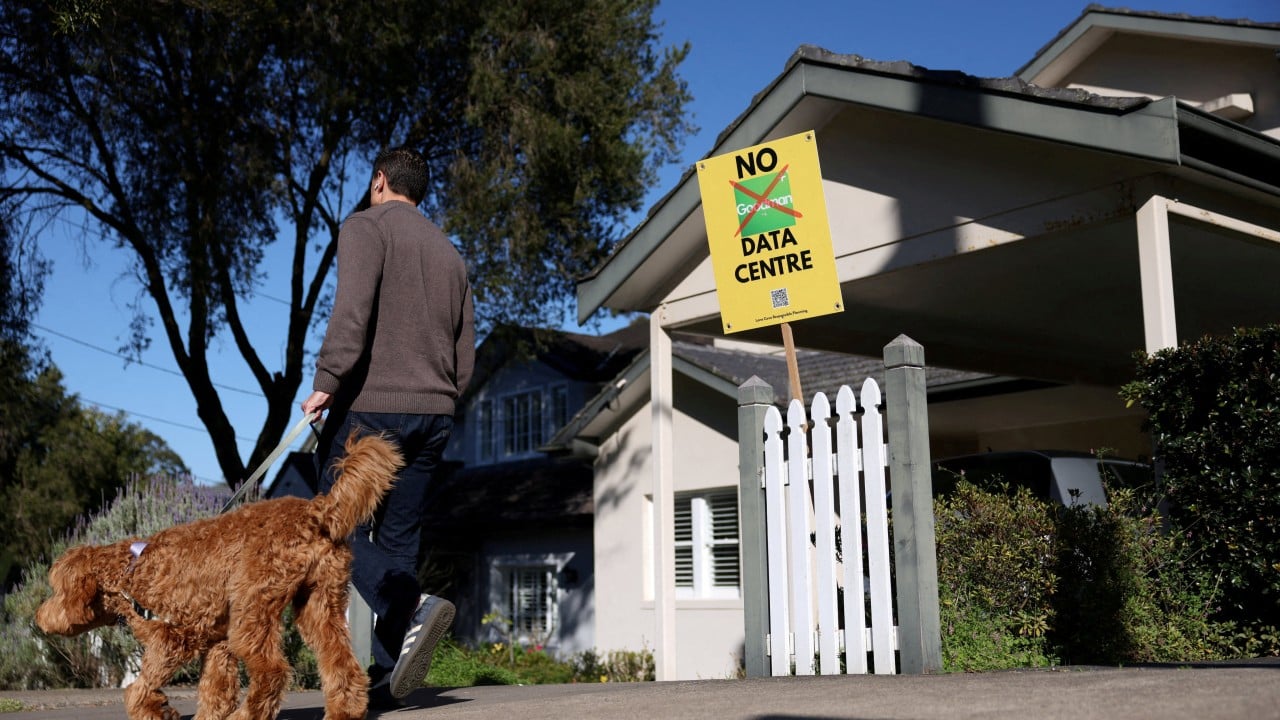
Australia may have vast tracts of land and political will to support the growth of the artificial intelligence industry, but the development of data centres to power the technology is proving more challenging.
Last month, property developer Goodman Group withdrew its application for a 90-megawatt data centre in Lane Cove, on Sydney’s lower north shore, after months of opposition from residents about the potential impact on their electricity and water supplies, noise pollution and other concerns.
In a press statement, Goodman said it had considered changes in the policy and regulatory environment, as well as feedback from residents.
It is not the first time that a developer has pulled the plug on a proposed data centre in Australia this year.
In May, GreenSquareDC shelved its plan for a 120MW data centre in Hazelmere, in Perth’s eastern suburbs. A much smaller proposed data centre in Katoomba, in New South Wales’ Blue Mountains, was also withdrawn by MAK Urban Group in June.
Although the projects were in two different states, residents had raised similar concerns – that the large resource-hungry facilities would be located too close to their homes and schools, and could potentially cause environmental damage.
Rob Nicholls, a senior research associate at the University of Sydney, who recently gave evidence to a New South Wales legislative inquiry on the development of data centres, said these facilities had run ahead of current land-use categories.
02:59
US residents fight AI data centres as Trump blames China for opposition to facilities
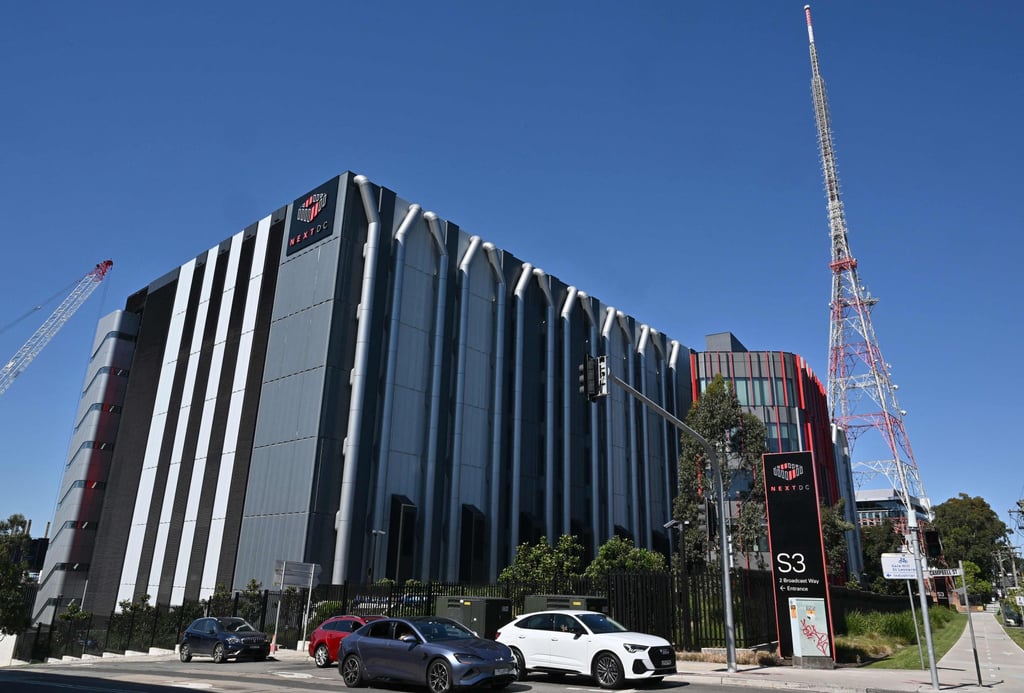
Developers typically look for sites with convenient access to high-capacity electricity networks, fibre-optic connections, water and sewerage, according to Nicholls. These requirements favoured established industrial estates, he added.
Such industrial space had often been designated for warehouses and lighter industrial uses, located near residential neighbourhoods, schools and waterways, Nicholls said.
Existing telecommunications infrastructure, however, could potentially fit into the plans of data centre developers if they were scaled down, he added.
“I wouldn’t be at all surprised to see lots of Telstra telephone exchange buildings hosting small inference-level data centres.”
Residents push back
Sasha Titchkosky, from the Lane Cove Responsible Planning group, explained to This Week In Asia why residents were up in arms over the data centre plan, saying it would be built just 20 metres away from the nearest house as well as being close to a nursery and conservation bushland.
Residents were concerned about constant noise from diesel backup generators, fire hazard, air pollution and water use, Titchkosky said.
While the community was not totally opposed to having a data centre, the scale of the Goodman plan meant it was not suitable for Lane Cove, she added.
“We would say that data centres fit into the heavy-industry kind of classification because of their impact.”
In Hazelmere, community members and Trillion Trees Australia objected to GreenSquareDC’s planned facility, which would have been located near a school, residential areas and Helena River, a major environmental and cultural landmark.
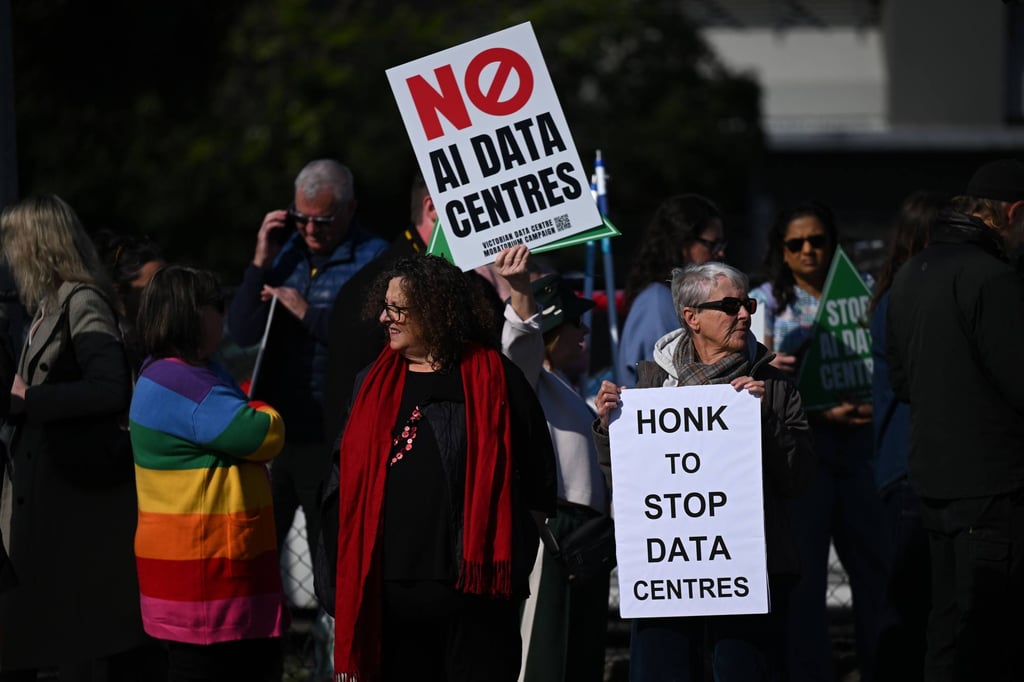
Kate Herren of Trillion Trees Australia said the conservation charity was not wholly against the development of data centres.
“We understand the need for it, but there needs to be very careful consideration of the impact of these developments on the environment and the local community,” she said.
Herren said planning staff from the City of Swan, the local government area in Perth, had recommended objecting to the GreenSquareDC plan as operating diesel backup generators overnight could exceed the residential noise limit. The developer withdrew the proposal before local authorities could assess the data centre’s feasibility.
Titchkosky and Herren said the communities they served were part of the Australian Community Alliance for Responsible Data Centres, an informal network sharing information and strategies on proposals for such facilities.
The alliance has called for a moratorium on new approvals while local governments develop stronger safeguards for communities and the environment.
Nicholls and his University of Sydney colleague Deanna D’Alessandro have proposed a “dual-gate” approval process for data centres that sets a threshold for power usage. Under their proposal, conditional planning consent and start of construction are also subject to electricity and water providers providing adequate supply for data centre operators.
In addition, the researchers have proposed using recycled water and capping potable water supply when its levels are low.
Guidelines for development
Australian federal and some state governments have been taking steps to address the concerns of communities.
In March, the federal government’s Department of Industry, Science and Resources published a document stating that data centre expansion must meet certain national expectations for operators to retain their “social licence to operate”.
The document also states that new facilities should enhance clean-energy generation or storage, minimise water use, engage communities and First Nations groups early in site selection and pay their share of infrastructure upgrades.
“New data centres and AI infrastructure should not place upward pressure on energy prices and should make a positive contribution to Australia’s energy transition,” it said.
New South Wales has introduced a separate policy framework requiring developers seeking approval for the energy and water infrastructure their projects need to meet environmental and efficiency standards and avoid shifting costs to households and small businesses.
Data Centres Australia (DCA) has said the sector is already subject to extensive regulation.
Belinda Dennett, CEO of the industry’s lobbying organisation, has rejected claims that data-centre construction and operation are unregulated, citing existing planning, building, environmental, water, electricity and critical-infrastructure laws.
“What is disappointing is that some continue to perpetuate the myth that this sector is unregulated,” she wrote in a social media post in September.
In the same month, DCA issued a media statement welcoming the federal government’s consultation on nationally consistent standards for AI infrastructure.
Calling for one set of rules at the national level, Dennett said in the statement that “a clear and certain framework is better for communities and better for investment than a patchwork of different rules across the country”.
DCA also said its members had adopted voluntary commitments on energy, water, community consultation and transparency. These include pledges to engage communities before and during approvals on land use, noise, traffic and amenities, minimise water use, choose recycled or non-potable water where available, and fund their own energy and water connections.
Opposition in the US
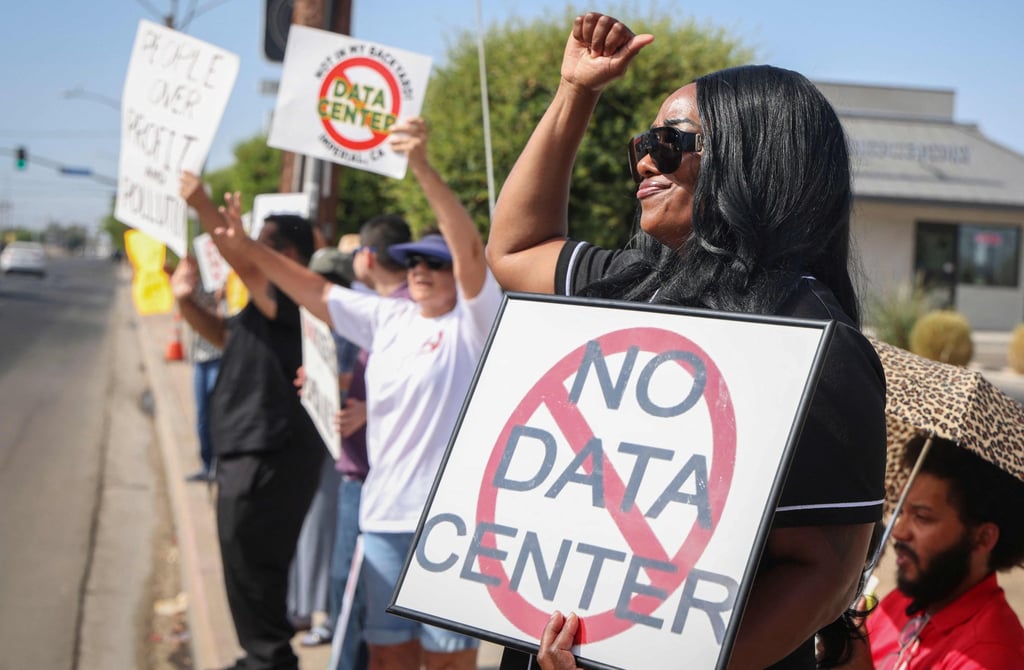
Several industry players, including the DCA, have noted that objections against data centres in Australia appear to mirror the backlash in the United States.
In July, Blackstone-owned QTS terminated its Digital Gateway project in Virginia after years of planning and regulatory review. A month later, developer Stillwater withdrew its permit application for a proposed US$1 billion facility in Georgia.
The US also saw multiple protests against data centres across 42 states on July 18, as opponents expressed concerns over water and energy use and transparency in approvals.
Despite differences over how the data centre issue has evolved in the two countries, the communities’ concerns are the same, according to Titchkosky.
“It’s the same impact in terms of diesel generators, the pollution, light, the heat impact, and the water and noise issues,” she said.
“What the US situation showed us was what the future could look like if you just allowed unfettered data-centre development.”
KioskNews shows a cleaned-up reading view extracted from the publisher’s page — the original always lives on their site, not ours.