We are reclaiming real life after getting rid of Instagram | Letters
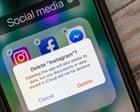
I couldn’t agree more with Georgina McNamara (The one change that worked: I deleted Instagram – and embraced the joys of a truly private life, 19 October).
Reading about the sheer relief of stepping away from Instagram resonates deeply with my own feelings over the last few years. There is an incredible quiet joy in reclaiming a truly private life, entirely free from the pressure to document, curate and perform our daily routines for an invisible audience.
This shift immediately brings to mind Jaron Lanier’s compelling points in his 2018 book Ten Arguments for Deleting Your Social Media Accounts Right Now. Lanier warned us that these platforms aren’t just neutral tools; they are behaviour-modification engines designed to hijack our attention and slowly erode our autonomy.
His argument that social media algorithms inherently reward outrage, tribalism and comparison to drive engagement feels truer today than ever. By participating, we unwittingly allow algorithms to alter our moods and warp our sense of reality, stripping away the simple contentment of just being.
In my own life, stepping back from that digital noise has been incredibly grounding. I’ve found that my most meaningful moments – whether I’m spending a few focused hours woodworking in my workshop, sitting down to figure out a new arrangement on the guitar, or just out walking the spaniels – are vastly richer when they exist solely in the present, without the impulse to photograph or share them.
Getting back to tangible, analogue realities has felt like taking a long, deep breath. Even organising a recent social evening at the local pub in Hipperholme reminded me how much more genuine our connections are when we are physically present, sharing a pint and a conversation rather than a screen.
A private life is not a smaller life; it is an unmediated one. As Lanier suggests, opting out isn’t just rejecting technology; it’s reclaiming our free will and our peace of mind.
Guy Edmondson
Hipperholme, West Yorkshire
Georgina McNamara’s article really resonated with me. I haven’t deleted Instagram, but I check it very infrequently now. While I didn’t post all that often, the compulsion to document experiences and turn moments into posts or stories, rather than being in the moment, was always there – and with it, the eventual anxiety about whether anyone had liked what I had posted.
I also realised that comparing my day-to-day life with others’ carefully curated highlights was making me unhappy: an endless stream of holiday photos made me keenly aware of how long it would be until I would next have a break, while other fitness instructors posting photos taken from strategic angles made me worry that I wasn’t as flexible as them in comparison, or that my technique was poor.
After reading some books and articles on cutting back on smartphone use, I took a number of steps to reduce my phone use, and used the One Sec app to trigger a breathing exercise whenever I opened Instagram.
It made me realise how often I checked Instagram as a reflex, and that I could be devoting this time to other activities that I found more fulfilling. The few occasions that I do check it these days, I find it a bit overwhelming.
I find that my mind is a lot quieter now and that I pay more attention to what is around me, appreciating what I see as a moment that doesn’t have to become a post or a story. And if I take a photograph of something, it’s because I like it, not because I’m concerned about whether someone else will.
Laura Dobie
Glasgow
I deleted my Instagram account after getting pregnant with my second child. At first, I muted it; when I returned, the algorithm had decided that, with all the information it had gathered on me, I must have taken a break due to baby loss. It bombarded me with images and messages about baby loss, until it realised this wasn’t the reason and started to fill my algorithm with “two under two” narratives. The juxtaposition was stark and insensitive. It felt awful.
I realised I didn’t want this platform having information about not just me but my family as well, and I hated that by feeding into it (with likes on obsessed-over images and funny captions), I was allowing it to dictate some of my parenting decisions through algorithms and advertised content. Since leaving it, my motherhood journey has been much happier, simpler and in my control. I completely agree that it’s the change that works!
Stefanie Withey-Jones
London
I enjoyed Georgina McNamara’s account of leaving Instagram, particularly her observations about the time spent checking reactions and seeking validation.
However, there is an important distinction to be made between sharing our lives and seeking approval for them. I use social media to share photographs with friends and family because I enjoy letting people I know see what I have been doing. For me, that is about connection, not validation.
There is another pleasure too that is rarely mentioned: unexpected reminders of photographs posted one, five or even 10 years ago. A holiday, a familiar face or an ordinary moment that I had forgotten suddenly reappears, bringing back the feelings associated with it.
It’s not just the memories themselves I treasure, but the unexpected joy of being reminded of them, often when they’re furthest from my mind.
The problem, perhaps, is not posting our lives online, but allowing other people’s reactions to determine how much we value those experiences.
Nicky Atkinson
Shoreham-by-Sea, West Sussex
I lasted only six weeks on Instagram. Unlike Georgina McNamara, I came to the party late, in my 60s. Almost immediately, I resented the way that posts were pushed into my feed. In no time at all I was spending hours watching posts of horse sanctuaries in the US and feeling depressed and resentful at whole sections of society. So I deleted my account – no small feat in itself, as the process is determined to keep you there.
Afterwards, I felt relief at getting back hours of my own brain time, but for months, I would think: “I could just pop on and look at x, y, z.” I’m glad that I’m off, and scared at how quickly I became addicted. Now when I look around I see that I am the only person on the bus or train who is not looking at a screen but at the outside world, and thinking for myself.
Dr Hilary Redden
Aberdeen
The one change that worked? I deleted all social media from my phone and instead installed the Guardian app with a subscription to news and well-curated content. No more time-wasting, bottomless doomscrolling for me. Do it, kids!
Cecilia Scott
Woking, Surrey
KioskNews shows a cleaned-up reading view extracted from the publisher’s page — the original always lives on their site, not ours.