Nearly 300 detained in Chile at protests marking Pinochet coup anniversary
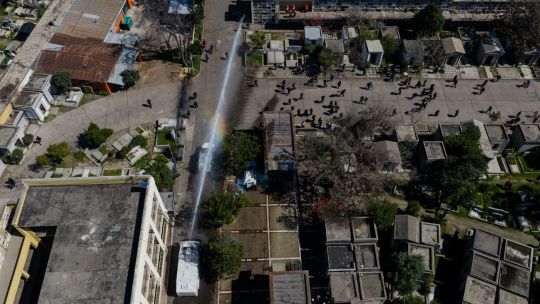
Nearly 300 people were detained in Chile on Saturdayduring protests commemorating the victims of Augusto Pinochet’s 1973-1990 dictatorship, the government in Santiago said.
The demonstrations, held annually, took place around the 53rd anniversary of the September 11, 1973 coup led by Pinochet against the government of socialist president Salvador Allende.
Thousands took to the streets to denounce the military dictatorship, which left more than 3,200 people dead or disappeared.
For the first time since the return of democracy in 1990, there were no official commemorative events.
Earlier this year, José Antonio Kast – an apologist for Pinochet and his dictatorship – was elected as Chile's president.
“This year, during September 11 and its eve, there were 198 incidents of violence, 34 percent fewer than in 2025, and 284 arrests, an 80 percent increase. There were no civilians injured and no damage to public transport,” Security Minister Martín Arrau said in a post on X.
Among those detained were 16 foreigners and 31 minors, Arrau said.
“We will remain firm, confronting violence and protecting the peace and security of Chilean families,” the minister added.
The main demonstrations took place at Santiago’s General Cemetery, where the Allende family mausoleum is located.
Events there were attended by Salvador Allende’s daughter and former senator Isabel Allende, as well as left-wing former president Gabriel Boric, who preceded Kast in office.
Gatherings were also held at the La Moneda presidential palace and Chile's National Stadium. Allende resisted inside the government palace until his death by suicide, while demonstrators recalled that the sports stadium was used as a detention and torture centre following the coup.
Protesters threw stones and sticks at police, who responded with tear gas and water cannon vehicles.
Kast's government did not hold an official commemorative event, the first time since 1990 that has happened. In the southern Los Ríos region on Friday, the president defended his decision.
“Just as I cannot erase history, neither can I ask our compatriots to be condemned by our history to being unable to look towards the future of our nation,” he said in a public speech.
KioskNews shows a cleaned-up reading view extracted from the publisher’s page — the original always lives on their site, not ours.