Was this the end of Ted Lasso? I really hope so
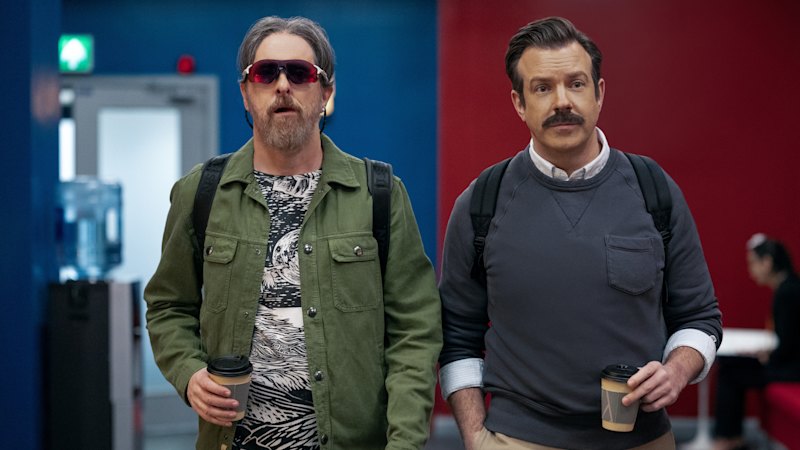
This story contains spoilers for the fourth season of Ted Lasso, including this week’s finale.
After six years and four seasons, Ted Lasso is over. Finally. Again. Maybe.
I mean, can we actually trust this is the last we’ll see of it? After all, everyone involved with the show swore the third season would be its last, but after all the storylines were wrapped, the irresistible lure of Apple’s fat wads of cash was enough to drag the team out of retirement for a comeback that was about as necessary as Cristiano Ronaldo’s second stint at Manchester United. Which is to say, not necessary at all.
With the juice well and truly squeezed out of those half-time oranges by the end of season three, this felt like the skin and pulp was being turned into a batch of marmalade no one had asked for.
To be clear, no one has officially ruled more Ted in or out. Apple TV is yet to renew the show for season five, and the creators are hopeful. Before this season premiered, the show’s star and co-creator Jason Sudeikis told The Hollywood Reporter he had a new three-season arc in mind. But for mine, it’s time to hang up the boots once and for all.
When the first season landed in August 2020, Ted Lasso quickly established itself as the perfect antidote to our lockdown blues, a little ray of sunshine and goodwill at a time of deep but seemingly necessary deprivation. I’ve just gone back to that first season to see if it stands up six years later, and it really does. The conceit was so strong, the ideas so fresh, the characters so surprising.
In it, Ted Lasso (Sudeikis) is an American football coach hired to take over English soccer team Richmond AFC, not because he has the skills to make it work, but precisely because he doesn’t. He’s such a know-nothing that he doesn’t understand the offside rule, and he thinks a game has four quarters.
Owner Rebecca Welton (Hannah Waddingham) has inherited the club as part of the divorce settlement from her cheating husband Rupert Mannion (the late Anthony Head). Rupert loves Richmond, so Rebecca wants to destroy it in revenge. Ted is her secret weapon. Only it doesn’t work out that way because Ted’s ability to bring out the best in people makes the team so much better. More than that, it makes everyone a better person, including Rebecca.
Yes, it was syrupy. But it also felt genuinely good-natured, optimistic and celebratory of ideas like respect and compassion and the value of working together. Of accepting your limitations, but not being defined by them.
I concede the disappointment I feel for this season might have something do with it feeling so out of kilter with the state of the world right now, but I think it has more to do with the fact it felt like a pastiche of itself. Too often, Ted Lasso S4 was merely going through the motions, offering us faded takes on the things that had worked so well in its first three seasons (and especially the first two) as a kind of desultory fan service.
In plopping Ted back into the Richmond milieu as the coach of the women’s team, the so-called Lady Greyhounds, there might have been an opportunity to explore a different set of characters, a new set of dynamics. Instead, the writers largely opted to create female versions of the same types.
Tanya Reynolds does her best to make assistant coach Alice Chilton’s grievances at being overlooked for the top job (for a man, no less) believable, but it’s impossible to escape the feeling she is simply the female version of Nate (Nick Mohammed). Tracey Ullman’s machiavellian Zelda, who swans in as purported saviour of the club but secretly harbours darker ambitions, is a version of season-one Rebecca. The mad goalkeeper “Boots” Quinn (Jude Mack) is a kind of ersatz Roy Kent (Brett Goldstein).
Worse, the returning characters have become caricatures, reduced to a series of tics and bon mots whose charm has long since been rubbed away by repetition.
Every now and then, the season did nudge at the realities of women’s sport: the paltry attendances, the difficulty in attracting sponsorship and crowds, the poor pay and the resulting need to juggle outside work with a semi-pro training regimen. In the character of team captain Lizzie (Faye Marsay, tragically underused), a single mum of two whose ex-partner has a habit of reneging on his parenting obligations, there was real scope to explore those issues to both serious and comedic effect. But the season did little more than sprinkle them across its 10 episodes as light seasoning.
The actual football has never been a strong suit in Ted Lasso, but this season saw it sink to new lows. In making women’s soccer the focus, surely the producers had an obligation to showcase how good it can be – and it really can be. But they failed abysmally on that front.
Ted’s decision to allow himself the possibility of finding love again went nowhere; the presence of his ex and their child in London was forgotten for episodes at a time. Like so much else, it all felt rather half-hearted, as if the writers room had too many balls in the air, and too little interest in any of them to ensure they remained fully inflated.
Maybe I’m being too cynical here, but even the death of publican and number-one fan Mae (Annette Badland) at the end of the penultimate episode felt like a desperate snatch at poignancy. But at least it did set up a wake in the finale where the always-sparring Harrigan twins Siobhan (Rex Hayes) and Niamh (Aisling Sharkey) got to do a beautiful a cappella rendition of The Parting Glass, a traditional Irish funeral song.
The episode, titled Being Alive, was all about farewells. Fair enough, too. But it was also about new beginnings. Take that as a warning if you will.
Coach Beard (Brendan Hunt) finally said farewell to that ridiculous new hairstyle, and to his earrings and maybe even to his on-again off-again lover Jane. Roy (Brett Goldstein) bade farewell to Richmond, tempted away by the prestige and treasure chest of Chelsea, while also preparing to welcome a child with Keeley (Juno Temple). And Alice got to slide into the coach’s chair at last.
Ted, it seems, is hanging around, happily reclaiming the assistant manager badge we saw on his chest at the beginning of this season, when he was working in a supermarket in Kansas. In theory, it will allow him to see more of his son. In truth, he could hardly see less of him.
It all ended with Mae in voiceover, reciting the words of Mary Oliver’s poem When Death Comes, an incitement to not waste a minute. As the end credits rolled, The Specials sang “enjoy yourself, enjoy yourself, it’s later than you think”.
I can’t quibble with the central message of that, or with the sentiment of Ted Lasso as a whole. And judging by the episode ratings for this season on IMDB, there are plenty of people who still find the way that message is delivered thoroughly engaging.
I wish I felt the same, but I don’t. Once brilliant but now tired and unimaginative, Ted Lasso was guilty of doing what so many in professional sports have done before: it stayed one season too long.
Want more TV? We’ve got you.
- Newsletter: Find out the next TV, streaming series and movies to add to your must-sees. Get The Watchlist delivered every Thursday.
- Movie guide: More than 200 hand-picked hits from all the major streamers.
- October streaming picks: A guide to the best new shows this month.
- Carrie is back: Stephen King didn’t want another remake. This is what convinced him.
- East of Eden review: Is the new Netflix adaptation worth watching?
- 70 Up: TV’s most fascinating experiment comes to an end.
- Watch: Binged The Airport Chaplain? Meet the man who inspired the show.
KioskNews shows a cleaned-up reading view extracted from the publisher’s page — the original always lives on their site, not ours.