HUAWEI CONNECT 2026 | Huawei Upgrades Stellar AI Fabric Solution to Build Efficient AI Computing Production Networks
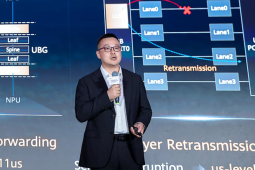
Shanghai (ANTARA/PRNewswire)- At HUAWEI CONNECT 2026, Huawei hosted the AI DC Innovation Summit themed "Leading AI DC Innovation, Shaping the Agentic World," convening over 600 industry leaders and researchers. During the event, Huawei unveiled its upgraded Stellar AI Fabric Solution to deliver continuous uptime and maximum compute utilization for production AI clusters.
Keynote: Engineering the Network Fabric for Agentic AI
Erick Zhang, President of Data Center Network Domain at Huawei Data Communication Product Line, noted that AI is turning traditional data centers into compute factories. In this agentic era, the underlying network fabric directly dictates token throughput and overall compute yield.
To address this demand, the upgraded Stellar AI Fabric integrates Rock-Solid Architecture 2.0, StarryWing Digital Map 2.0, Hyper-Converged Fabric (HCF), and Network Packet Load Balancing (NPLB). The upgraded NetMaster network AI agent automates root-cause analysis for 95% of network faults within minutes, maintaining consistent production uptime.
High-Throughput Hardware Platforms
Huawei launched two switch families built for high-density computing:
- CloudEngine SF9300 (UBG switch): Uses a two-layer multi-plane architecture that cuts buildout costs by 30%. Simplified UB forwarding lowers end-to-end latency by 40%. For link reliability, Link-Layer Retransmission (LLR) executes microsecond-level recovery, eliminating packet loss during link flapping.
- CloudEngine XH9300 (NPO switch): Delivers proprietary 100T and 51.2T. A centralized light source and proprietary 3.2T Optical Engine (OE) lower interconnect power draw by 40%. By eliminating the optical DSP (oDSP) stage, the architecture cuts forwarding latency by 26%, while snap-in pluggable optical engines speed up maintenance tenfold.
Financial Industry Standard and Research Deployment
The Beijing FinTech Industry Alliance, Huawei, and 17 partners released the Technical Specification for Network High Availability of Financial Data Center. The standard defines technical baselines and testing methods across two categories and five network types for both intra-DC and cross-DC environments, evaluating architectural redundancy, fault recovery, and proactive prevention.
In scientific research, Qi Fazhi, Computing Center Director at the Institute of High Energy Physics (IHEP), Chinese Academy of Sciences, reported that deploying the Stellar AI Fabric lifted computing efficiency by over 10%. Network-wide load balancing resolved training traffic imbalances, providing unhindered throughput for massive telemetry data and accelerating deep-space signal analysis.
Moving forward, Huawei continues to invest in intelligent data center networking with global partners to advance next-generation compute infrastructure.
KioskNews shows a cleaned-up reading view extracted from the publisher’s page — the original always lives on their site, not ours.